
Fuvahmulah Maldives Travel Guide: The Wild Island of Tiger Sharks, Lakes and Untouched Nature

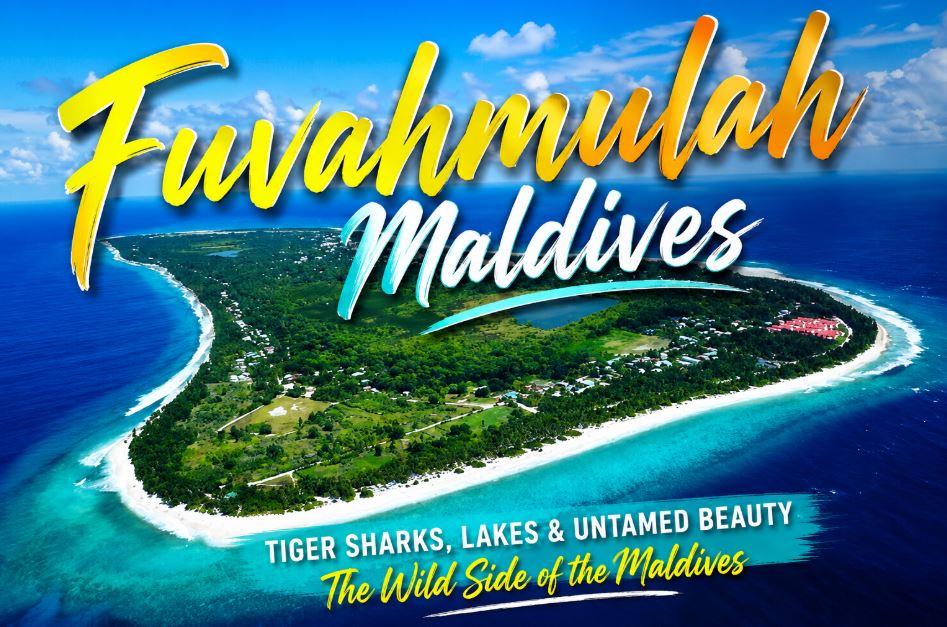
Forget the classic image of tiny Maldivian islands surrounded by calm turquoise lagoons. Fuvahmulah is different.
Located in the deep south of the Maldives, Fuvahmulah is a remarkable single-island atoll famous for tiger shark diving, freshwater wetlands, tropical greenery, powerful ocean waves and the extraordinary Thoondu pebble beach. It is also a UNESCO Biosphere Reserve, making it one of the most distinctive nature destinations in the country.
For travelers searching for a Maldives experience beyond luxury resorts, Fuvahmulah offers adventure, local culture and extraordinary wildlife in one destination.
Why Fuvahmulah Is Unlike Anywhere Else in the Maldives
Most Maldivian islands are small coral islands protected by lagoons. Fuvahmulah stands alone in the open Indian Ocean, giving it a dramatically different landscape and ecosystem.
The island contains wetlands, marshes, fertile vegetation and two important freshwater bodies: Bandaara Kilhi and Dhadimagi Kilhi. Its surrounding marine environment is equally remarkable, attracting tiger sharks, thresher sharks, whale sharks and other large pelagic species.
UNESCO designated the Fuvahmulah Biosphere Reserve in 2020, recognizing the importance of its terrestrial and marine ecosystems.
This combination makes Fuvahmulah feel less like the stereotypical Maldives and more like a tropical adventure island.
Fuvahmulah: The Maldives' Famous Tiger Shark Destination
For scuba divers, this is the attraction that has placed Fuvahmulah firmly on the international diving map.
Tiger sharks can be encountered around Fuvahmulah throughout the year, making the island one of the Maldives' most exciting destinations for shark enthusiasts.
The surrounding deep ocean also attracts an impressive variety of marine life. Depending on conditions and season, divers may encounter:
-
Tiger sharks
-
Thresher sharks
-
Whale sharks
-
Hammerhead sharks
-
Oceanic whitetip sharks
-
Silvertip sharks
-
Grey reef sharks
-
Oceanic manta rays
-
Barracuda
-
Tuna and other large pelagic fish
The island's geography plays an important role. With deep ocean surrounding Fuvahmulah and no conventional protective lagoon, large marine animals can pass surprisingly close to the island.
Tiger Zoo
The best-known dive experience is commonly called Tiger Zoo, near Fuvahmulah's harbour.
It has become internationally famous for close encounters with tiger sharks.
This is not an ordinary recreational reef dive. Anyone planning a shark dive should use an established professional dive operator and carefully follow the operator's certification, experience and safety requirements.
For experienced divers, however, Fuvahmulah can deliver one of the most memorable underwater experiences in the Maldives.
Thoondu Beach: A Beach You Won't Find Elsewhere
Even travelers who never go diving have a compelling reason to visit Fuvahmulah: Thoondu.
Located toward the northern end of the island, Thoondu is famous for its unusual smooth, glossy white pebbles.
Rather than the typical powdery coral sand associated with Maldivian beaches, sections of Thoondu have a distinctive pebble-like shoreline shaped by the powerful surrounding ocean.
The combination of white shoreline, tropical vegetation and deep blue water makes it one of Fuvahmulah's most photogenic locations.
Sunset is an especially beautiful time to explore the area.
Explore Fuvahmulah's Freshwater Wetlands
One of the biggest surprises for first-time visitors is finding substantial freshwater wetlands on a Maldivian island.
Bandaara Kilhi
Bandaara Kilhi is surrounded by lush vegetation and wetland habitat. It offers visitors a completely different landscape from the beaches and reefs usually associated with the Maldives.
Dhadimagi Kilhi
Dhadimagi Kilhi is another major wetland area and an important part of Fuvahmulah's ecosystem.
Together, these wetlands support plants, birds and other wildlife while contributing to the island's extraordinary biodiversity.
They are among the best places to experience the greener, quieter side of Fuvahmulah.
Discover Fuvahmulah Nature Park
Nature lovers should make time to explore the island's protected natural areas.
Walking through the green interior reveals another side of the Maldives: wetlands, dense vegetation, tropical plants and agricultural areas rather than endless resort villas.
Fuvahmulah's landscape is one reason the island works particularly well for travelers who want to combine beaches, wildlife and outdoor exploration.
Go Surfing in the Deep South
Fuvahmulah's exposure to the open Indian Ocean creates waves that can make the island appealing to surfers.
Unlike islands surrounded by broad, calm lagoons, the coastline here can experience powerful swells.
Conditions vary considerably, so travelers should seek local advice before entering unfamiliar surf breaks. Experienced surfers may find Fuvahmulah another exciting reason to venture into the southern Maldives.
Go Fishing With Local Fishermen
Fishing has long been an important part of life in Fuvahmulah.
For visitors, a fishing excursion offers more than simply catching fish. It provides an opportunity to experience a tradition deeply connected with the island's economy, cuisine and culture.
Depending on the excursion, fishing trips may target tuna and other species found in the rich waters surrounding the island.
Experience Authentic Maldivian Island Life
Fuvahmulah isn't a private resort island.
It is a living Maldivian community, which is exactly what makes visiting so interesting.
Travelers can explore neighborhoods, eat at local cafés and restaurants, observe agriculture and fishing, cycle through quieter areas and experience everyday life in one of the country's most distinctive communities.
Visitors should remember that local-island customs apply. Dressing respectfully away from designated tourist beach areas and respecting local traditions are important parts of responsible travel.
Getting to Fuvahmulah
Because Fuvahmulah is hundreds of kilometers south of Malé, flying is generally the easiest option for international visitors.
Travelers typically arrive at Velana International Airport (MLE) and connect with a domestic flight to Fuvahmulah Airport (FVM).
The domestic flight takes roughly 70–90 minutes, depending on the service and routing.
Flight schedules can change, so check current domestic connections when planning international flights.
Once on Fuvahmulah, guesthouses and hotels may arrange airport transfers.
Getting Around Fuvahmulah
Fuvahmulah is considerably larger than many popular Maldivian local islands, so walking everywhere isn't always practical.
Common ways to explore include:
Bicycle: A relaxed and environmentally friendly way to explore relatively flat parts of the island.
Motorbike or scooter: Popular locally and convenient for covering longer distances.
Taxi: Useful for airport transfers and traveling between attractions.
Because attractions are spread across the island, having some form of transport can make a significant difference to your trip.
Where to Stay in Fuvahmulah
Fuvahmulah has developed a growing collection of guesthouses, boutique hotels and dive-oriented accommodation.
This makes it possible to experience the island without paying private-island resort prices.
Divers should look for packages combining accommodation with dive trips because these can simplify logistics. Non-divers may prefer guesthouses closer to beaches, restaurants or the island's natural attractions.
Before booking, compare whether the rate includes:
-
Breakfast
-
Airport transfers
-
Bicycle or scooter rental
-
Diving packages
-
Excursions
-
Taxes and service charges
Comparing the complete package rather than the room price alone can help budget travelers save money.
Is Fuvahmulah Good for Budget Travel?
Yes, particularly for travelers who want an adventurous local-island experience rather than a luxury resort holiday.
Guesthouses and locally operated hotels provide alternatives to expensive private-island resorts, while local restaurants can make daily dining considerably more affordable.
However, there is one important consideration: getting to Fuvahmulah requires a domestic transfer from the Malé area, so transportation can represent a significant part of the total budget.
Divers should also budget separately for equipment rental, boat trips and specialized shark dives.
For the best value, staying several nights makes more sense than making an extremely short trip.
Best Things to Do in Fuvahmulah
A first visit can easily combine adventure and nature. Highlights include:
-
Dive with tiger sharks
-
Search for thresher sharks and other pelagic species
-
Visit Thoondu Beach
-
Explore Bandaara Kilhi
-
Visit Dhadimagi Kilhi
-
Discover the island's wetlands
-
Cycle around Fuvahmulah
-
Go fishing
-
Try surfing
-
Photograph tropical landscapes
-
Explore local neighborhoods
-
Taste Maldivian food
-
Watch the sunset
-
Learn about local culture and traditional livelihoods
You don't need to be a diver to enjoy Fuvahmulah.
Its unusual landscape alone makes it worthwhile.
Best Time to Visit Fuvahmulah
Fuvahmulah can be visited throughout the year, particularly for travelers interested in diving.
As elsewhere in the Maldives, weather and ocean conditions vary throughout the year. The drier northeast monsoon period generally brings sunnier conditions, while wetter months can bring more rain, wind and changing seas.
For divers, the ideal month depends heavily on the marine species you hope to encounter.
Rather than choosing your dates solely according to weather, serious divers should ask a reputable Fuvahmulah dive center about seasonal marine-life patterns before booking.
How Many Days Do You Need in Fuvahmulah?
A stay of four to seven nights works well for many first-time visitors.
Four nights can provide enough time to see the main attractions, while a week allows divers to schedule multiple dives and gives non-divers more time to explore the island slowly.
Weather can occasionally affect marine activities, so adding extra time is useful when diving is the primary purpose of your trip.
Who Should Visit Fuvahmulah?
Fuvahmulah is particularly suited to:
Scuba divers looking for big-animal encounters.
Adventure travelers wanting something beyond a conventional Maldives resort holiday.
Nature lovers interested in wetlands, birds and unusual island ecosystems.
Photographers searching for landscapes different from standard turquoise-lagoon imagery.
Budget travelers who prefer guesthouses and local experiences.
Repeat Maldives visitors who want to discover a completely different side of the country.
Travelers whose only priority is a calm shallow lagoon directly outside an overwater villa may prefer a traditional resort island.
Fuvahmulah's appeal is its wildness.
Why Fuvahmulah Deserves a Place on Your Maldives Itinerary
Fuvahmulah challenges almost every stereotype about the Maldives.
There are tropical beaches, but also freshwater wetlands. There are coral reefs, but also dramatic open-ocean conditions. There are relaxing guesthouses, but some of the world's most exciting shark encounters are waiting offshore.
Add Thoondu's extraordinary shoreline, lush vegetation, authentic local culture and UNESCO-recognized biodiversity, and you have an island unlike anywhere else in the archipelago.
For travelers willing to fly beyond the country's familiar resort zones, Fuvahmulah reveals a wilder side of the Maldives — one filled with sharks, forests, wetlands, waves and adventure.
Frequently Asked Questions About Fuvahmulah
Where is Fuvahmulah?
Fuvahmulah is located in the southern Maldives, south of the equator. It forms its own single-island administrative atoll and can be reached by domestic flight from the Malé area.
Why is Fuvahmulah famous?
Fuvahmulah is best known internationally for tiger shark diving. It is also famous for Thoondu Beach, freshwater wetlands, surfing, fishing and its unusually diverse natural environment.
Is Fuvahmulah a UNESCO Biosphere Reserve?
Yes. Fuvahmulah was designated a UNESCO Biosphere Reserve in 2020, recognizing its significant marine and terrestrial biodiversity.
Can you see tiger sharks in Fuvahmulah?
Yes. Fuvahmulah is internationally known for reliable tiger shark encounters, and specialized dive operators offer guided shark dives.
Can beginners dive with tiger sharks in Fuvahmulah?
Requirements vary between dive operators and dive sites. Because shark diving and open-ocean conditions require appropriate training and safety procedures, travelers should confirm certification and experience requirements directly with a reputable dive center.
Is Fuvahmulah worth visiting if I don't dive?
Absolutely. Visitors can explore Thoondu, freshwater wetlands, beaches and local neighborhoods or enjoy cycling, fishing, surfing, photography and Maldivian food.
Does Fuvahmulah have resorts?
Fuvahmulah is primarily a local-island destination with guesthouses, hotels and dive-oriented accommodation rather than the conventional private-island resort experience.
How do you reach Fuvahmulah from Malé?
The most convenient option is generally a domestic flight from the Malé airport area to Fuvahmulah Airport. Travelers should check current schedules when booking because flight frequencies and timings can change.
How long should I stay in Fuvahmulah?
Around four to seven nights is a good starting point. Divers may want to stay longer to allow for several diving days and changing ocean conditions.
Is Fuvahmulah expensive?
It can be more affordable than staying at a luxury private-island resort because local guesthouses and restaurants are available. However, domestic flights and multiple scuba dives can significantly increase the overall trip cost.
What is Thoondu Beach?
Thoondu is one of Fuvahmulah's most distinctive natural attractions, known for its unusual smooth white pebbles and dramatic open-ocean setting.
What makes Fuvahmulah different from other Maldives islands?
Its combination of single-island atoll geography, freshwater wetlands, lush vegetation, open-ocean coastline and exceptional populations of large marine animals makes Fuvahmulah fundamentally different from many classic Maldivian resort islands.
- News
- Technology
- Health
- Science
- Travel
- Food & Recipes
- Lifestyle
- Entertainment
- Gaming
- Business
- Educación
- Finance
- Automotive
- Pets & Animals
- Sports
- Fashion
- Beauty
- Home
- Relationships
- Kids
- Directorio
- Nature
- Religion
- Culture
- Photography
- Art & Design
- Real Estate
- Shopping
- Parenting
- Jobs & Careers
- Legal
- Environment
- How-To
- Guides
- Opinions
- Viral
- Maldives
- Folklore
- Romance
- Horror
- Humor
- Inspirational
- Vista previa
- Quizzes
- Lists
- Miscellaneous
- Viral

 Dhivehi
 English
 Arabic
 French
 Portuguese
 Deutsch
 Turkish
 Dutch
Dutch
 Italiano
 Russian
 Romaian
 Portuguese (Brazil)
 Greek
Greek