

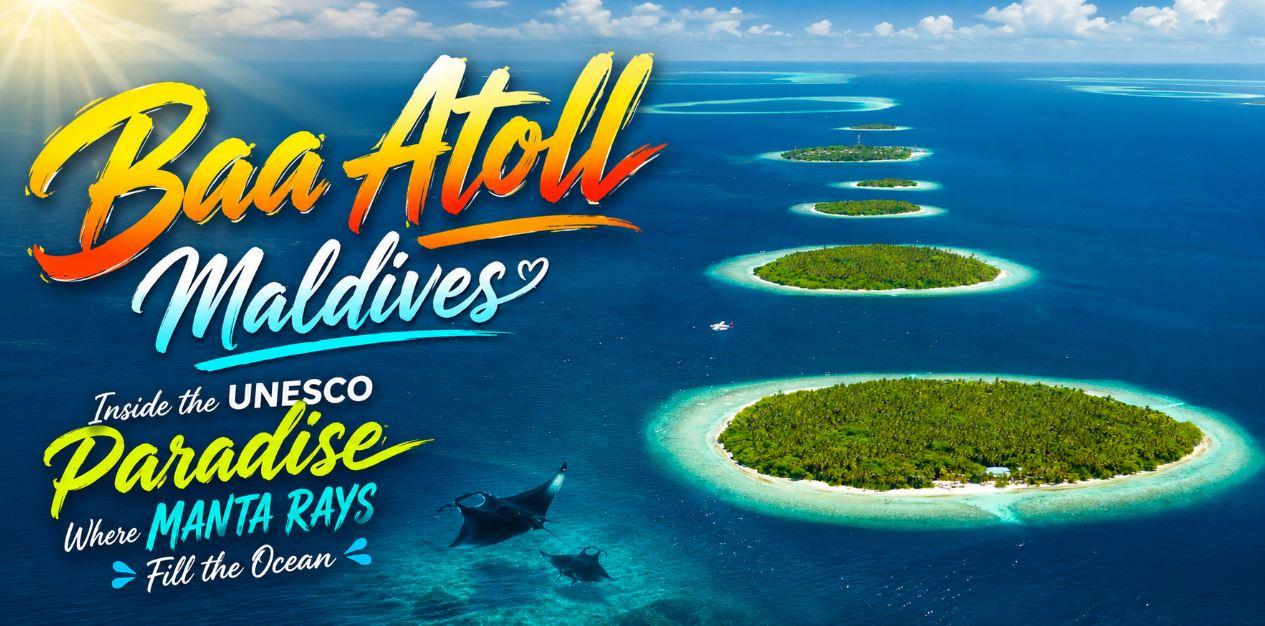
Baa Atoll is where the Maldives becomes truly wild.
Beyond its white beaches and turquoise lagoons lies an extraordinary marine ecosystem filled with coral reefs, turtles, reef fish and magnificent manta rays. Add beautiful local islands, remote sandbanks and some of the Maldives' most luxurious resorts, and Baa Atoll becomes one of the country's most rewarding destinations.
For travelers dreaming of combining Maldives luxury with unforgettable marine encounters, Baa Atoll deserves a place near the top of the list.
Why Is Baa Atoll So Special?
Baa Atoll sits in the central-western Maldives and forms part of one of the country's most biologically important marine environments.
In 2011, Baa Atoll was designated a UNESCO Biosphere Reserve, recognizing both its remarkable biodiversity and the importance of balancing environmental conservation with sustainable human activity.
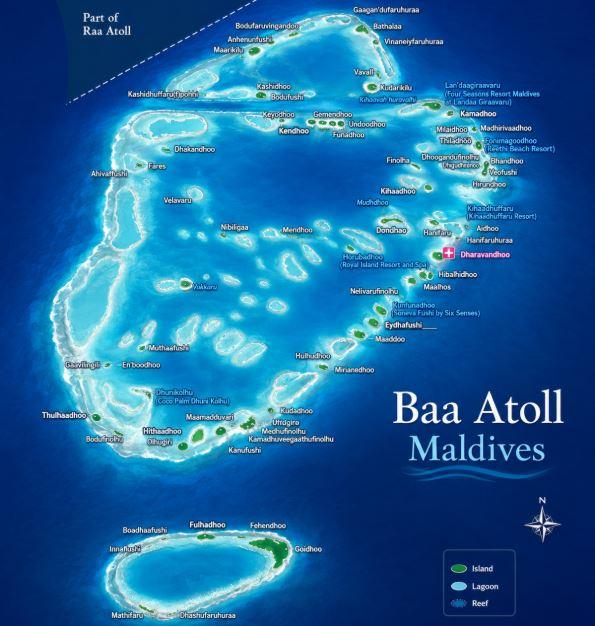
The biosphere reserve covers approximately 144,024 hectares, the overwhelming majority of which is marine environment.
Its habitats include coral reefs, lagoons, islands, seagrass beds and mangroves. Together, these ecosystems support an impressive range of marine species.
But one natural attraction has made Baa Atoll famous around the world: Hanifaru Bay.
Hanifaru Bay: The Manta Ray Highlight of Baa Atoll
Imagine entering warm tropical water and suddenly seeing enormous manta rays gliding around you.
That is the experience that has made Hanifaru Bay one of the most celebrated marine locations in the Maldives.
The bay's unusual geography and water circulation can concentrate huge quantities of plankton. During favorable conditions, this creates a natural feeding ground that attracts reef manta rays.
Rather than simply passing through, mantas can gather to feed in the plankton-rich water, creating one of the Maldives' most spectacular wildlife experiences.
Whale sharks can also occur in the region, although sightings should never be considered guaranteed.
Hanifaru is a protected area, and visitor activities are regulated. Travelers should therefore follow current rules and use authorized operators when planning a visit.
When Is the Best Time to See Manta Rays?
The southwest monsoon period is particularly important for manta activity around Baa Atoll.
Broadly, May to November is considered the key period for travelers hoping to experience manta rays around Hanifaru Bay, although wildlife encounters depend on tides, plankton, currents and other natural conditions.
This means there is never a guarantee.
That's part of what makes an encounter special.
If seeing manta rays is the main reason for your trip, consider staying several nights rather than planning around a single excursion. Having multiple opportunities can improve your chances when conditions change.
Snorkeling in Baa Atoll
You don't need to be a scuba diver to appreciate Baa Atoll.
In fact, snorkeling can be one of the easiest ways to discover its underwater beauty.
Depending on your island and reef conditions, snorkeling may reveal:
-
Reef manta rays
-
Hawksbill and green turtles
-
Butterflyfish and angelfish
-
Parrotfish
-
Surgeonfish
-
Rays
-
Reef sharks
-
Colorful coral formations
Many resorts have accessible house reefs, while local guesthouses and dive centers arrange boat trips to nearby reefs.
For beginners, a guided snorkeling excursion is worth considering. Local guides understand currents and reef conditions and can help visitors enjoy marine life responsibly.
Scuba Diving in Baa Atoll
Baa Atoll is equally exciting beneath the surface for certified divers.
The underwater landscape includes channels, coral pinnacles, reef edges and cleaning stations. Depending on the site and season, divers can encounter schools of tropical fish, turtles, sharks, rays and manta rays.
Some sites offer relatively relaxed reef diving, while channels and current-exposed locations can be better suited to experienced divers.
A major advantage of diving here is variety. One dive might focus on small reef life and coral formations, while another could produce encounters with much larger pelagic species.
Conditions vary, so choosing sites based on your certification and experience is important.
Baa Atoll Is More Than Manta Rays
It would be easy to define Baa Atoll entirely by Hanifaru Bay, but that would miss much of its appeal.
The wider atoll offers everything travelers associate with a classic Maldives holiday: powdery beaches, brilliant lagoons, palm-covered islands and clear tropical water.
Activities can include snorkeling, diving, kayaking, paddleboarding, dolphin cruises, fishing excursions and sandbank visits.
Then there are the simple pleasures.
Walking barefoot along an almost empty beach, watching the Indian Ocean change color at sunset or sitting beside a quiet lagoon can be every bit as memorable as an organized excursion.
Luxury Resorts in Baa Atoll
Baa Atoll has become one of the Maldives' major luxury resort regions.
Travelers can choose from private-island properties offering beach villas, overwater villas, private pools, spas, fine dining and extensive water-sports facilities.
The destination is particularly attractive to honeymooners and couples because it combines seclusion with exceptional marine experiences.
Families are also well catered for, with several resorts offering kids' clubs, family villas, children's activities and shallow lagoon areas.
For underwater enthusiasts, choosing a resort with a strong house reef or established marine center can make a significant difference to the holiday.
Local Islands: A Different Side of Baa Atoll
Luxury resorts aren't the only way to experience Baa Atoll.
Several inhabited islands provide travelers with an alternative style of Maldives holiday, often with guesthouses, local restaurants and excursion operators.
Popular choices include Dharavandhoo, Maalhos, Kamadhoo, Fulhadhoo, Fehendhoo and Goidhoo.
Dharavandhoo is particularly useful as a base because of its airport and proximity to some of the region's major marine attractions.
Local-island stays can also give visitors more opportunities to experience everyday Maldivian island life.
Travelers should remember that inhabited islands follow local customs. Dress respectfully away from designated tourist beaches and follow local regulations concerning alcohol and beachwear.
Dharavandhoo: Gateway to Baa Atoll
For independent travelers, Dharavandhoo is one of the most important islands in Baa Atoll.
Dharavandhoo Airport connects the region with the greater Maldives transport network, making the island a convenient gateway for guesthouse visitors as well as travelers transferring onward to resorts.
The island also has dive centers and excursion providers offering snorkeling and diving trips.
Its location makes Dharavandhoo especially appealing to travelers whose main priority is exploring Baa Atoll's underwater world without necessarily staying at a high-end private-island resort.
Fulhadhoo: For Beaches and Tranquility
Travelers searching for a quieter Maldives experience may be drawn to Fulhadhoo.
The island is known for beautiful tropical scenery and a relaxed atmosphere that feels far removed from the busier resort experience.
Long stretches of pale sand, turquoise water and lush vegetation create the kind of landscape many people imagine when they first dream about visiting the Maldives.
It can be particularly appealing to couples, independent travelers and anyone who values tranquility over nightlife.
Best Time to Visit Baa Atoll
There isn't one perfect season because the ideal time depends on what you want from the trip.
December to April
These months generally coincide with the Maldives' drier northeast monsoon period.
Travelers often choose this season for sunshine, beach holidays and generally favorable outdoor conditions.
May to November
The southwest monsoon brings a greater possibility of clouds, showers and changing sea conditions.
However, this is also the period associated with Baa Atoll's famous manta ray activity.
For marine-life enthusiasts, that trade-off can be worthwhile.
If manta rays are your priority, consider the wetter months. If blue skies and beach time matter more, the drier season may suit you better.
How to Get to Baa Atoll
Travelers generally arrive in the Maldives through Velana International Airport near Malé before continuing to Baa Atoll.
Depending on your accommodation, transfers may involve a domestic flight to Dharavandhoo followed by a speedboat, or a seaplane directly to a resort.
Transfer arrangements vary significantly between properties.
Before booking international flights, check your resort or guesthouse's transfer schedule, particularly if you arrive late in the afternoon or evening.
Who Should Visit Baa Atoll?
Baa Atoll works particularly well for travelers who want more than a beautiful beach.
Nature lovers come for manta rays, turtles, reefs and marine biodiversity.
Snorkelers and divers get access to an extensive underwater environment.
Couples and honeymooners can combine marine adventures with secluded beaches and luxury villas.
Families can find resorts offering kid-friendly facilities alongside easy ocean activities.
Independent travelers can use inhabited islands to experience Baa Atoll without relying exclusively on private-island resorts.
This versatility is one of Baa Atoll's greatest strengths.
Responsible Travel in a UNESCO Biosphere Reserve
Visiting an internationally recognized ecosystem also brings responsibility.
Never touch coral or chase marine animals for photographs. Keep a respectful distance from manta rays, turtles, whale sharks and other wildlife.
Avoid standing on reefs while snorkeling and follow instructions from local guides and rangers.
Reducing single-use plastics and choosing responsible excursion providers can also help minimize your environmental impact.
The goal should be simple: leave the reef exactly as you found it.
Is Baa Atoll Worth Visiting?
Absolutely — particularly if marine life is one of the reasons you're traveling to the Maldives.
There are atolls with spectacular beaches. There are islands with luxurious resorts. And there are destinations with excellent snorkeling and diving.
Baa Atoll brings all three together.
Its UNESCO Biosphere Reserve status highlights the ecological importance of the region, while Hanifaru Bay provides the possibility of one of the most memorable manta ray experiences anywhere in the Indian Ocean.
Whether you're snorkeling above a coral reef, searching for mantas, staying in an overwater villa or spending a quiet afternoon on a local island, Baa Atoll reveals a side of the Maldives where luxury and wilderness exist remarkably close together.
Frequently Asked Questions About Baa Atoll
Where is Baa Atoll?
Baa Atoll is located in the central-western part of the Maldives, north of the Malé region.
Is Baa Atoll a UNESCO World Heritage Site?
Baa Atoll is a UNESCO Biosphere Reserve, designated in 2011 under UNESCO's Man and the Biosphere Programme. A biosphere reserve is different from a UNESCO World Heritage Site.
Why is Baa Atoll famous?
Baa Atoll is best known for its rich marine biodiversity, coral reefs, luxury resorts and Hanifaru Bay, where large numbers of manta rays can gather under favorable conditions.
What is Hanifaru Bay?
Hanifaru Bay is a protected marine area in Baa Atoll famous for plankton-rich waters that can attract feeding manta rays.
When can you see manta rays in Baa Atoll?
The main manta season is generally associated with the southwest monsoon, broadly from May through November. Sightings depend on natural conditions and cannot be guaranteed.
Can you see whale sharks in Baa Atoll?
Whale sharks can occur around Baa Atoll and Hanifaru, but encounters are less predictable than manta ray sightings.
Can beginners snorkel in Baa Atoll?
Yes. Baa Atoll offers many snorkeling opportunities suitable for different experience levels. Beginners should choose calm locations and preferably snorkel with a guide.
Is Baa Atoll good for scuba diving?
Yes. Baa Atoll offers coral reefs, channels, pinnacles and diverse marine life, making it an excellent Maldives diving destination for both recreational and experienced divers.
Are there affordable places to stay in Baa Atoll?
Yes. In addition to luxury resorts, inhabited islands such as Dharavandhoo, Maalhos, Kamadhoo, Fulhadhoo, Fehendhoo and Goidhoo offer guesthouse-style accommodation.
How do you reach Baa Atoll from Malé?
Common options include a domestic flight to Dharavandhoo followed by a boat transfer or a seaplane transfer to selected resorts. The exact route depends on your accommodation.
How many days should you spend in Baa Atoll?
Around five to seven nights gives most visitors enough time for snorkeling, diving or manta excursions while still leaving plenty of time to relax. Travelers visiting primarily for wildlife may benefit from staying longer because sightings and weather are unpredictable.
Is Baa Atoll good for a honeymoon?
Yes. Its secluded islands, overwater villas, beaches, spas and extraordinary marine environment make Baa Atoll one of the Maldives' strongest choices for honeymooners.

 Dhivehi
 Arabic
 French
 Spanish
 Portuguese
 Deutsch
 Turkish
 Dutch
Dutch
 Italiano
 Russian
 Romaian
 Portuguese (Brazil)
 Greek
Greek