

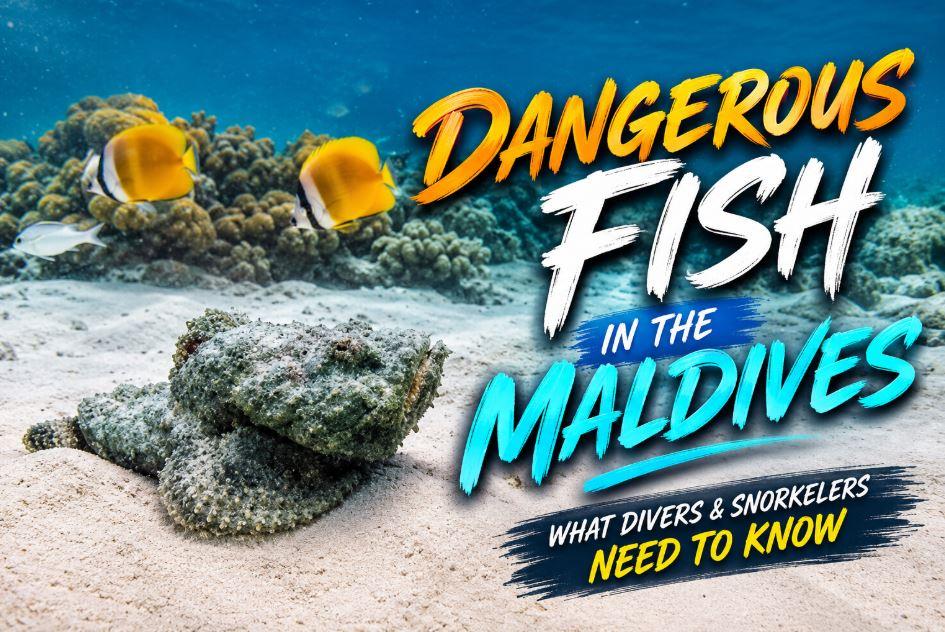
The Maldives is famous for crystal-clear lagoons, spectacular coral reefs and extraordinary marine life. But among the colorful reef fish, manta rays and turtles are a handful of creatures that deserve extra space and respect.
The good news? The Maldives is generally a safe destination for swimming, snorkeling and scuba diving. Most potentially dangerous marine animals do not actively hunt or attack people. Problems usually happen when an animal is touched, stepped on, cornered, fed or approached too closely.
Here are the dangerous fish and marine creatures in the Maldives you should recognize before entering the water, plus simple tips for enjoying the reef safely.
Are There Dangerous Fish in the Maldives?
Yes. Maldives reefs are home to several venomous, territorial or potentially defensive marine species.
However, describing them simply as "dangerous" can be misleading. Most encounters are peaceful. Divers regularly swim near sharks, moray eels, rays, lionfish and other large marine animals without incident.
The golden rule is simple:
Look, photograph and enjoy — but don't touch, chase or feed marine life.
1. Stonefish – The Hidden Danger on the Reef
The stonefish deserves particular caution because it combines powerful venom with exceptional camouflage.
Stonefish often remain motionless against rocks, rubble or coral, where their textured skin makes them extremely difficult to see. A diver or swimmer may therefore get dangerously close without realizing a fish is present.
Their dorsal spines can inject venom when pressure is applied, such as when someone accidentally steps on or touches the fish.
Why stonefish can be dangerous
A stonefish sting can cause:
-
Severe and immediate pain
-
Swelling
-
Tissue damage
-
Nausea or weakness
-
Potentially serious systemic symptoms
How to stay safe
Never put your hands or feet onto coral, rocks or reef structures without knowing exactly what is there.
Divers should maintain good buoyancy rather than kneeling or standing on the reef, while snorkelers should avoid walking across coral areas.
If you suspect a stonefish sting, seek professional medical assistance urgently.
2. Lionfish – Beautiful but Venomous
Few reef fish look as spectacular as the lionfish.
With dramatic striped markings, enormous fan-shaped pectoral fins and long spines, lionfish are a favorite subject for underwater photographers.
Those beautiful spines, however, are venomous.
Lionfish generally remain calm around divers and have little reason to approach humans aggressively. The danger comes from accidentally touching or handling one.
A puncture from a venomous spine can produce intense pain, swelling and other symptoms.
Lionfish safety tip
Give the fish plenty of room and never attempt to touch, catch or handle one.
For underwater photographers, this is one creature where using your camera's zoom is considerably smarter than trying to get your fingers closer to the subject.
3. Titan Triggerfish – Small Territory, Big Attitude
One of the most important fish for Maldives divers to understand isn't venomous at all.
It's the titan triggerfish.
Titan triggerfish are large, powerful reef fish equipped with strong teeth. Most of the time they are wary of divers. Their behavior can change dramatically when guarding a nest.
A nesting triggerfish may perceive a diver or snorkeler as an intruder and begin charging.
Warning behavior can include an erect dorsal spine, rapid approaches and repeatedly turning toward the diver.
What should you do if a triggerfish approaches?
Don't challenge it or try to photograph it at close range.
Move calmly horizontally away from the nesting area.
This matters because a triggerfish's defended territory can extend upward from the nest. Simply ascending directly above it may keep you inside its territory longer.
Once you're outside its territory, the fish will normally lose interest.
4. Moray Eels – Impressive Teeth, Usually Peaceful
Seeing a large moray eel staring from a coral crevice can be intimidating.
Its open mouth and sharp teeth make it look permanently angry, but the open-mouth appearance is largely part of the eel's normal respiration.
Morays typically spend much of their time inside holes and crevices.
Problems can occur when people:
-
Put their hands inside reef holes
-
Attempt to touch an eel
-
Feed morays
-
Corner or harass them
A defensive bite can cause a serious wound.
Moray eel safety
Never put your hands into holes or crevices in a coral reef.
If you see a moray, simply observe it from a respectful distance.
5. Great Barracuda – An Intimidating Reef Predator
With a long streamlined body and mouth packed with sharp teeth, the great barracuda certainly looks like something swimmers should fear.
Fortunately, barracuda attacks on humans are uncommon.
Large barracuda sometimes follow divers, which can feel unnerving, but curiosity does not necessarily indicate aggression.
Divers and snorkelers should nevertheless avoid feeding, touching or deliberately provoking them.
It's also sensible to minimize dangling or highly reflective objects underwater.
6. Stingrays and Bluespotted Rays
Rays are among the most graceful animals you can encounter around Maldives reefs and lagoons.
The bluespotted ribbontail ray, with its brilliant electric-blue spots, is particularly beautiful.
Stingrays are normally shy and prefer escaping from people rather than confronting them.
Their defensive weapon is a spine located on the tail. Injuries can occur when a ray feels trapped or is accidentally stepped on.
How to safely watch stingrays
Don't chase, grab or stand over resting rays.
If you encounter one underwater, give it an obvious escape route and enjoy the sighting from a comfortable distance.
7. Surgeonfish – The Reef Fish with a Hidden Blade
Surgeonfish are extremely common around tropical coral reefs.
They don't look particularly dangerous, but their name provides a clue.
Near the tail are sharp, scalpel-like structures used primarily for defense. These can cause deep cuts if the fish is handled or becomes trapped against a person.
Fortunately, surgeonfish generally have no interest in attacking divers.
Give schooling fish room to move and never attempt to catch them with your hands.
8. Fire Coral – Not a Fish, but Worth Knowing
One of the easiest Maldives reef hazards to overlook isn't actually a fish.
Fire coral resembles ordinary coral, but contact can produce a painful burning or stinging sensation.
This is another excellent reason for divers to perfect their buoyancy and for snorkelers to avoid touching reef structures.
Coral should never be touched anyway: contact can injure you while simultaneously damaging the fragile reef ecosystem.
What About Sharks in the Maldives?
Sharks are often the animals first-time visitors worry about most, but seeing one is usually a highlight rather than an emergency.
The Maldives offers opportunities to encounter several shark species, including reef sharks and, at certain destinations, larger species.
The safest approach is the same rule used with other wildlife:
Never chase, touch, corner or feed a shark.
Remain calm, maintain appropriate distance and follow instructions from your dive guide.
A shark peacefully swimming past you is not automatically displaying aggressive behavior.
The Biggest Risks May Not Be Fish
Visitors sometimes become so concerned about sharks and venomous fish that they overlook more ordinary ocean hazards.
Strong currents can present a serious danger in the Maldives.
Channels between reefs and islands can experience powerful water movement, and conditions can change according to tides, weather and location.
For scuba divers, current diving is one of the attractions of the Maldives — but it requires suitable experience and proper guidance.
Snorkelers should always ask their resort, guesthouse or dive center about local conditions before entering unfamiliar water.
10 Rules for Safe Snorkeling and Diving in the Maldives
Following a few simple rules dramatically reduces the likelihood of unpleasant marine encounters:
-
Never touch marine animals.
-
Never feed fish, sharks, rays or moray eels.
-
Don't stand or walk on coral reefs.
-
Keep your hands out of holes and reef crevices.
-
Maintain good buoyancy while scuba diving.
-
Give territorial triggerfish plenty of space.
-
Don't chase sharks, rays, turtles or other wildlife for photographs.
-
Listen carefully to your divemaster or snorkeling guide.
-
Check tides, currents and local conditions before entering the water.
-
Seek medical assistance after a serious bite, puncture or venomous sting.
Can Beginners Safely Dive in the Maldives?
Absolutely — provided the dive site matches the diver's certification and experience.
The Maldives has everything from calm lagoons and protected house reefs to channels with powerful currents.
Beginners can enjoy spectacular reef diving at appropriately selected sites, while more challenging channels and deep-water locations are better suited to experienced divers.
A reputable dive center will evaluate conditions and choose sites appropriate for your experience.
Should You Be Afraid of Maldives Marine Life?
No.
Respect is much more useful than fear.
Millions of extraordinary interactions happen underwater without incident because marine animals generally want the same thing divers do: enough space to go about their lives.
The Maldives gives snorkelers and divers opportunities to see sharks, rays, moray eels, lionfish, triggerfish and countless tropical reef species in their natural habitat.
Understanding which creatures require extra caution makes those encounters safer, more relaxing and ultimately more rewarding.
Frequently Asked Questions
What is the most dangerous fish in the Maldives?
Stonefish are among the marine animals requiring the greatest caution because they possess venomous spines and are extremely well camouflaged. Accidental contact or stepping on one can cause a painful and potentially serious envenomation.
Are sharks dangerous in the Maldives?
Sharks should always be treated as wild animals and given appropriate space, but routine shark encounters during professionally guided snorkeling and diving are generally peaceful. Never touch, chase or feed sharks.
Are lionfish dangerous in the Maldives?
Lionfish possess venomous spines capable of producing extremely painful puncture wounds. They generally don't attack divers, so avoiding physical contact greatly reduces the risk.
Do titan triggerfish attack divers?
Titan triggerfish can become highly territorial when guarding nests. They may charge or bite divers who enter their defended area. If one becomes aggressive, calmly move horizontally away from its territory.
Are moray eels dangerous?
Moray eels normally avoid confrontation, but they possess powerful jaws and sharp teeth. Never feed them or put your hands inside reef holes where an eel may be hiding.
Are stingrays dangerous in the Maldives?
Stingrays are generally shy. Their tail spine is primarily defensive, but injuries can happen if a ray is stepped on, trapped or handled. Observe rays without approaching too closely.
Is it safe to snorkel from Maldives beaches?
Generally yes, but conditions vary significantly between islands. Ask local staff about currents, tides, boat traffic and recommended snorkeling areas before entering unfamiliar water.
Should I wear reef shoes in the Maldives?
Protective footwear may be useful in designated wading areas, but it should never be treated as permission to walk across coral reefs. Avoid stepping on coral, rocks or marine animals.
What should I do if I'm stung by a venomous fish?
Leave the water safely and seek professional medical assistance as soon as possible. Serious pain, breathing difficulties, weakness, extensive swelling or other systemic symptoms require urgent medical evaluation.
What is the best way to avoid dangerous marine animals?
Keep your distance and don't touch anything. Most injuries involving reef animals occur because an animal is accidentally stepped on, touched, handled, cornered or otherwise disturbed.

 Dhivehi
 English
 Arabic
 French
 Spanish
 Portuguese
 Deutsch
 Turkish
 Dutch
Dutch
 Italiano
 Russian
 Romaian
 Greek
Greek