

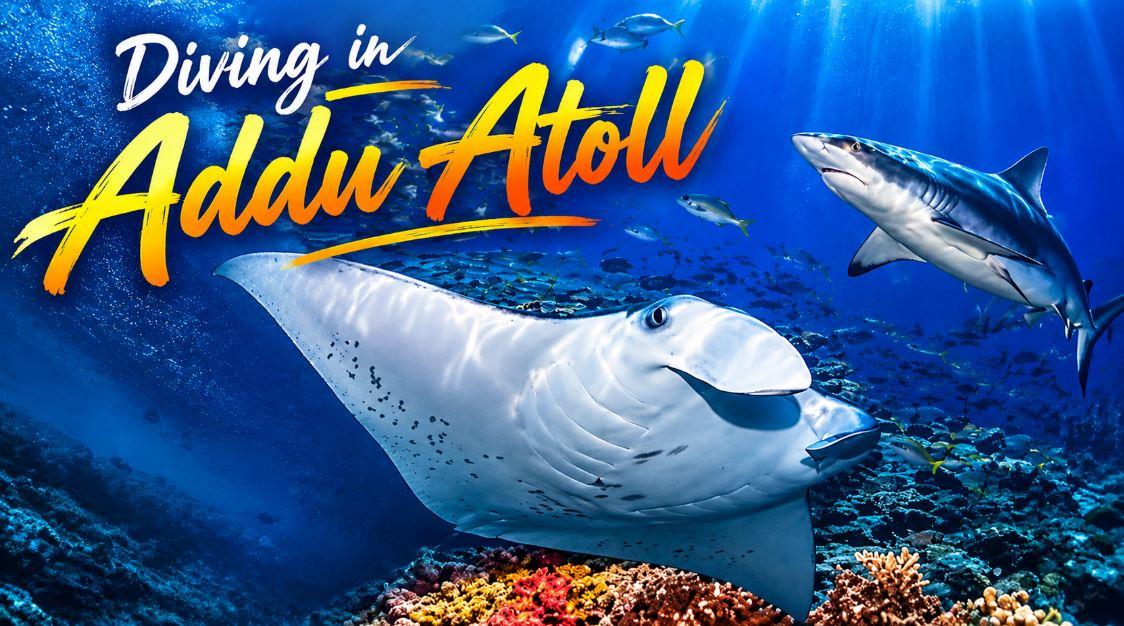
Far beyond the classic resort lagoons of the central Maldives, Addu Atoll offers one of the country’s most exciting scuba diving experiences. Located at the southern end of the archipelago, this remote diving destination combines year-round manta encounters, shark-filled channels, impressive coral reefs and the legendary British Loyalty shipwreck.
For divers looking for a different side of the Maldives — wilder, quieter and packed with underwater variety — diving in Addu Atoll deserves a place on the bucket list.
Why Dive in Addu Atoll?
Addu Atoll, historically known as Seenu Atoll, is one of the most distinctive diving regions in the Maldives.
Its underwater landscape includes outer reef walls, coral-covered slopes, channels known locally as kandus, cleaning stations, drift dives and one of the country's most important wreck dives.
What really makes Addu special is the variety. During a diving holiday here, you may encounter:
-
Manta rays
-
Grey reef sharks
-
Whitetip reef sharks
-
Eagle rays
-
Green and hawksbill turtles
-
Napoleon wrasse
-
Tuna and other large pelagic fish
-
Huge schools of tropical reef fish
-
Impressive hard and soft corals
Unlike some Maldivian destinations where manta encounters are highly seasonal, Addu is particularly famous for manta rays being present throughout the year.
British Loyalty: The Iconic Wreck Dive of Addu Atoll
No guide to scuba diving in Addu Atoll would be complete without the British Loyalty.
This enormous oil tanker was built in 1928 and became part of the Maldives' World War II history. Today, the approximately 140-metre-long wreck rests on its starboard side, with its deeper sections reaching around 33 metres.
It is widely regarded as one of the Maldives' signature wreck dives.
Decades underwater have transformed the vessel into an artificial reef. Corals grow across the structure while schools of fish, groupers and other marine species shelter around it.
The sheer scale of the wreck is part of its attraction. Rather than simply looking at a small sunken vessel, divers explore an enormous underwater structure carrying both historical and ecological significance.
Its depth means that certification, experience and local diving conditions should always be considered before attempting the dive.
Manta Point: Dive With Manta Rays in Addu
For many visitors, diving with manta rays in Addu Atoll is the highlight of the entire trip.
Addu's famous manta cleaning areas give divers opportunities to watch reef manta rays glide over the reef while smaller fish clean their bodies.
The experience can be spectacular.
Instead of swimming after the mantas, divers generally settle into an appropriate observation position and allow the animals to approach naturally.
Manta Point diving can involve current, so following the instructions of an experienced local dive guide is essential.
Because these are wild animals, sightings can never be guaranteed. Nevertheless, Addu has developed an international reputation as one of the Maldives' notable manta diving destinations.
Shark Point: Meet Addu's Reef Sharks
Divers searching for sharks should put Shark Point high on their list.
Located around the northeastern side of the atoll, the site is known for encounters with grey reef and whitetip reef sharks.
The underwater terrain drops toward a deeper sandy area where sharks can sometimes be observed cruising or resting.
Seeing several reef sharks moving naturally through clear blue Maldivian water is an unforgettable experience, particularly for underwater photographers.
Remember that these encounters are wildlife experiences rather than staged attractions. Conditions and sightings change from dive to dive.
Maa Kandu: Drift Diving and Big Fish
Addu's channels are where things can become particularly exciting.
Maa Kandu is a classic example.
When ocean water moves through the channel, nutrients attract reef fish and larger predators. Divers may encounter grey reef sharks, eagle rays, tuna, Napoleon wrasse and manta rays around the channel and outer reef.
These dives can involve stronger currents, making good buoyancy control and appropriate diving experience important.
For experienced divers who enjoy current and pelagic encounters, channel diving is one of the strongest reasons to visit Addu.
Kuda Kandu: Coral Gardens and Schooling Fish
Not every memorable Addu dive is about large animals.
Kuda Kandu showcases another side of the atoll, with impressive coral formations and abundant reef life.
Large table, brain and other hard corals create a complex underwater landscape, while schooling fish move through the channel.
Grey reef sharks can also appear around the channel mouth.
It is an excellent example of why Addu deserves recognition for more than its manta rays and wreck diving.
Turtle Point
As its name suggests, Turtle Point is one of the places to look for sea turtles while diving in Addu.
Both green and hawksbill turtles can be encountered around the atoll's reefs.
For photographers, turtles swimming above coral or resting around the reef can produce some of the most memorable images of an Addu diving holiday.
Give turtles plenty of space and never chase, touch or block them from reaching the surface.
Bushy West Channel
For divers who love colourful reefs combined with bigger marine life, Bushy West Channel is another exciting option.
The dive features coral formations, deeper drop-offs and opportunities to encounter rays, turtles, Napoleon wrasse and sharks.
Eagle-ray sightings are another attraction.
Depending on current conditions, it can become an exhilarating drift dive through one of Addu's beautiful underwater landscapes.
Gan Inside: A Gentler Introduction to Addu Diving
Addu isn't exclusively for advanced divers.
Gan Inside offers comparatively sheltered and shallower diving and can be suitable for divers developing their skills.
Despite the easier conditions, marine life can still be impressive.
Divers may see stingrays resting along sandy areas as well as turtles, reef fish and occasional reef sharks.
It makes a useful contrast to Addu's more demanding channel dives.
What Marine Life Can You See in Addu Atoll?
Addu's location and channel system create opportunities for encounters with both reef species and larger ocean-going animals.
The biggest attraction is undoubtedly the manta ray.
But look beyond the mantas and the marine-life list becomes remarkably diverse.
Depending on the site, season and conditions, divers can potentially encounter reef sharks, eagle rays, turtles, Napoleon wrasse, tuna, stingrays, barracuda, groupers and huge schools of smaller reef fish.
The coral formations themselves are equally important.
Healthy-looking hard-coral gardens, reef walls and coral-covered structures provide the backdrop that makes Addu's dives visually distinctive.
Best Time to Dive in Addu Atoll
Scuba diving is possible throughout the year in Addu Atoll.
For many travellers, January through April is particularly attractive because conditions can bring calmer seas and excellent diving weather.
Water temperatures generally remain tropical throughout the year, so diving is comfortable in every season.
The southwest monsoon brings wetter and windier periods, while increased plankton at certain times can reduce visibility but may also contribute to activity from filter-feeding marine animals.
There is therefore no single "perfect" month for every diver.
If manta rays are your priority, Addu's reputation for year-round encounters gives it an important advantage.
Is Addu Atoll Suitable for Beginner Divers?
Yes — but choose your dive sites carefully.
Addu offers everything from relatively sheltered dives to deeper wrecks and current-swept channels.
Beginners can explore easier reefs under professional supervision, while experienced divers can tackle more challenging drift, wreck and channel dives.
The key is to tell your dive centre honestly about your certification, number of logged dives and experience with currents.
Never select a dive simply because a particular animal might appear there.
Conditions should always determine whether a dive is appropriate for your experience level.
Diving Safety in Addu
The Maldives is famous for drift diving, and Addu is no exception.
Current strength can change according to tides, moon phases, weather and the individual channel.
Divers should therefore:
-
Follow the local dive guide's briefing
-
Maintain good buoyancy control
-
Stay within certification and experience limits
-
Monitor depth, gas and no-decompression limits
-
Keep appropriate distance from marine animals
-
Avoid touching or standing on coral
-
Never enter enclosed sections of a wreck without the appropriate training
Local guides understand how Addu's currents behave and can select sites according to daily conditions.
How to Get to Addu Atoll
Addu is much farther south than the main tourism regions surrounding Malé.
The gateway is Gan, making domestic air travel one of the most practical ways for visitors arriving elsewhere in the Maldives to reach the atoll.
Once in Addu, dive centres and accommodations can arrange boats to the surrounding reefs, channels, manta sites and wreck.
Because several inhabited islands in Addu are connected, the destination can also offer visitors something different from the isolated private-island resort experience found elsewhere in the country.
Why Addu Should Be on Every Diver's Maldives Bucket List
Addu doesn't rely on one famous dive site.
That's its greatest strength.
You can explore a historic shipwreck on one dive, watch manta rays at a cleaning station on another, drift through a shark-filled channel later in the day and spend the next morning photographing turtles over a coral reef.
This diversity makes Addu Atoll one of the most fascinating scuba diving destinations in the southern Maldives.
For travellers prepared to venture far beyond Malé, the reward is a quieter corner of the country where the Maldives' underwater wilderness takes centre stage.
Frequently Asked Questions About Diving in Addu Atoll
Is Addu Atoll good for scuba diving?
Yes. Addu offers wreck, reef, channel and drift diving along with opportunities to see manta rays, sharks, turtles, rays and large schools of fish. Its variety makes it attractive to both recreational and experienced divers.
Can you see manta rays in Addu Atoll?
Yes. Addu is particularly well known for manta-ray encounters, and mantas can be present throughout the year. However, they are wild animals, so sightings can never be guaranteed.
What is the most famous dive site in Addu Atoll?
The British Loyalty wreck is arguably Addu's most iconic individual dive site. The approximately 140-metre-long tanker rests at depths reaching around 33 metres and has developed into an artificial reef.
What are the best dive sites in Addu Atoll?
Popular sites include British Loyalty, Manta Point, Shark Point, Maa Kandu, Kuda Kandu, Turtle Point, Bushy West Channel and Gan Inside. The best choice on any particular day depends on currents, weather and diver experience.
Are there sharks in Addu Atoll?
Yes. Grey reef and whitetip reef sharks are among the sharks divers may encounter. Channel dives can provide particularly exciting opportunities to observe larger marine life.
Is Addu suitable for beginner divers?
Yes, selected sheltered and shallower sites can suit less-experienced divers. However, some channel, drift and deeper wreck dives require greater experience and appropriate certification.
When is the best time to dive Addu Atoll?
Diving is possible year-round. January to April is particularly popular for generally favourable conditions, while other months can still offer excellent diving and manta encounters.
How deep is the British Loyalty wreck?
The wreck reaches approximately 33 metres at its deeper sections, making experience and appropriate certification important when planning the dive.
Can you dive with turtles in Addu?
Yes. Green and hawksbill turtles occur around Addu's reefs, with Turtle Point being one of the sites associated with regular turtle encounters.
What makes Addu different from other Maldives diving destinations?
Addu combines year-round manta opportunities, historic wreck diving, shark encounters, channel dives and impressive coral formations in one destination. Its remote southern location also gives the experience a noticeably different character from the busier central atolls.

 Dhivehi
 English
 Arabic
 French
 Spanish
 Deutsch
 Turkish
 Dutch
Dutch
 Italiano
 Russian
 Romaian
 Portuguese (Brazil)
 Greek
Greek