

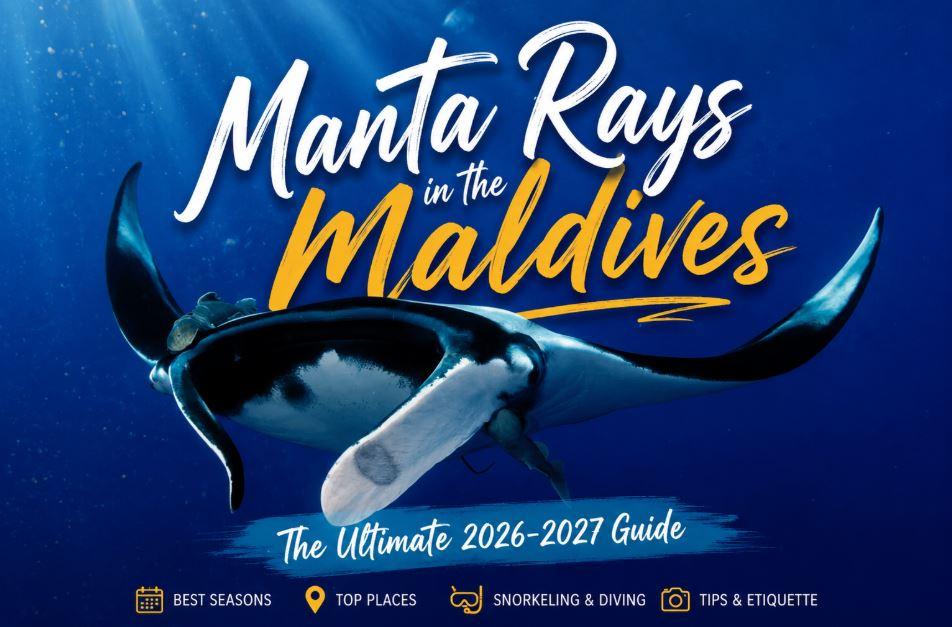
Few wildlife experiences compare with watching a giant manta ray glide through the clear blue waters of the Maldives. With manta encounters possible across several atolls and spectacular seasonal feeding gatherings at Hanifaru Bay, the Maldives remains one of the world's great destinations for seeing these graceful ocean giants.
But timing matters.
Manta rays follow plankton, currents and monsoon-driven conditions, so knowing when and where to go can dramatically improve your chances of an unforgettable encounter.
This guide covers the best time to see manta rays in the Maldives, top manta locations, Hanifaru Bay, snorkeling versus diving, responsible encounter rules and practical tips for planning a manta trip in 2026–2027.
Why the Maldives Is One of the World's Best Places to See Manta Rays
The geography of the Maldives creates ideal conditions for manta rays.
Hundreds of coral islands are grouped into atolls separated by channels connecting lagoons with the open Indian Ocean. Seasonal monsoon currents transport nutrient-rich water and concentrate plankton around reefs, channels and bays.
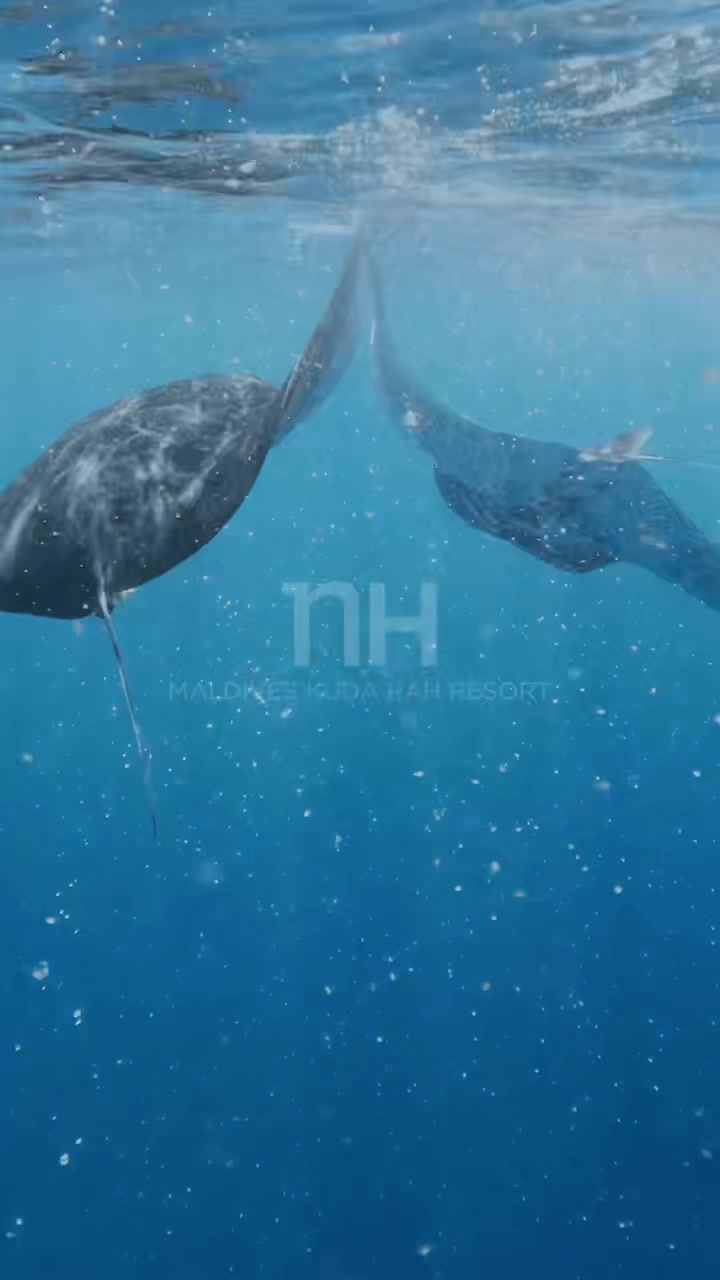
Manta rays follow this food supply.
As currents and winds change during the year, manta activity tends to shift from one side of the archipelago to another. This means travelers can encounter mantas in the Maldives throughout much of the year, although the best locations vary by season.
The Maldives is particularly famous for reef manta rays, which regularly visit feeding areas and cleaning stations.
When Is Manta Ray Season in the Maldives?
There isn't one simple manta season covering the entire country.
Instead, manta distribution is heavily influenced by the Maldives' two monsoons.
May to November: Southwest Monsoon
The southwest monsoon is particularly famous for manta encounters in Baa Atoll.
From roughly May to November, seasonal currents can concentrate huge quantities of plankton around Hanifaru Bay and surrounding waters.
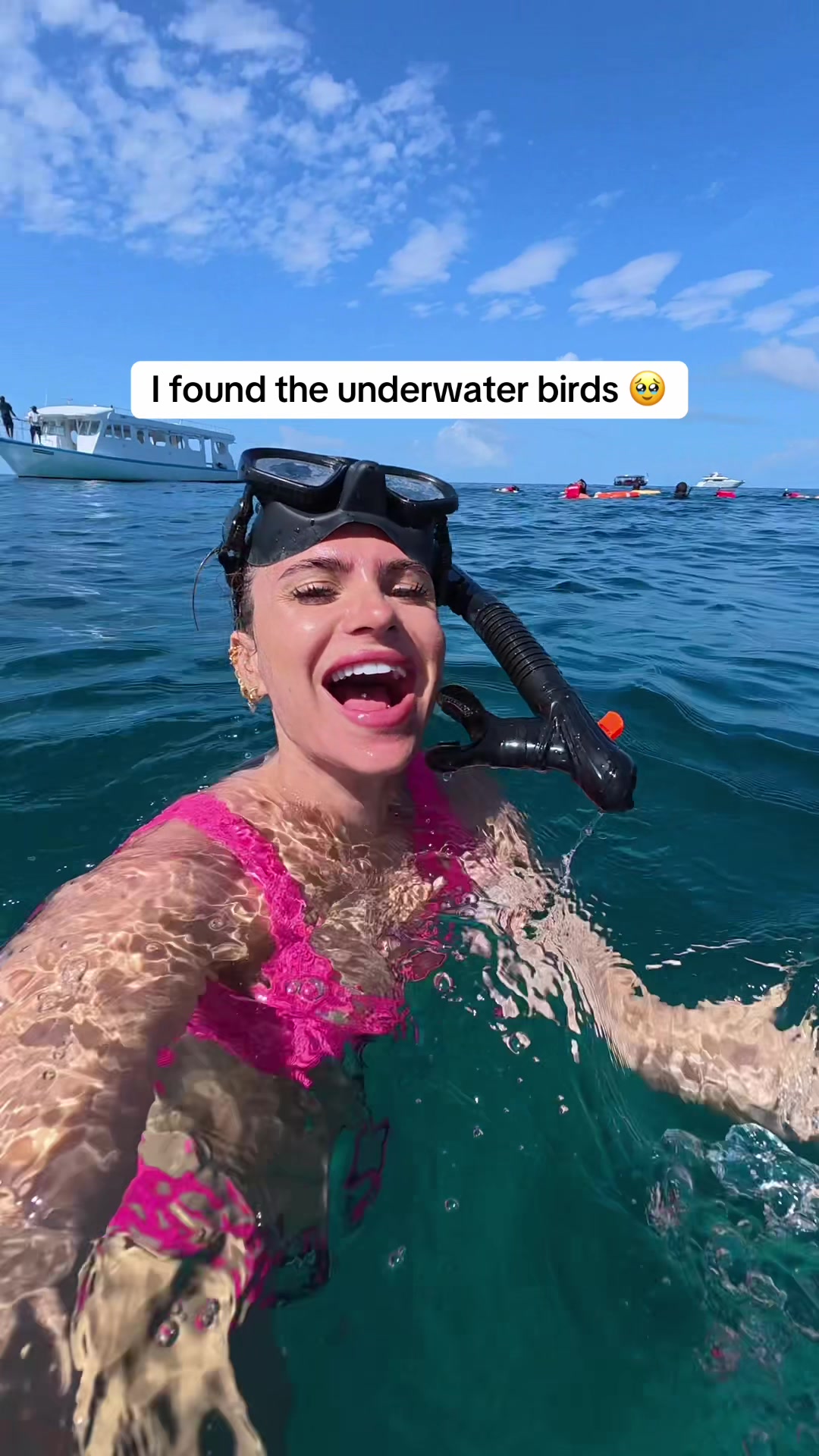
The period from approximately July through October can be especially exciting, although manta sightings are controlled by natural conditions rather than a calendar.
December to April: Northeast Monsoon
During the northeast monsoon, changes in wind and currents alter where plankton accumulates.
Mantas can still be encountered in the Maldives, but travelers may need to visit different atolls and dive sites.
This seasonal movement is one reason experienced dive centers pay close attention to currents, tides and recent manta sightings rather than relying only on the month.
Hanifaru Bay: The Maldives' Most Famous Manta Destination
If there is one place synonymous with manta rays in the Maldives, it is Hanifaru Bay in Baa Atoll.
The bay lies within the Baa Atoll UNESCO Biosphere Reserve and has become internationally famous for extraordinary manta feeding aggregations.
Under the right combination of tides, currents and plankton concentrations, large numbers of reef manta rays can gather inside the relatively small bay.
Instead of simply swimming through the area, the mantas may repeatedly loop through plankton-rich water while feeding.
When many rays coordinate their movements, visitors can witness spectacular feeding behavior sometimes described as chain feeding or cyclone feeding.
It is one of the Maldives' most remarkable natural spectacles.
Can You Scuba Dive at Hanifaru Bay?
No.
This is an important distinction for travelers searching for "manta diving at Hanifaru Bay."
Scuba diving inside Hanifaru Bay is prohibited.
Visitors experience the manta aggregation by snorkeling under controlled conditions designed to reduce disturbance to the animals and their feeding habitat.
For divers, this isn't necessarily a disadvantage.
Floating quietly at the surface can provide extraordinary views as mantas swim beneath and occasionally approach surprisingly close.
There are also other manta sites around Baa Atoll where scuba diving is possible.
Best Time to Visit Hanifaru Bay for Manta Rays
The main Hanifaru manta season generally falls between May and November, corresponding with the southwest monsoon.
However, travelers should understand that arriving during manta season does not guarantee a large aggregation.
Conditions depend on several factors, including:
-
plankton concentration
-
tides
-
currents
-
wind direction
-
lunar cycles
-
recent weather conditions
One day may produce relatively little activity, while changing conditions can suddenly attract dozens of feeding mantas.
For this reason, spending several days in Baa Atoll is generally better than planning a single short excursion.
Baa Atoll: More Than Hanifaru Bay
Hanifaru Bay receives most of the attention, but the wider Baa Atoll offers excellent marine experiences.
Mantas also visit cleaning stations where small reef fish remove parasites from their bodies.
At these sites, divers may be able to remain underwater while mantas circle above cleaning areas.
The experience is very different from a feeding aggregation.
Hanifaru can be energetic and chaotic when plankton concentrations are high, while a cleaning-station encounter can involve patiently watching one or several mantas repeatedly circle a reef.
Both experiences can be exceptional.
Ari Atoll
Ari Atoll is another excellent region for travelers interested in large marine animals.
Its channels, reefs and plankton-rich waters can produce manta encounters at different times of the year.
The region is also internationally known for whale shark encounters, making it attractive to divers hoping to see several of the Maldives' most iconic marine species during one trip.
Manta sightings remain dependent on conditions, so choosing an experienced local dive operator is important.
Addu Atoll
Far to the south, Addu Atoll offers a completely different Maldives diving experience.
Its deep channels, reefs and southern location support diverse marine life, including manta rays.
Addu can be particularly appealing to experienced divers who want manta encounters as part of a broader diving itinerary rather than focusing exclusively on Hanifaru Bay.
The atoll also provides exciting channel diving and encounters with sharks, turtles and schooling fish.
Fuvahmulah
Fuvahmulah has become internationally famous for encounters with large pelagic species.
Tiger sharks are its best-known attraction, but divers may also encounter manta rays and other rays in the surrounding open-ocean environment.
Unlike Hanifaru Bay, where manta feeding aggregations are the primary attraction, Fuvahmulah is better considered a destination for divers seeking big-animal encounters in general.
Snorkeling or Diving With Manta Rays?
Both can be spectacular, but they provide very different experiences.
Snorkeling
Snorkeling is ideal when mantas are feeding close to the surface.
You don't need advanced diving skills, and surface encounters can put you remarkably close to feeding animals.
Hanifaru Bay is the most famous example.
Scuba Diving
Diving is particularly rewarding around manta cleaning stations.
Instead of swimming after the animals, divers generally settle into an appropriate viewing position and wait.
A manta may then circle the cleaning station repeatedly, sometimes passing directly overhead.
The key to both experiences is patience.
How Big Are Manta Rays?
Manta rays are among the largest rays in the ocean.
Their broad triangular fins create the appearance of underwater wings, allowing them to move through the water with remarkably little visible effort.
Despite their impressive size, mantas are filter feeders.
They feed primarily on zooplankton and other tiny organisms suspended in the water.
They do not have the venomous tail stinger associated with stingrays.
Why Do Mantas Gather at Cleaning Stations?
Cleaning stations are special reef locations where manta rays visit small cleaner fish.
These fish remove parasites and dead tissue from the mantas' skin and around areas such as the mouth and gills.
A manta may circle a cleaning station repeatedly while receiving this natural service.
Because mantas can return to established cleaning stations, these locations provide divers with opportunities for longer, calmer observations.
How to Behave Around Manta Rays
Responsible behavior is essential.
Mantas may appear relaxed around swimmers and divers, but they are still wild animals.
Avoid chasing them.
If a manta changes direction because you are swimming directly toward it, you are probably too close.
Never touch a manta ray.
Instead, maintain a respectful distance and allow the animal to decide whether it wants to approach.
A curious manta may pass extremely close when swimmers remain calm.
Good manta etiquette includes:
-
Never touching or attempting to ride a manta.
-
Avoiding sudden movements.
-
Never blocking its swimming direction.
-
Staying out of established cleaning stations.
-
Following instructions from guides and rangers.
-
Avoiding flash photography where prohibited.
-
Allowing mantas to approach naturally.
The best manta encounter often happens when you stop trying to get closer.
Photography Tips for Manta Encounters
Manta rays are extraordinary underwater photography subjects, but their size creates challenges.
A wide-angle camera or action camera is generally more useful than a narrow field of view.
Try to anticipate the manta's path rather than swimming after it.
For snorkeling encounters, keeping the sun behind you can help illuminate the animal.
At cleaning stations, photographers should remain in the designated observation area instead of moving closer for a photograph.
Respecting the manta always comes before getting the shot.
Can You See Whale Sharks With Manta Rays?
Sometimes.
Hanifaru Bay is primarily famous for manta rays, but whale sharks may occasionally appear when feeding conditions are favorable.
Travelers specifically hoping to see whale sharks often combine manta-focused destinations with South Ari Atoll, which is one of the Maldives' best-known regions for whale shark encounters.
However, both species are wild animals.
No responsible operator can guarantee a sighting.
Should You Stay at a Resort or Local Island?
Both options work.
Luxury resorts in manta regions often provide dedicated marine biology programs, dive centers and organized excursions.
Local islands can provide a more affordable alternative.
In Baa Atoll, islands such as Dharavandhoo are popular bases for travelers interested in Hanifaru Bay because of their proximity to the protected area and availability of guesthouses and excursion operators.
Staying several nights also gives operators more opportunities to choose favorable conditions.
How Many Days Should You Plan?
If seeing manta rays is one of the main reasons for your Maldives trip, don't rely on a single day.
Consider staying at least three to five nights in your chosen manta region.
Weather and plankton conditions can change quickly.
A longer stay provides flexibility if the first excursion doesn't produce the encounter you hoped for.
Travelers whose entire trip revolves around Hanifaru Bay may prefer an even longer stay during the main season.
What to Bring for a Manta Trip
You don't need much equipment, but a few items can make the experience more comfortable.
Bring a comfortable mask and snorkel, rash guard or sun-protective swimwear, reef-conscious sun protection, underwater camera if desired and reusable water bottle.
For diving, equipment can usually be rented from local dive centers.
If you're serious about underwater photography, ask the operator about photography rules before entering protected areas.
Are Manta Ray Sightings Guaranteed?
No — and travelers should be cautious of anyone promising otherwise.
Manta rays are wild animals.
Even during the best season, changes in tides, plankton, currents and weather can affect where they appear.
Think in terms of increasing your chances, not guaranteeing an encounter.
Choose the right region for the season, stay several days and use an experienced operator familiar with recent manta activity.
Why Responsible Manta Tourism Matters
The extraordinary popularity of manta encounters creates both opportunities and responsibilities.
Well-managed tourism gives manta rays enormous value as living wildlife while supporting conservation, research and local tourism businesses.
Poorly managed encounters can have the opposite effect.
Crowding, touching, chasing and blocking mantas can interrupt natural feeding and cleaning behavior.
Protected areas such as Hanifaru Bay demonstrate why tourism and conservation need to work together.
Visitors aren't simply entering an attraction.
They are entering a feeding habitat used by wild animals.
Planning a Maldives Manta Ray Trip in 2026–2027
For travelers primarily dreaming of huge feeding aggregations, Baa Atoll during the southwest monsoon should be high on the list.
Those wanting traditional scuba encounters can combine snorkeling at Hanifaru with dives at manta cleaning stations around the atoll.
Travelers visiting during other seasons still have options elsewhere in the Maldives.
The most important strategy is to match your destination with seasonal conditions rather than assuming mantas will be equally common everywhere.
Final Thoughts
Swimming beside a manta ray is unforgettable.
Seeing dozens feeding together can redefine what you imagined a wildlife encounter could be.
The Maldives offers both experiences.
Come during the right season, give yourself several days, choose responsible guides and remember one simple rule:
Let the mantas come to you.
Do that, and your best Maldives memory might happen beneath the surface.
FAQ: Manta Rays in the Maldives
What is the best month to see manta rays in the Maldives?
There is no single best month for the entire country because manta movements change with the monsoons. For Hanifaru Bay and Baa Atoll, May to November is the main season, with particularly favorable opportunities often occurring from around July to October.
Where is the best place to see manta rays in the Maldives?
Hanifaru Bay in Baa Atoll is the country's most famous manta destination because seasonal plankton concentrations can attract large feeding aggregations.
Can you dive with manta rays at Hanifaru Bay?
No. Scuba diving inside Hanifaru Bay is prohibited. Manta encounters within the protected bay are conducted by snorkeling under regulated conditions.
Can beginners swim with manta rays?
Yes. Many manta encounters are snorkeling experiences and don't require scuba certification. Visitors should nevertheless be comfortable swimming in open water and follow their guide's instructions.
Are manta rays dangerous?
Manta rays are generally considered gentle animals and are filter feeders. Unlike stingrays, manta rays do not possess a venomous tail stinger.
Can you touch manta rays in the Maldives?
No. Visitors should never touch, chase or attempt to ride manta rays. Maintain a respectful distance and allow the animal to approach naturally.
Are manta rays in the Maldives all year?
Mantas can be encountered in Maldivian waters throughout the year, but their concentrations and the best locations change according to monsoon-driven currents and food availability.
How long should I stay in Baa Atoll to see mantas?
A stay of around three to five nights or longer gives you more opportunities than relying on a single excursion because sightings depend on natural conditions.
Can I see whale sharks and manta rays on the same Maldives trip?
Yes. Travelers can build itineraries combining manta destinations with whale shark areas such as South Ari Atoll. Occasionally both species may appear in the same general feeding areas, but sightings cannot be guaranteed.
Is Hanifaru Bay worth visiting?
For wildlife enthusiasts, absolutely. During favorable conditions, Hanifaru Bay can host extraordinary gatherings of feeding manta rays, making it one of the Maldives' most distinctive marine experiences.

 Dhivehi
 English
 Arabic
 French
 Spanish
 Portuguese
 Deutsch
 Dutch
Dutch
 Italiano
 Russian
 Romaian
 Portuguese (Brazil)
 Greek
Greek