

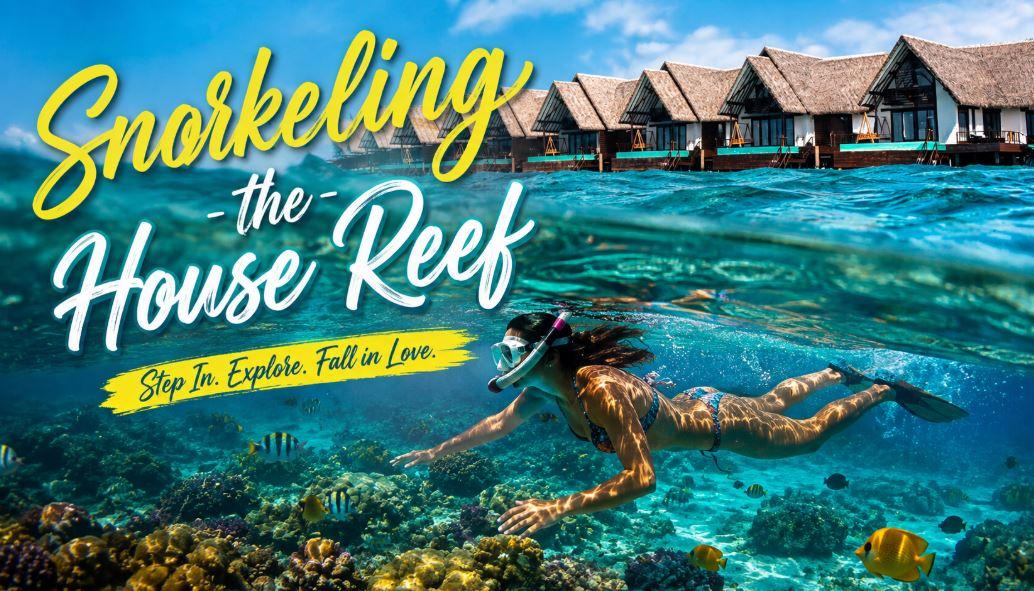
One of the greatest pleasures of a Maldives holiday is discovering that you don't always need a boat trip or scuba diving equipment to experience spectacular marine life. At many Maldivian resorts and local islands, an incredible underwater world begins only a few steps from the beach.
Snorkeling the house reef in the Maldives gives you the freedom to slip on a mask, snorkel, and fins and explore whenever conditions are suitable. Beneath the turquoise surface, you may encounter colorful tropical fish, parrotfish, butterflyfish, surgeonfish, rays, sea turtles, and occasionally small reef sharks cruising along the reef.
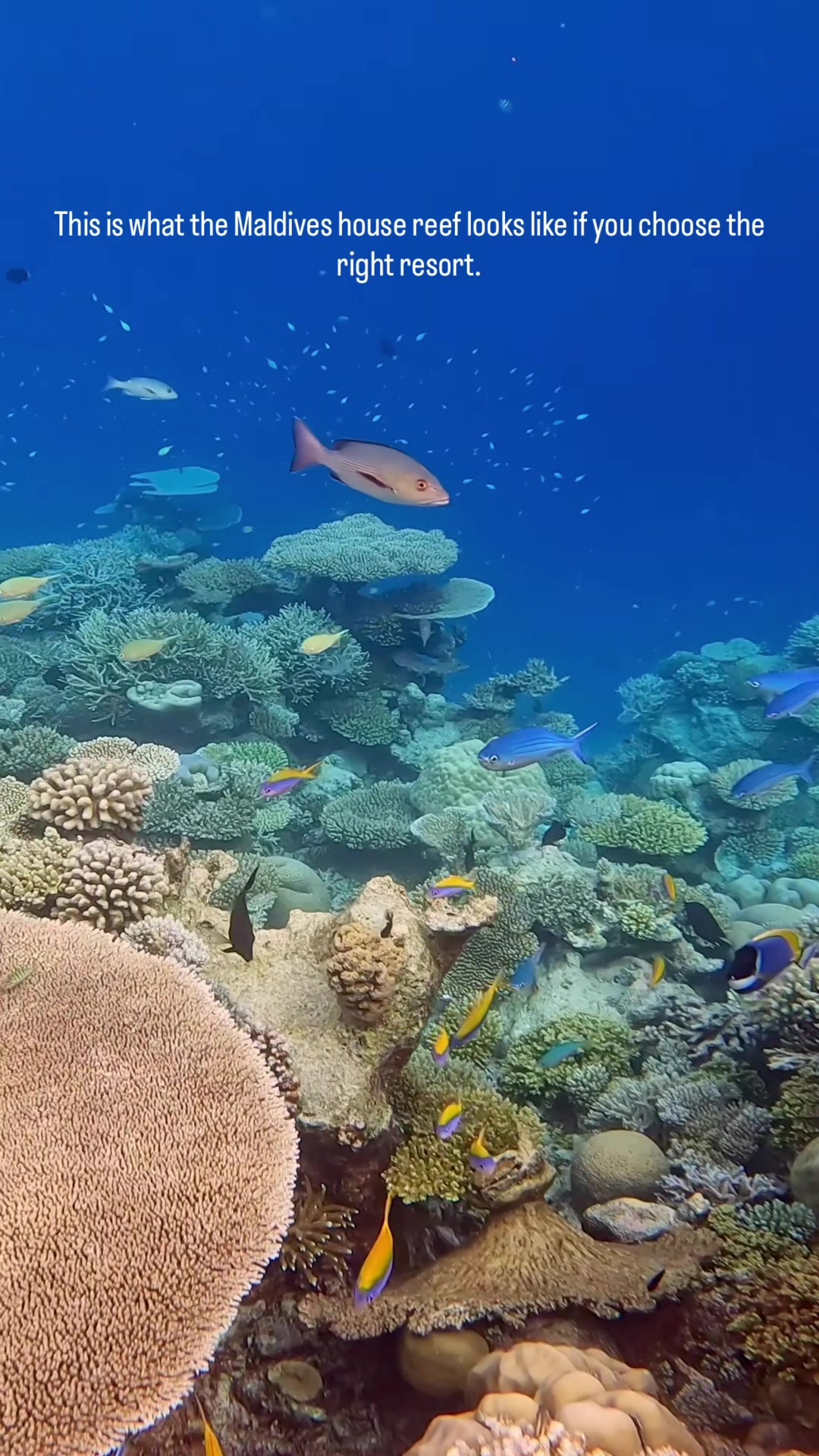
For beginners, families, and experienced snorkelers alike, exploring a Maldives house reef can be one of the easiest and most rewarding activities of an island holiday.
What Is a House Reef?
A house reef is the coral reef surrounding or located close to an island, resort, or inhabited island. Unlike offshore snorkeling sites that require a speedboat or traditional dhoni to reach, a good house reef can often be accessed directly from the beach or through designated reef-entry points.
Maldivian islands are generally surrounded by shallow lagoons. Beyond the lagoon, the seabed may descend along a reef edge into deeper water. These edges can be particularly exciting for snorkeling because they create habitats for a wide variety of marine species.
Some resorts have exceptionally accessible reefs, allowing guests to walk from their villas or the beach, enter the lagoon, and begin snorkeling within minutes.
Why House Reef Snorkeling Is Special
The biggest advantage of house reef snorkeling in the Maldives is freedom.
Instead of arranging an excursion at a specific time, you may be able to snorkel directly from the island whenever weather, currents, visibility, and resort rules permit. This makes it possible to explore the same reef several times during your stay.
And the reef rarely feels exactly the same twice.
One morning you might find schools of tiny fish gathering around coral formations. Later, a parrotfish could be grazing noisily across the reef while a turtle passes through the deeper blue.
The experience can be surprisingly peaceful. Once you put your face beneath the surface, much of the activity of the resort disappears and is replaced by the sounds and movement of the reef.
Marine Life You Can See
The Maldives sits within a remarkably rich tropical marine environment, so even relatively shallow reefs can support an impressive variety of life.
Depending on the island, season, reef condition, and a little luck, you could encounter:
-
Parrotfish
-
Butterflyfish
-
Angelfish
-
Surgeonfish
-
Triggerfish
-
Moorish idols
-
Damselfish
-
Wrasses
-
Groupers
-
Moray eels
-
Stingrays
-
Eagle rays
-
Sea turtles
-
Reef sharks
Juvenile blacktip reef sharks are sometimes seen patrolling shallow lagoons. Despite their dramatic appearance, these small sharks generally avoid people. Give all sharks plenty of space and enjoy observing them without attempting to approach, chase, or touch them.
Sea turtles are another unforgettable sight. Seeing one glide effortlessly along a reef can easily become a highlight of your Maldives holiday.
Snorkeling at Kurumba Maldives
Kurumba Maldives is a well-known resort close to Malé and Velana International Airport. Its tropical island setting offers opportunities to discover marine life without traveling far from the resort.
House reefs such as those around established Maldives resorts demonstrate why choosing accommodation based on reef accessibility can make such a difference for snorkeling enthusiasts.
If snorkeling is one of your main reasons for visiting the Maldives, don't choose a resort based only on the beauty of its beach or villas. Check how easily the house reef can be reached, whether there are designated snorkeling channels, and what marine conditions are typically like around the island.
House Reef vs. Lagoon Snorkeling
The lagoon and house reef offer slightly different experiences.
Shallow lagoons can be excellent places for beginners to become comfortable using a mask, snorkel, and fins. Sandy areas may also attract rays, juvenile fish, and small reef sharks.
The reef edge is usually where things become more interesting for confident snorkelers. Coral formations provide food and shelter, while deeper water attracts larger fish and other marine animals.
However, deeper water can also mean stronger currents. Never assume a site is safe simply because it is close to shore.
Best Time for House Reef Snorkeling
You can snorkel in the Maldives throughout the year, although conditions vary considerably with weather, wind, currents, tides, and location.
Calm mornings often provide particularly pleasant snorkeling conditions. When the sea is relatively flat, underwater visibility can be better and swimming requires less effort.
Before entering the water, ask the resort's dive or watersports center about current conditions. Staff familiar with the island can identify safe entry and exit points and tell you whether particular areas should be avoided.
What to Bring
You don't need complicated equipment for house reef snorkeling.
A comfortable, properly fitting mask is particularly important. A leaking mask can quickly turn an otherwise beautiful snorkeling session into a frustrating experience.
You'll generally want a mask, snorkel, fins, rash guard, and reef-safe sun protection. A flotation vest can provide additional confidence for less experienced swimmers where appropriate.
Many Maldives resorts provide or rent snorkeling equipment, but travelers who plan to snorkel frequently may prefer bringing their own mask to guarantee a comfortable fit.
Safety Tips for Snorkeling the House Reef
The tropical setting can make snorkeling look effortless, but the ocean deserves respect.
Check currents and weather before entering the water, use designated snorkeling entrances where provided, and avoid snorkeling alone. Stay within your swimming ability and don't venture into deep channels simply to follow an animal.
Be especially cautious around reef passages, where water moving between the lagoon and open ocean can create stronger currents.
If you're unfamiliar with the reef, consider joining a guided snorkeling tour first. A local guide can explain the safest route while helping you identify marine species you might otherwise swim straight past.
Protect the Coral Reef
A coral reef is a living ecosystem, not an underwater playground.
Never stand on, kick, collect, or deliberately touch coral. Even apparently empty sections of reef may contain delicate organisms.
Maintain enough distance that your fins don't accidentally strike the coral, particularly when swimming through shallow sections.
Marine animals should also be allowed to behave naturally. Don't chase turtles, grab rays, surround sharks, or feed fish for photographs.
The best wildlife encounter is one where the animal barely needs to react to your presence.
Is House Reef Snorkeling Suitable for Beginners?
It can be, but conditions vary dramatically between islands.
Some Maldives resorts have calm lagoons where beginners can practice before progressing toward the reef. Others have house reefs with deeper water, narrow access channels, or currents that require stronger swimming skills.
First-time snorkelers should consider taking an introductory lesson. Learning how to clear a snorkel, adjust a mask, use fins efficiently, and remain relaxed in the water can dramatically improve the experience.
Children should always be closely supervised around the ocean, regardless of how calm the lagoon appears.
Choosing a Maldives Resort for House Reef Snorkeling
If underwater exploration is a priority, look beyond luxury villas and infinity pools when comparing resorts.
Research the quality and accessibility of the house reef before booking. An island with a beautiful wide lagoon might require a longer swim or boat trip to reach substantial coral, while another island may have a reef edge relatively close to the beach.
Consider:
Reef accessibility: Can you snorkel directly from shore?
Distance: How far is the reef edge from the beach?
Entry points: Does the resort maintain designated reef channels?
Guided snorkeling: Are marine biologists or snorkeling guides available?
Equipment: Is snorkeling gear complimentary or rented separately?
Marine conservation: Does the resort operate coral restoration, reef monitoring, or educational programs?
For travelers who intend to snorkel every day, these details can be just as important as the room category.
A Different Adventure Every Time You Enter the Water
One of the charms of snorkeling a Maldives house reef is its unpredictability.
You might spend twenty minutes watching tiny reef fish before suddenly spotting a turtle approaching from deeper water. A seemingly empty sandy patch can reveal a stingray partially buried beneath the sand. A small blacktip reef shark might appear for several seconds and disappear almost as quickly.
You never quite know what will swim past.
That anticipation is part of what makes snorkeling addictive.
Experience the Maldives Beneath the Surface
The Maldives is famous for powder-white beaches and brilliant turquoise lagoons, but some of its greatest treasures are hidden beneath that turquoise water.
Snorkeling the house reef lets you experience them with remarkable simplicity.
No scuba tank. No complicated equipment. And, on islands with easily accessible reefs, no boat is necessary.
Put on your mask and fins, walk into the warm Indian Ocean, and suddenly your beach holiday becomes an underwater safari filled with tropical fish, coral formations, rays, turtles, and perhaps the unforgettable silhouette of a young reef shark passing through the lagoon.
For anyone planning a Maldives vacation, a good house reef isn't merely another resort amenity. It can become one of the most memorable parts of the entire trip.

 Dhivehi
 Arabic
 French
 Spanish
 Portuguese
 Deutsch
 Turkish
 Dutch
Dutch
 Italiano
 Russian
 Romaian
 Portuguese (Brazil)
 Greek
Greek