

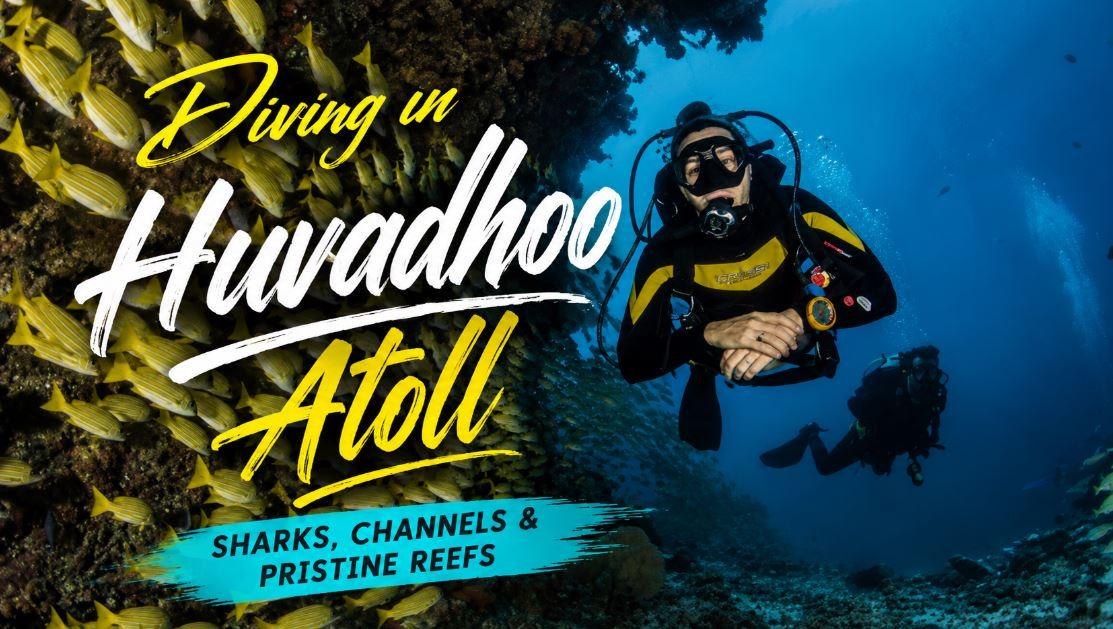
Far into the Deep South of the Maldives, Huvadhoo Atoll offers a very different kind of diving experience. Powerful channels, dramatic reef walls, clear tropical water and encounters with sharks, eagle rays, tuna and huge schools of fish make this remote atoll especially rewarding for adventurous divers.
Also associated with Gaafu Alifu and Gaafu Dhaalu Atolls, Huvadhoo is particularly famous for its channel dives, where ocean currents create some of the most action-packed underwater encounters in the Maldives.
Why Dive in Huvadhoo Atoll?
Huvadhoo Atoll is enormous, with a central lagoon measuring roughly 65 km (40 miles) across at its widest point. Its outer reef separates the lagoon from the open Indian Ocean and creates a spectacular underwater environment of channels, steep drop-offs, caves, reef edges and coral formations.
Because Huvadhoo is far from the busier central Maldives, divers can experience a more remote side of the country, with numerous dive sites spread across its inner and outer reefs.
For experienced divers in particular, the combination of strong currents and open-ocean exposure can produce unforgettable dives.
Huvadhoo Atoll Is Shark Country
Sharks are one of the biggest reasons divers travel to Huvadhoo.
The atoll's channels provide ideal conditions for spotting grey reef sharks, whitetip reef sharks and blacktip reef sharks. Other larger shark species may occasionally appear in the wider region, including tiger, leopard and hammerhead sharks, although sightings of these species should never be considered guaranteed.
At the right channel and with favorable currents, divers may watch numerous reef sharks holding position in the blue while schools of fish stream past.
It's one of those classic Maldives scenes that experienced divers travel thousands of kilometres hoping to see.
Spectacular Channel Diving
The kandus, or channels, are among Huvadhoo's signature underwater attractions.
These natural passages connect the open Indian Ocean with the atoll lagoon. As water moves through them, currents transport nutrients that attract enormous numbers of fish.
Divers can encounter:
-
Grey reef sharks
-
Whitetip reef sharks
-
Eagle rays
-
Barracuda
-
Dogtooth and other tuna
-
Trevallies
-
Napoleon wrasse
-
Turtles
-
Stingrays
-
Large schools of reef fish
Some dives begin along the outside reef before reaching a channel entrance where the action intensifies.
Depending on the tide, current and dive plan, divers may remain near the channel edge watching sharks and rays or drift through the channel with the current.
Villingili Kandu
Villingili Kandu is one of Huvadhoo Atoll's exciting channel dives.
The site is particularly associated with grey reef shark encounters. Whitetip reef sharks, barracuda and eagle rays can also appear.
With current running through the channel, divers can position themselves near the channel mouth and watch marine life moving through the blue before continuing the dive with the current.
The deeper sections and potentially powerful currents make this a dive best suited to appropriately experienced divers.
Nilandhoo Kandu
Another exciting site is Nilandhoo Kandu, a large channel where currents can attract an impressive collection of pelagic marine life.
Grey reef sharks are among the highlights, while divers may also encounter barracuda, tuna, eagle rays, stingrays, turtles and Napoleon wrasse.
Occasional sightings of less common visitors are possible, making every dive unpredictable.
Gemanafushi Kandu
Gemanafushi Kandu is another site that demonstrates why channel diving in Huvadhoo is so highly regarded.
During favorable incoming-current conditions, divers can encounter grey reef sharks, eagle rays and dense schools of fish around the channel.
Different sections can offer different experiences, so the precise dive plan should always be determined by the local dive team after checking current and sea conditions.
More Than Just Sharks
Although sharks may steal the headlines, Huvadhoo's underwater appeal goes much further.
Schools of trevally can form enormous swirling formations, while reef walls and drop-offs support colourful tropical fish and other marine species.
Look closely around the reef and you may find smaller creatures hiding among coral formations, while looking toward the open water can reveal passing rays, tuna, barracuda or other pelagic visitors.
This combination means divers constantly have something to watch—from tiny reef life to predators cruising through the blue.
When Is the Best Time to Dive in Huvadhoo Atoll?
Diving is possible throughout the year, with tropical water temperatures typically around 27–30°C.
For many divers, December to April is an attractive period because the northeast monsoon generally brings calmer conditions and good underwater visibility.
The original Maldives Magazine Huvadhoo guide highlights January to May as a particularly good period, with incoming currents and excellent visibility often associated with this season.
Conditions change with tides, weather and location, however, so there is no single perfect month for every dive site.
Northeast Monsoon
During roughly December/January to April/May, divers can often expect clearer ocean water and favorable conditions for shark and pelagic encounters.
Incoming currents can produce excellent visibility but may also create stronger channel dives.
Southwest Monsoon
The southwest monsoon generally brings more variable weather and plankton-rich water.
Visibility can sometimes decrease, but additional nutrients can stimulate marine activity. Conditions vary considerably around such a large atoll, so one side of Huvadhoo may experience different conditions from another.
How Good Is the Visibility?
Under favorable conditions, underwater visibility in Huvadhoo can be excellent.
The reference guide reports a broad range of approximately 15–50 metres, although actual visibility depends heavily on current direction, plankton, weather and individual dive location.
During clear-water periods, looking across a channel and seeing sharks suspended in the blue can be spectacular.
Is Huvadhoo Suitable for Beginner Divers?
Some sheltered reef dives may accommodate less-experienced divers, but many of Huvadhoo's most exciting channel dives are better suited to experienced divers.
Currents can be strong and conditions can change quickly.
Divers planning a Deep South trip will benefit from being comfortable with:
-
Drift diving
-
Negative entries when required
-
Current
-
Maintaining good buoyancy
-
Controlled descents and ascents
-
Following a dive guide closely
-
Deploying and using a surface marker buoy
Advanced certification and previous current-diving experience can be particularly useful for more demanding sites.
Always follow the requirements of your chosen dive operator and dive within your certification, experience and personal comfort level.
Liveaboard Diving in Huvadhoo Atoll
Huvadhoo is particularly attractive for Maldives liveaboard diving.
Deep South itineraries can combine several remote atolls and allow divers to reach sites that would be inconvenient to access from a single resort or local island.
Liveaboards can also adjust their daily dive plans around tides, current direction and weather.
For experienced divers interested primarily in sharks, channels and pelagic encounters rather than resort activities, a Deep South itinerary featuring Huvadhoo can be one of the Maldives' most exciting diving adventures.
What Makes Huvadhoo Different From Central Maldives?
Central Maldives destinations are famous for their own exceptional manta, whale shark, thila and channel experiences.
Huvadhoo's appeal is different.
It feels bigger, wilder and more remote.
Its extensive outer reef, deep channels and proximity to the open Indian Ocean create conditions particularly suited to encounters with sharks and other large marine animals.
There are fewer reasons to rush underwater here.
Every dive can begin with the same question:
What is going to come out of the blue today?
Tips for Diving Huvadhoo Atoll
Check your dive equipment carefully before travelling into the Deep South, as the region is more remote than the main tourism areas around Malé.
Listen closely to each dive briefing because the same site can behave very differently as the tide changes. Current direction often determines the dive plan, entry point and where sharks or schooling fish are most likely to gather.
Most importantly, don't become so focused on the reef that you forget to look into the blue. Some of Huvadhoo's best encounters can happen away from the reef.
Why Huvadhoo Belongs on a Maldives Diving Bucket List
Huvadhoo Atoll combines many of the characteristics experienced divers dream about when imagining the Maldives: clear blue water, dramatic channels, reef sharks, eagle rays, huge schools of fish, powerful currents and remote coral reefs.
It isn't simply another tropical reef destination.
For divers comfortable in current who want to experience the wilder side of the Maldives, Huvadhoo offers the possibility of dives where dozens of fish race through a channel, eagle rays glide overhead and grey reef sharks patrol effortlessly in the blue.
That unpredictability is exactly what makes diving here so addictive.
Frequently Asked Questions About Diving in Huvadhoo Atoll
Where is Huvadhoo Atoll?
Huvadhoo Atoll is located in the Deep South of the Maldives, relatively close to the equator. Administratively, the region includes Gaafu Alifu and Gaafu Dhaalu Atolls.
Is Huvadhoo Atoll good for scuba diving?
Yes. Huvadhoo is considered an excellent Maldives destination for experienced divers, particularly those interested in channel diving, sharks, rays, schooling fish, drop-offs and pelagic marine life.
What sharks can you see in Huvadhoo Atoll?
Grey reef, whitetip reef and blacktip reef sharks can be encountered. Other species, including tiger, leopard and hammerhead sharks, may occasionally be seen in the broader region, but sightings are never guaranteed.
What is the best time to dive Huvadhoo Atoll?
Diving is possible year-round. December to April generally offers an attractive combination of calmer seas, clearer water and pelagic activity, while the Maldives Magazine reference guide highlights January to May as a particularly favorable diving period.
What is the water temperature in Huvadhoo?
Water temperatures are generally warm throughout the year, commonly around 27–30°C.
How good is visibility in Huvadhoo Atoll?
Visibility varies according to season, currents and location. The reference guide reports conditions ranging roughly from 15 metres to as much as 50 metres.
Is Huvadhoo suitable for beginners?
There can be easier reef dives, but many famous Huvadhoo channel sites involve stronger currents and are more appropriate for experienced divers. Always select sites appropriate for your certification and experience.
What marine life can divers see?
Depending on the site and season, encounters can include reef sharks, eagle rays, tuna, barracuda, trevally, turtles, stingrays, Napoleon wrasse and large schools of tropical reef fish.
Is a liveaboard a good way to dive Huvadhoo?
Yes. Huvadhoo is a popular component of Deep South liveaboard itineraries because liveaboards can access multiple remote sites and plan dives around changing tides and currents.
Is Huvadhoo worth visiting for shark diving?
For divers comfortable with current and interested in reef sharks and other pelagic marine life, Huvadhoo is one of the most exciting regions of the Maldives to explore.

 Dhivehi
 English
 Arabic
 Spanish
 Portuguese
 Deutsch
 Turkish
 Dutch
Dutch
 Italiano
 Russian
 Romaian
 Portuguese (Brazil)
 Greek
Greek