

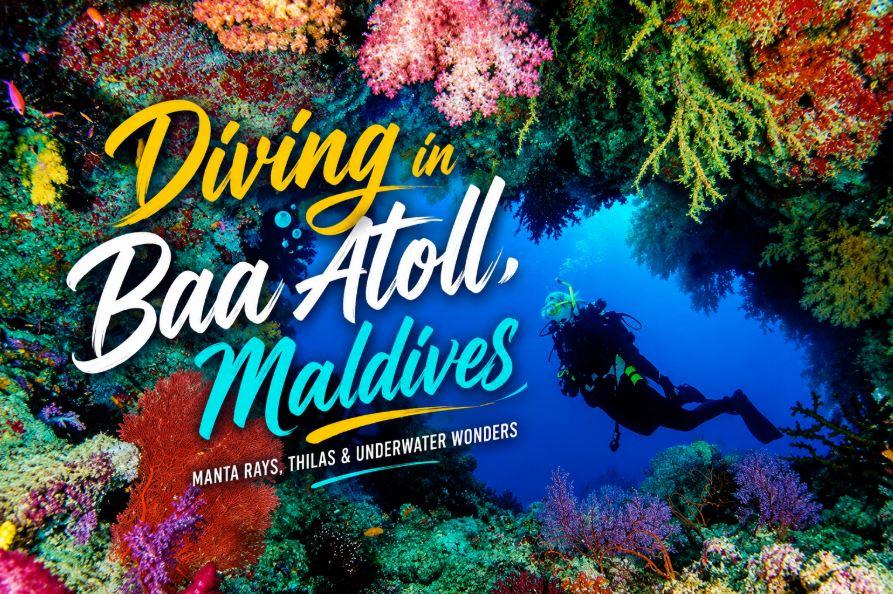
Baa Atoll is one of the Maldives’ most extraordinary underwater destinations—a UNESCO Biosphere Reserve where manta rays, reef sharks, turtles and enormous schools of tropical fish share a maze of coral-covered thilas, channels and reefs.
While legendary Hanifaru Bay puts Baa Atoll on the world map for manta encounters, divers will discover that the surrounding atoll offers an even bigger underwater adventure.
Why Baa Atoll Is One of the Best Diving Destinations in the Maldives
Located in the northern Maldives, Baa Atoll was designated a UNESCO World Biosphere Reserve in 2011, recognizing its exceptional marine biodiversity.
Its underwater landscape includes submerged pinnacles known locally as thilas, reef channels, caves, overhangs, coral gardens and cleaning stations visited by some of the Maldives’ most impressive marine animals.
Depending on the season and dive site, divers may encounter:
-
Reef manta rays
-
Grey reef sharks
-
Whitetip reef sharks
-
Eagle rays
-
Napoleon wrasse
-
Barracuda
-
Sea turtles
-
Moray eels
-
Giant trevallies
-
Fusiliers and snappers
-
Nudibranchs and other macro life
-
Occasional whale sharks
The variety makes Baa Atoll suitable for photographers, experienced drift divers and less experienced divers when conditions and dive sites are appropriate.
Manta Rays: The Stars of Baa Atoll
For many visitors, manta rays are the biggest reason to dive in Baa Atoll.
During the southwest monsoon, plankton-rich water moves through the atoll and creates excellent feeding conditions for mantas. The wider Hanifaru region becomes particularly famous during this period.
Mantas can also appear at cleaning stations around Baa Atoll, giving scuba divers opportunities to observe these graceful animals away from Hanifaru Bay itself.
Rather than chasing them, divers should remain calm, maintain appropriate distance and allow the mantas to approach naturally.
Few underwater experiences compare with watching a huge manta ray glide silently overhead.
Hanifaru Bay: The Experience You Shouldn't Miss
Hanifaru Bay is the most famous marine attraction in Baa Atoll.
Its unusual geography and water circulation can concentrate enormous amounts of plankton inside the bay. When conditions align during the southwest monsoon, reef manta rays arrive to feed, sometimes creating spectacular mass aggregations.
Whale sharks may also appear.
But there is one extremely important rule visitors need to understand:
You Cannot Scuba Dive Inside Hanifaru Bay
Scuba diving is prohibited in Hanifaru Bay.
The protected site is primarily experienced by snorkeling under regulated conditions designed to reduce disturbance to its marine life.
That doesn't make Hanifaru any less exciting.
Much of the manta feeding activity happens close to the surface, making snorkeling an exceptional way to witness the spectacle.
Divers visiting Baa Atoll can therefore combine scuba diving at nearby reefs and manta cleaning stations with a dedicated snorkeling excursion to Hanifaru Bay.
Best Dive Sites in Baa Atoll
Baa Atoll contains numerous dive sites, ranging from relatively sheltered reefs to deeper pinnacles and current-influenced dives.
Here are several highlights.
1. Dhonfanu Thila
Located close to the Hanifaru region, Dhonfanu Thila is one of Baa Atoll's exciting underwater pinnacles.
The reef begins relatively shallow and features interesting underwater topography, including a swim-through at greater depth.
During manta season, sections of the reef can function as cleaning stations.
Divers may also encounter:
-
Grey reef sharks
-
Eagle rays
-
Barracuda
-
Jacks
-
Fusiliers
-
Snappers
-
Angelfish
-
Nudibranchs
Its combination of larger marine life and colorful reef activity makes Dhonfanu Thila particularly appealing to underwater photographers.
2. Dhigali Haa
Dhigali Haa is another beautiful pinnacle and an excellent example of Baa Atoll's biodiversity.
Rather than being purely a manta destination, the site rewards divers with busy reef ecosystems and colorful underwater scenery.
Look for fusiliers streaming around the reef while predatory jacks patrol nearby.
Other possible sightings include turtles, Napoleon wrasse, barracuda, frogfish, shrimps and crabs.
Black corals, whip corals and other reef life provide plenty of subjects for macro and wide-angle photography.
3. Dharavandhoo Thila
Dharavandhoo is one of the most convenient bases for travelers exploring Baa Atoll, and its nearby underwater sites offer plenty to see.
Dharavandhoo Thila features sandy areas, overhangs and reef sections supporting remarkably different marine communities.
Garden eels can emerge from sandy patches while gobies and partner shrimps work around their burrows.
Elsewhere, divers can search for:
-
Groupers
-
Napoleon wrasse
-
Scorpionfish
-
Sweetlips
-
Blue-striped snappers
-
Moray eels
-
Lionfish
-
Anthias
Manta rays may also visit cleaning stations in the area during the wetter monsoon months.
4. Nelivaru Haa
Nelivaru Haa combines dramatic underwater structure with the possibility of excellent marine-life encounters.
Canyons, reef walls and coral-covered formations create an underwater playground where divers may encounter groupers, batfish, sweetlips and rays.
During manta season, the reef can also become an active cleaning area.
Seeing mantas slowly circle above a reef while cleaner fish work beneath them is one of the signature experiences of diving in Baa Atoll.
5. Anga Faru
Shark lovers should have Anga Faru on their Baa Atoll wish list.
The area is associated with grey reef sharks and can also produce sightings of nurse sharks, tuna, schooling snappers and eagle rays.
Nearby current-influenced sites can offer more challenging drift dives, making this part of Baa Atoll particularly interesting for experienced divers.
6. Christmas Tree
Named after its unusual shape, Christmas Tree offers a multi-level reef environment packed with marine life.
Whitetip reef sharks may patrol deeper sections while smaller reef creatures and colorful fish occupy the reef itself.
Its deeper profile can make it more suitable for experienced divers, but photographers will appreciate the combination of dramatic reef scenery and smaller marine subjects.
What Marine Life Can You See in Baa Atoll?
Baa Atoll isn't famous simply because of one species.
Its appeal comes from the sheer variety of marine ecosystems packed into a relatively compact region.
On a typical dive trip you might spend one morning watching mantas at a cleaning station and the afternoon drifting beside a coral pinnacle surrounded by fusiliers.
Another dive could bring turtles and Napoleon wrasse, while the next produces reef sharks and eagle rays.
Macro enthusiasts can search reef walls and overhangs for nudibranchs, shrimps, crabs and other tiny creatures.
This combination of megafauna and smaller reef life makes Baa Atoll particularly rewarding for underwater photographers.
Best Time to Dive in Baa Atoll
Baa Atoll can be dived throughout the year, but the experience changes considerably with the monsoons.
May to November: Best for Manta Rays
The southwest monsoon generally brings more plankton into the region.
That plankton is precisely what makes Baa Atoll so exciting.
May through November is the key period for travelers hoping to encounter manta rays, with conditions around Hanifaru becoming particularly productive when currents, tides and plankton concentrations align.
Visibility can sometimes be lower because of the increased plankton—but that's often a good sign if your priority is large filter-feeding marine life.
December to April: Clearer Conditions
The northeast monsoon often provides clearer underwater conditions and generally appealing diving.
This period can be particularly attractive for travelers prioritizing reef scenery, underwater photography and visibility rather than planning their entire trip around seasonal manta aggregations.
Water temperatures around Baa Atoll typically remain warm, making year-round diving possible.
Diving Baa Atoll for Beginners
You don't necessarily need hundreds of logged dives to enjoy Baa Atoll.
Some protected sites can offer relatively manageable conditions suitable for newer certified divers.
However, conditions vary significantly.
Thilas and channels can experience currents, and some deeper or current-exposed sites are better suited to experienced divers.
A reputable local dive center should select sites according to:
-
Certification level
-
Number of logged dives
-
Current strength
-
Weather
-
Visibility
-
Comfort level
Never choose a dive solely because a particular animal was recently spotted there.
Baa Atoll for Underwater Photography
Baa Atoll is an underwater photographer's dream.
Wide-angle photographers can concentrate on manta rays, reef sharks, turtles, coral pinnacles and huge schools of fish.
Macro photographers have plenty to search for among overhangs and reef walls, including nudibranchs, crustaceans and unusual reef inhabitants.
For manta photography, patience usually produces better results than chasing an animal.
Position yourself responsibly, control your buoyancy and allow the manta to decide how close the encounter becomes.
Staying on Dharavandhoo for Diving
Travelers don't necessarily need to book an expensive private-island resort to experience Baa Atoll.
Dharavandhoo has become a popular base for diving and Hanifaru excursions because of its location and tourism infrastructure.
Guesthouses and local dive centers make it possible to build a more affordable Baa Atoll diving holiday while remaining close to many of the region's attractions.
Nearby Maalhos is another option for travelers looking for a quieter local-island atmosphere.
Resort Diving vs Local Island Diving
Both approaches have advantages.
A luxury resort may offer an integrated dive center, comfortable dive boats and easy access to selected nearby reefs.
Local islands can provide a more affordable experience while giving travelers the opportunity to experience everyday Maldivian island life.
Your best choice depends less on luxury level and more on the sites you want to dive.
Before booking accommodation, ask the dive center which sites they regularly visit and how long the boat journeys typically take.
Liveaboard Diving in Baa Atoll
Another excellent way to explore the region is by liveaboard.
Instead of returning to the same island every afternoon, liveaboards can move between different sections of the atoll and potentially combine Baa with neighboring diving regions.
This can be particularly appealing to experienced divers who want multiple dives each day and a trip centered almost entirely around underwater exploration.
However, itineraries vary by season, weather and operator, so travelers specifically interested in Baa Atoll should confirm how much time the boat actually plans to spend there.
Responsible Diving in a UNESCO Biosphere Reserve
Baa Atoll's protected status is part of what makes it special.
Divers and snorkelers can help protect the environment by following a few basic principles:
-
Never touch or stand on coral.
-
Maintain good buoyancy.
-
Keep fins away from fragile reef structures.
-
Never chase manta rays, sharks or turtles.
-
Follow local protected-area regulations.
-
Avoid collecting shells, coral or marine animals.
-
Follow your dive guide's instructions around cleaning stations.
-
Secure cameras and gauges so they don't drag across the reef.
The objective should always be simple: leave the underwater environment exactly as you found it.
Is Diving in Baa Atoll Worth It?
Absolutely—especially if manta rays are high on your Maldives wish list.
Baa Atoll combines something relatively rare: globally significant marine conservation, spectacular megafauna encounters and genuinely varied scuba diving.
Hanifaru Bay may attract the headlines, but the surrounding thilas, reefs and cleaning stations give divers a reason to stay underwater for days.
One dive might bring sharks and eagle rays. Another could surround you with thousands of fusiliers. Then, almost without warning, the unmistakable silhouette of a manta ray can appear overhead.
That's the magic of diving in Baa Atoll.
Frequently Asked Questions About Diving in Baa Atoll
Is Baa Atoll good for scuba diving?
Yes. Baa Atoll is one of the Maldives' most celebrated diving regions, offering thilas, coral reefs, overhangs, cleaning stations and abundant marine life including manta rays, sharks, turtles and large schools of fish.
Can you scuba dive in Hanifaru Bay?
No. Scuba diving is prohibited inside Hanifaru Bay. The protected bay is experienced through regulated snorkeling excursions. Scuba divers can instead explore numerous nearby dive sites around Baa Atoll.
When is manta season in Baa Atoll?
The main manta season is generally associated with the southwest monsoon, roughly May to November. Exact encounters depend on plankton, currents, tides and other natural conditions, so manta sightings can never be guaranteed.
Can you see whale sharks in Baa Atoll?
Yes, whale sharks can visit the Baa Atoll region and occasionally appear around Hanifaru Bay when plankton conditions are favorable. However, they should be considered a special encounter rather than a guaranteed sighting.
What are the best dive sites in Baa Atoll?
Popular sites include Dhonfanu Thila, Dhigali Haa, Dharavandhoo Thila, Nelivaru Haa, Anga Faru and Christmas Tree, among many other reefs and pinnacles.
Is Baa Atoll suitable for beginner divers?
Yes, some dive sites can be suitable for newer certified divers, but other sites experience stronger currents or have deeper profiles. Dive centers normally select sites according to certification, experience and daily conditions.
Where should I stay for budget diving in Baa Atoll?
Dharavandhoo is one of the most convenient local-island bases for diving Baa Atoll and visiting the Hanifaru region. Maalhos can also appeal to travelers looking for a quieter local-island experience.
Is Baa Atoll better for diving or snorkeling?
It's excellent for both. Scuba diving reveals Baa Atoll's thilas, reefs, cleaning stations and deeper marine ecosystems, while snorkeling is essential for experiencing protected Hanifaru Bay.
How many days should I spend diving in Baa Atoll?
A stay of five to seven days gives divers more opportunities to experience different sites and changing conditions. Travelers visiting specifically for manta encounters may benefit from extra flexibility because wildlife sightings depend on natural conditions.
What makes Baa Atoll special?
The combination of UNESCO Biosphere Reserve status, seasonal manta aggregations, diverse coral reefs, underwater pinnacles and rich marine biodiversity distinguishes Baa Atoll from many other Maldives diving destinations.
Final Word
For divers dreaming of manta rays, shark encounters, coral-covered pinnacles and warm tropical water, Baa Atoll deserves a place near the top of the Maldives diving list.
Come for the legendary mantas—but don't make the mistake of thinking Hanifaru Bay is the whole story.
The real adventure begins when you descend beneath the surface and discover just how much of Baa Atoll remains hidden below the Indian Ocean.

 Dhivehi
 English
 Arabic
 French
 Spanish
 Portuguese
 Deutsch
 Turkish
 Dutch
Dutch
 Italiano
 Russian
 Romaian
 Portuguese (Brazil)