

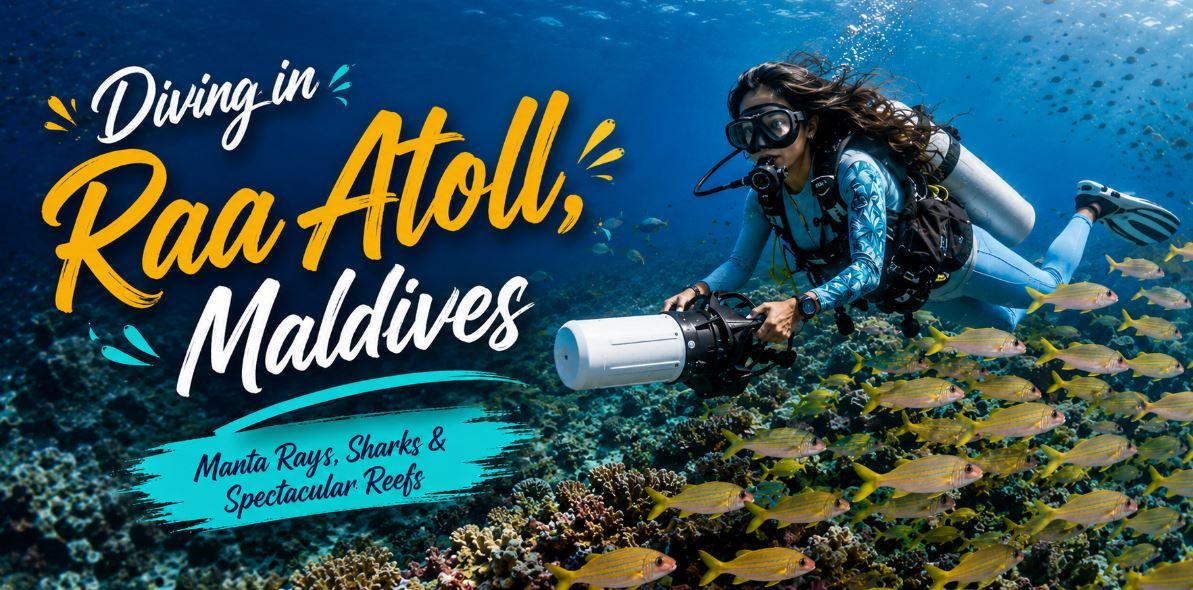
Raa Atoll is one of the Maldives' most rewarding destinations for divers looking beyond the country's busiest underwater hotspots. Located in the northern Maldives, the atoll combines submerged pinnacles, channels, reef walls and coral-covered overhangs with encounters ranging from tiny reef creatures to manta rays and sharks.
Its relatively remote location is part of the appeal. Compared with the heavily visited central atolls, Raa can offer a quieter diving experience where spectacular reefs and big marine-life encounters take center stage.
Why Go Diving in Raa Atoll?
Also known as Northern Maalhosmadulu Atoll, Raa Atoll lies immediately north of Baa Atoll on the western side of the Maldives.
The underwater landscape is wonderfully varied. Divers can explore thilas — submerged reef pinnacles — along with giris, channels, drop-offs and island reefs.
The original Maldives Magazine guide particularly highlights the high density of thilas within the atoll and the caves, overhangs and drop-offs that make these dives so interesting.
Raa Atoll is especially attractive for divers hoping to see:
-
Manta rays
-
Grey reef sharks
-
Whitetip reef sharks
-
Eagle rays
-
Stingrays
-
Napoleon wrasse
-
Sea turtles
-
Tuna and trevally
-
Fusiliers and other schooling reef fish
-
Hard and soft corals
Add good visibility and fewer divers at many sites, and Raa becomes an excellent alternative to the Maldives' better-known diving regions.
Manta Ray Diving in Raa Atoll
Manta rays are one of the biggest reasons to put Raa Atoll on your Maldives diving itinerary.
Several sites around the atoll act as manta cleaning or gathering areas. At cleaning stations, mantas may circle above the reef while small cleaner fish remove parasites from their bodies.
Watching a manta slowly glide overhead can easily become the highlight of an entire Maldives holiday.
One particularly interesting feature of Raa is that manta encounters can occur during different parts of the year depending on the dive site and prevailing conditions. For example, Kottefaru Bodu Thila is associated with manta encounters during roughly June to November, while Sola Corner can produce sightings during another part of the year.
Wildlife sightings are never guaranteed, but the possibility adds an exciting dimension to diving here.
Best Dive Sites in Raa Atoll
Labyrinth
The name gives you an idea of what to expect.
Labyrinth offers fascinating underwater topography that makes exploring the reef almost as exciting as searching for marine life. Coral formations, channels and passages create a dive where there always seems to be something new around the next corner.
It is particularly appealing to divers who enjoy underwater landscapes rather than simply dropping onto a reef and waiting for large animals.
Kottefaru Bodu Thila
For manta lovers, Kottefaru Bodu Thila deserves a place high on the list.
The site is known as a manta cleaning area during favorable seasonal conditions. When the mantas arrive, divers may have the opportunity to watch these enormous rays cruise gracefully around the pinnacle.
Even without mantas, the reef itself and surrounding marine life make the site worth exploring.
Sola Corner
Another important manta location is Sola Corner.
Seasonal changes in currents and plankton distribution can attract manta rays to different sides and areas of Maldivian atolls, making local knowledge especially important.
A good dive center will choose sites according to the day's current, visibility and recent marine-life activity rather than following a fixed itinerary.
Vaadhoo Thila
Divers hoping for sharks should keep Vaadhoo Thila on their radar.
Grey reef sharks are among its star attractions, while turtles and stingrays may also appear around the reef and overhangs.
Look closer at the shallower reef and you'll discover another side of the dive, including anemones, clownfish, fusiliers and other colorful reef inhabitants.
Beriyan Thila
Beriyan Thila combines beautiful reef scenery with excellent opportunities for marine-life encounters.
Its walls and overhangs can feature colorful soft corals, while schooling fish add movement above the reef.
It is the kind of classic Maldivian thila dive where divers should remember to look into the blue as well as inspect the reef.
Reethi Thila
Reethi Thila is another noteworthy Raa Atoll dive site.
Like many of the atoll's submerged pinnacles, it brings together coral scenery and abundant fish life, making it an attractive option for underwater photographers and recreational divers.
Fenfushi Giri
For divers who enjoy reef exploration, Fenfushi Giri provides another opportunity to experience the rich underwater environment of southern Raa Atoll.
Giris are generally shallower submerged reefs than thilas, making them particularly enjoyable when conditions are calm and sunlight illuminates the reef.
Sharks and Other Big Marine Life
Manta rays may receive much of the attention, but they're certainly not Raa Atoll's only large underwater residents.
Grey reef sharks and whitetip reef sharks can patrol the deeper reef edges and current-swept areas. Eagle rays may pass through the blue, while turtles frequently appear around coral formations.
Large schools of fish can be equally impressive.
Fusiliers sweeping across a reef while trevally hunt around them can turn an ordinary-looking dive into an extraordinary underwater spectacle.
This combination of healthy reef activity and larger pelagic visitors is one of Raa Atoll's greatest strengths.
Thilas: The Heart of Raa Atoll Diving
If there is one underwater feature that defines diving in Raa Atoll, it is the thila.
A thila is a submerged reef or pinnacle whose top remains below the surface. Currents flowing around these structures carry nutrients and plankton, supporting abundant marine life.
The edges can feature dramatic walls, caves and overhangs decorated with coral.
For divers, thilas provide the best of both worlds: you can investigate the reef for small creatures and colorful coral while occasionally turning toward the open water to search for sharks, rays and schooling fish.
Is Raa Atoll Good for Beginner Divers?
Yes, but the appropriate dive site matters.
Some sheltered reefs and easier sites can be suitable for newer divers. However, many of the Maldives' famous channel and thila dives can experience moderate or strong currents.
More experienced divers may therefore have access to a wider selection of sites.
Always discuss your certification level, number of logged dives and comfort with currents with your dive center before heading out.
Conditions can change quickly, and the same dive site may be easy one day and considerably more challenging the next.
Best Time to Dive in Raa Atoll
Diving is possible throughout much of the year, but conditions vary with the Maldives' monsoon seasons.
The northeast monsoon, broadly associated with the drier part of the year, often brings excellent visibility to many areas.
The southwest monsoon brings different currents, weather and plankton conditions. Although visibility can sometimes decrease, increased plankton can also create favorable conditions for manta ray activity.
This creates an important choice for divers.
If crystal-clear visibility is your priority, you may prefer the generally drier months. If manta encounters are high on your wish list, discuss the seasonal manta activity around your chosen resort or dive center before booking.
Resort Diving or Liveaboard?
Both are excellent ways to explore Raa Atoll.
Resort-Based Diving
Staying at a resort gives you the classic Maldives experience: beach, lagoon, restaurants and comfortable accommodation combined with daily boat dives.
Many resorts operate professional dive centers offering trips to nearby thilas, reefs and channels.
This option works especially well for couples or families where not everyone wants to spend the entire holiday diving.
Liveaboard Diving
A liveaboard is ideal for travelers whose main reason for visiting the Maldives is scuba diving.
Liveaboards can cover a larger area and move according to conditions, giving divers access to multiple sites during a single itinerary.
Some northern Maldives itineraries combine Raa Atoll with neighboring Baa Atoll and other northern atolls, creating a diverse diving journey.
Underwater Photography in Raa Atoll
Bring your camera.
Raa Atoll offers subjects for both wide-angle and macro photographers.
Wide-angle photographers can concentrate on mantas, sharks, reef scenery, coral-covered overhangs and schooling fish.
Macro photographers should slow down and examine the reef carefully for smaller creatures hidden among corals, crevices and sandy patches.
When photographing mantas, avoid chasing or blocking them. Staying calm and allowing the animal to determine the encounter often produces both a more responsible interaction and better photographs.
Responsible Diving in Raa Atoll
The beauty of Raa Atoll depends on healthy reefs and responsible tourism.
Maintain good buoyancy and never stand on or touch living coral. Keep your fins away from the reef, especially when swimming through tighter areas or photographing marine life.
Never chase manta rays, turtles or sharks for photographs.
Give wildlife space and allow animals to approach naturally.
Small choices made by individual divers can help protect these reefs for future generations.
Is Raa Atoll Worth Diving?
Absolutely.
Raa Atoll combines many of the features divers travel thousands of kilometers to experience in the Maldives: manta rays, sharks, coral-covered pinnacles, dramatic underwater landscapes and enormous schools of tropical fish.
But its biggest advantage may be the atmosphere.
Rather than feeling like you're visiting one of the Maldives' busiest underwater attractions, diving in Raa Atoll can still feel exploratory.
One dive might have you drifting beside grey reef sharks. The next could involve exploring a coral-covered thila. And another may deliver the unforgettable silhouette of a manta ray appearing from the blue.
For divers searching for a quieter corner of the Maldives without sacrificing world-class underwater encounters, Raa Atoll deserves serious consideration.
FAQ: Diving in Raa Atoll, Maldives
Is Raa Atoll good for scuba diving?
Yes. Raa Atoll offers thilas, giris, channels, reef walls and coral reefs alongside marine life including manta rays, reef sharks, eagle rays, turtles and large schools of tropical fish.
Can you see manta rays in Raa Atoll?
Yes. Raa Atoll has several locations associated with manta ray activity, including Kottefaru Bodu Thila and Sola Corner. Sightings depend on season, currents, plankton and other natural conditions.
Are there sharks in Raa Atoll?
Yes. Grey reef sharks and whitetip reef sharks are among the species divers may encounter. Vaadhoo Thila is particularly noted for grey reef shark sightings.
What are the best dive sites in Raa Atoll?
Notable sites include Labyrinth, Kottefaru Bodu Thila, Sola Corner, Vaadhoo Thila, Beriyan Thila, Reethi Thila and Fenfushi Giri.
Is Raa Atoll suitable for beginners?
Some dive sites can be appropriate for beginners, but currents around thilas and channels can make other sites better suited to experienced divers. Dive centers normally select sites according to diver experience and daily conditions.
When is the best time to dive in Raa Atoll?
Raa Atoll can be dived throughout much of the year. The drier northeast monsoon period often provides favorable visibility, while southwest monsoon conditions can increase plankton and create opportunities for manta encounters.
Is Raa Atoll better for resort diving or liveaboards?
Both work well. Resort diving is ideal for travelers combining scuba diving with a traditional Maldives holiday, while liveaboards suit dedicated divers who want to explore more sites and potentially combine Raa with neighboring northern atolls.
What marine life can I see while diving in Raa Atoll?
Depending on the site and season, divers may encounter manta rays, grey reef sharks, whitetip reef sharks, eagle rays, stingrays, turtles, Napoleon wrasse, tuna, trevally, fusiliers and many species of colorful reef fish.
Final Word
Raa Atoll is where the quieter side of Maldives diving meets big underwater adventure.
Come for the manta rays and sharks, but don't overlook the spectacular thilas, coral-covered overhangs, reef fish and dramatic underwater terrain.
For divers who want beautiful reefs, exciting marine life and fewer crowds, Raa Atoll could be one of the Maldives' most rewarding underwater discoveries.

 Dhivehi
 English
 Arabic
 French
 Spanish
 Portuguese
 Deutsch
 Dutch
Dutch
 Italiano
 Russian
 Romaian
 Portuguese (Brazil)
 Greek
Greek