

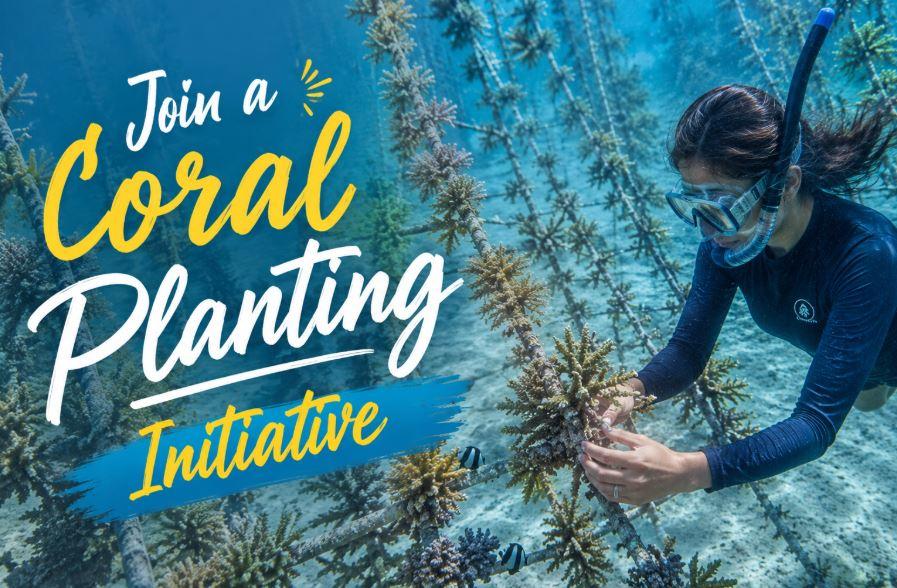
The Maldives is famous for its turquoise lagoons, white-sand beaches, and spectacular coral reefs. But beyond simply admiring this underwater paradise, travelers can also play a small part in protecting it. Joining a coral planting initiative in the Maldives is an educational and memorable experience that allows visitors to learn about reef conservation while supporting restoration projects.
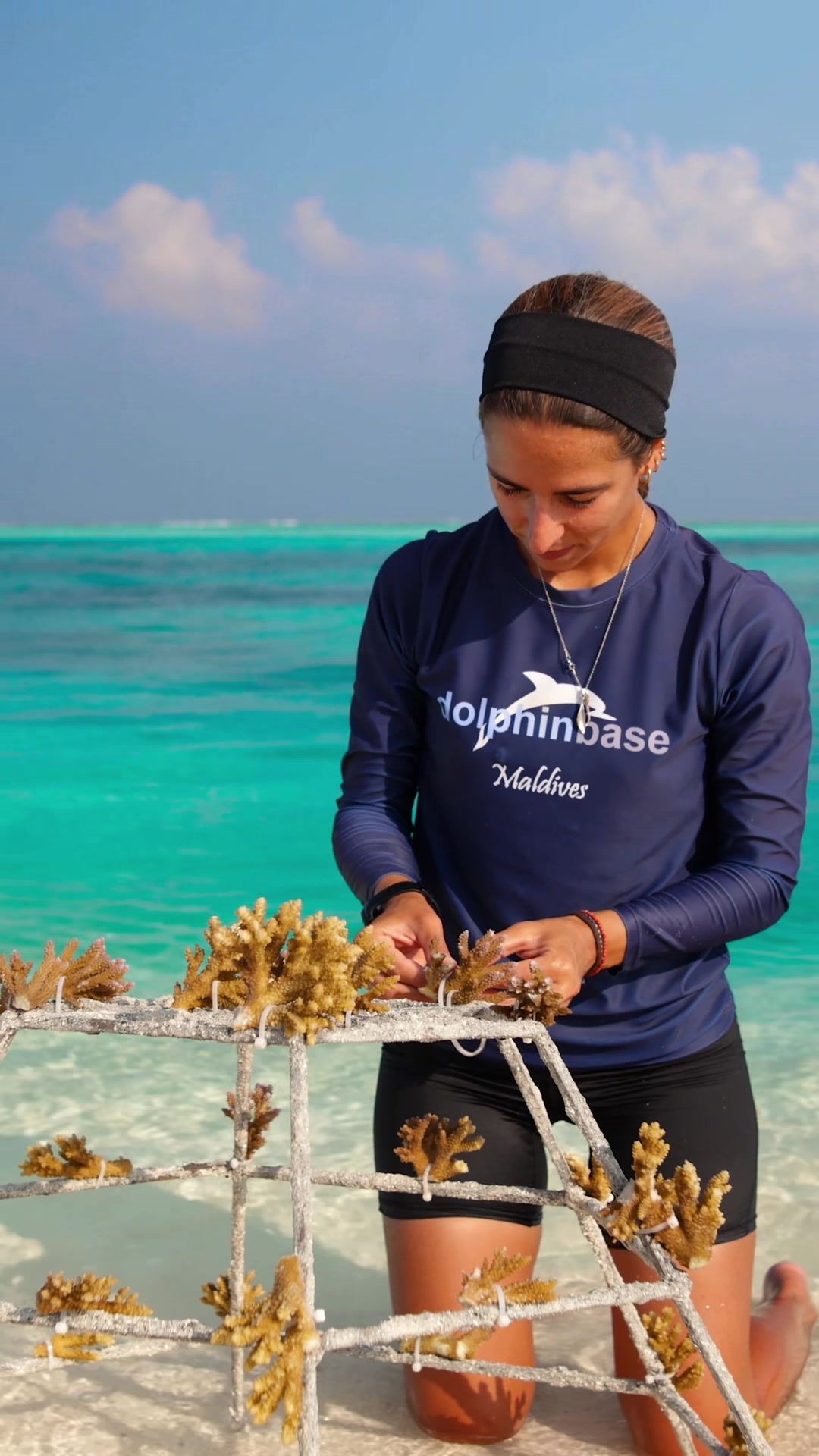
At selected resorts and marine conservation centers, guests can participate in coral restoration programs, sometimes helping marine biologists attach coral fragments to specially designed underwater frames. Some projects also offer coral-frame sponsorship or adoption programs, allowing participants to follow the progress of their corals after returning home.
Why Coral Restoration Matters in the Maldives
Coral reefs are at the heart of the Maldivian environment. They provide habitats for thousands of marine species while also helping protect islands from waves and erosion.
However, Maldivian reefs face significant environmental pressures. Elevated ocean temperatures can cause coral bleaching, while storms, pollution, coastal development, and other disturbances can further damage vulnerable reef ecosystems.
Coral restoration is not a replacement for addressing these larger environmental challenges, but carefully managed projects can help rehabilitate selected damaged reef areas while supporting scientific research and public awareness.
For visitors, participating in such a project offers something particularly valuable: the opportunity to understand that the spectacular reef surrounding a tropical island is a living ecosystem rather than simply a tourist attraction.
Coral Planting in Baa Atoll
Baa Atoll is one of the best-known areas of the Maldives for marine biodiversity. Its importance was internationally recognized when the region became a UNESCO Biosphere Reserve.
Several Maldivian resorts and conservation organizations have been involved in reef restoration initiatives, including programs using underwater coral frames. One well-known example is the Reefscapers approach, in which coral fragments are attached to specially designed frames placed in suitable areas of the reef.
Depending on the resort and program, visitors may be able to sponsor a frame, participate in an educational session, observe marine biologists working on restoration, or occasionally help with parts of the process under professional supervision.
Because individual programs and participation opportunities can change, travelers should check directly with their resort or marine biology center before arrival.
What Is a Coral Frame?
A coral frame is an underwater structure designed to provide a stable surface on which coral fragments can grow.
Small fragments of suitable coral may be carefully attached to the structure before the frame is positioned underwater. Marine conservation teams can then monitor its development, recording coral survival, growth, bleaching, predation, and other changes.
Over time, healthy coral colonies may grow across the structure and provide additional habitat for reef organisms.
Seeing a newly planted frame may seem relatively simple, but returning months or years later—or viewing monitoring photographs—can reveal a remarkable transformation.
Adopt or Sponsor a Coral Frame
One of the most appealing elements of some Maldivian restoration projects is the opportunity to adopt or sponsor a coral frame.
Rather than your involvement ending when your holiday does, participating programs may record the frame and periodically photograph or monitor it. This can allow sponsors to see how their corals develop over time.
Some programs may also allow frames to be sponsored for special occasions such as a honeymoon, anniversary, birthday, or family holiday.
It creates an unusual connection with the Maldives: long after you've flown home, a small restoration project associated with your visit remains beneath the Indian Ocean.
What to Expect During a Coral Planting Experience
The exact experience varies between resorts and conservation programs. A typical activity may begin with an introduction from a marine biologist explaining coral biology, reef threats, and the restoration techniques being used.
Participants may learn how coral fragments are selected and attached to frames. Depending on the program, guests might help prepare a frame or observe the installation process.
Some frames can be positioned in relatively shallow water, while others require trained divers or marine biology staff to install them safely.
The emphasis should always be on responsible restoration rather than simply giving tourists something to do. Coral is extremely delicate, so instructions from conservation staff should be followed carefully.
A Great Activity for Families
Coral conservation can also be one of the Maldives' most interesting educational activities for families.
Children who spend their holiday snorkeling among butterflyfish, parrotfish, rays, and reef sharks can learn why all of these animals depend on healthy marine ecosystems.
Instead of reef conservation remaining an abstract environmental concept, they can see coral up close and discover how slowly colonies develop.
For young travelers especially, that experience can create a much stronger appreciation for ocean conservation.
Combine Coral Planting With Snorkeling
A coral restoration experience pairs naturally with a guided snorkeling excursion.
After learning about coral biology, put on your mask and snorkel and explore a healthy section of reef with a knowledgeable guide. You'll begin noticing details that might previously have gone unnoticed: branching corals, massive coral colonies, tiny reef fish hiding among them, grazing parrotfish, and the complicated relationships between different reef species.
Understanding the ecosystem can completely change the way you experience snorkeling in the Maldives.
Instead of simply seeing a beautiful reef, you begin to understand how the reef works.
When Is the Best Time to Participate?
Coral conservation programs may operate throughout the year, although actual restoration work can depend on local conditions, sea temperatures, weather, reef health, and the individual project's scientific protocols.
If coral planting is an important part of your Maldives holiday, contact your chosen resort before booking and ask whether guests can currently participate.
You should also ask what the activity involves. There is a significant difference between sponsoring a coral frame, attending a marine biology presentation, helping prepare fragments, and physically participating in underwater restoration work.
How to Choose a Responsible Coral Restoration Program
Look for programs managed or supervised by qualified marine biologists or experienced conservation professionals.
A credible initiative should be able to explain why restoration is being conducted, where coral fragments originate, how frames or restoration sites are selected, and how corals are monitored afterward.
Responsible programs should also educate participants about the limitations of coral restoration. Planting coral alone cannot solve climate change, ocean warming, pollution, or every other threat facing reefs.
The strongest projects combine restoration with long-term monitoring, research, education, and broader reef protection.
Protect the Reef During the Rest of Your Holiday
Your contribution doesn't have to stop after the coral activity.
When snorkeling or diving, never stand on, kick, collect, or deliberately touch coral. Maintain good buoyancy while scuba diving and keep fins away from fragile colonies.
Avoid leaving plastic or other waste behind, choose environmentally responsible excursions, and follow local marine-protection rules.
Even simple behavior matters when millions of travelers collectively interact with tropical marine environments.
More Than Another Maldives Excursion
A Maldives holiday can easily become a collection of unforgettable experiences—swimming with manta rays, snorkeling over colorful reefs, watching dolphins at sunset, or relaxing beside an impossibly blue lagoon.
Joining a coral planting initiative adds something different: purpose.
You aren't only observing the underwater world. You're learning how vulnerable it is, meeting people working to protect it, and potentially contributing to a carefully managed restoration effort.
And if your program allows you to sponsor and follow a coral frame, the experience can continue long after your footprints have disappeared from the beach.

 Dhivehi
 Arabic
 French
 Spanish
 Portuguese
 Deutsch
 Turkish
 Dutch
Dutch
 Italiano
 Russian
 Romaian
 Portuguese (Brazil)
 Greek
Greek