

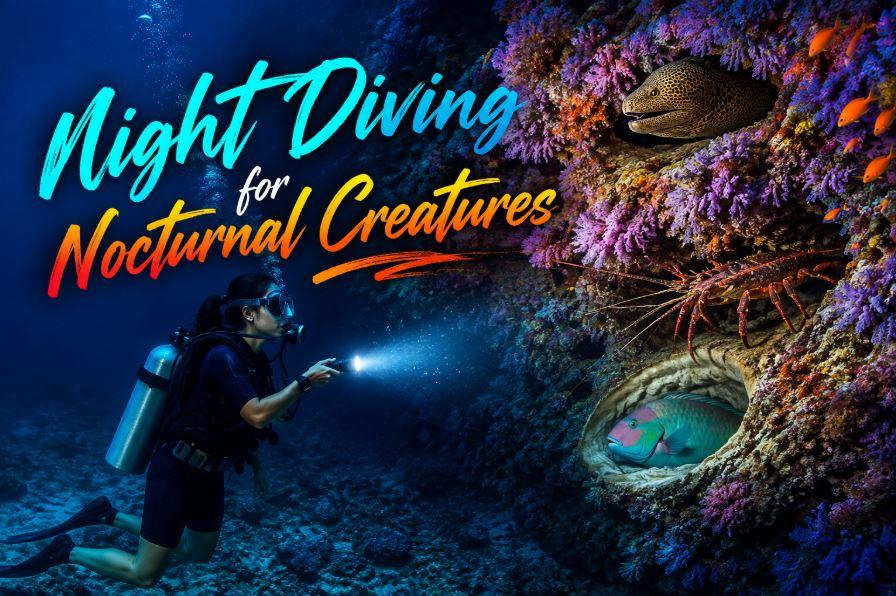
The Maldives may be famous for its brilliant turquoise lagoons and colorful coral reefs, but some of its most fascinating underwater encounters begin after the sun goes down.
Night diving in the Maldives reveals a completely different side of the Indian Ocean. Creatures that spend daylight hours hidden inside caves and coral crevices begin to emerge, while familiar reef inhabitants settle down to sleep. Moray eels become more active, lobsters venture across the reef, crustaceans appear from their hiding places, and parrotfish find protected places to rest.
For certified divers looking for something beyond a typical daytime reef dive, exploring the Maldives after dark can be one of the most atmospheric experiences of a diving holiday.
Why Go Night Diving in the Maldives?
During the day, Maldivian reefs are filled with colorful reef fish, rays, turtles and countless other marine creatures. At sunset, however, the underwater environment begins to change.
Many daytime species retreat into the reef to rest while nocturnal marine creatures become increasingly active.
Equipped with an underwater dive light and accompanied by an experienced guide, divers can watch this transition firsthand.
The beam of your torch illuminates only a small part of the reef at a time, making every movement in the darkness feel like a discovery. Instead of looking across an entire coral landscape, your attention becomes focused on individual animals and tiny details that are easily overlooked during daylight dives.
Moray Eels Hunting After Dark
Moray eels are among the most memorable creatures you may encounter during a Maldives night dive.
Although they can also be seen during the day with their heads protruding from holes in the reef, some morays become considerably more active after sunset.
Divers may see them moving between coral formations and searching the reef for prey.
Watching a moray eel leave its daytime shelter provides a very different experience from simply seeing one resting inside a crevice.
As with all wildlife encounters, divers should maintain a respectful distance and allow the animal to behave naturally.
Watch Lobsters Exploring the Reef
Lobsters and other crustaceans are another highlight of nocturnal diving.
During daylight hours, lobsters often remain hidden beneath rocks or deep inside coral formations. Once darkness arrives, they may venture into more exposed areas to search for food.
Their long antennae can sometimes be the first thing illuminated by your dive light.
Look carefully around coral ledges, sandy patches and rocky crevices. Night dives reward patient divers who slow down and examine the smaller details of the reef.
See Sleeping Parrotfish
One of the more unusual sights on a tropical night dive is a sleeping parrotfish.
Parrotfish that spend the daytime swimming energetically around the reef eventually need somewhere to rest. At night, they may shelter among coral formations where they remain relatively still until morning.
Some species of parrotfish can produce a protective mucus cocoon around themselves while sleeping. Scientists believe this mucus layer may provide protection against certain parasites and potentially help reduce detection by predators.
Seeing a parrotfish quietly tucked into the reef is a striking contrast to its busy daytime behavior.
Discover Tiny Nocturnal Creatures
Night diving isn't only about larger animals.
Turn your attention toward the coral and sand and you may discover a miniature world of nocturnal marine life.
Depending on the dive site and conditions, nighttime encounters can include crabs, shrimp, brittle stars, worms, mollusks and other small reef inhabitants that are much harder to notice during daylight hours.
This makes night diving in the Maldives especially interesting for underwater photographers and divers fascinated by macro marine life.
Instead of rushing across the reef looking for sharks or rays, night diving encourages you to explore slowly.
Sometimes the most interesting creature of the dive is only a few centimeters long.
Experience Fluorescent Corals Under UV or Blue Light
An especially fascinating variation of night diving is fluorescence diving.
Using specialized blue or ultraviolet-style dive lighting together with the appropriate viewing filter can reveal fluorescent colors in certain corals and marine organisms.
Parts of the reef that look relatively ordinary under a conventional dive torch may suddenly glow in extraordinary shades of green, orange, yellow and red.
Fluorescence is different from bioluminescence. With fluorescence, organisms absorb light at particular wavelengths and re-emit it at another wavelength, producing the glowing colors visible to divers using suitable equipment.
Not every dive center offers fluorescent night diving, so check availability beforehand if this experience is high on your Maldives diving wish list.
What Does a Maldives Night Dive Feel Like?
Entering the ocean after sunset can initially feel very different from diving during the day.
Above you is darkness. Below you is darkness. Your primary visual reference becomes the narrow beam of your dive light.
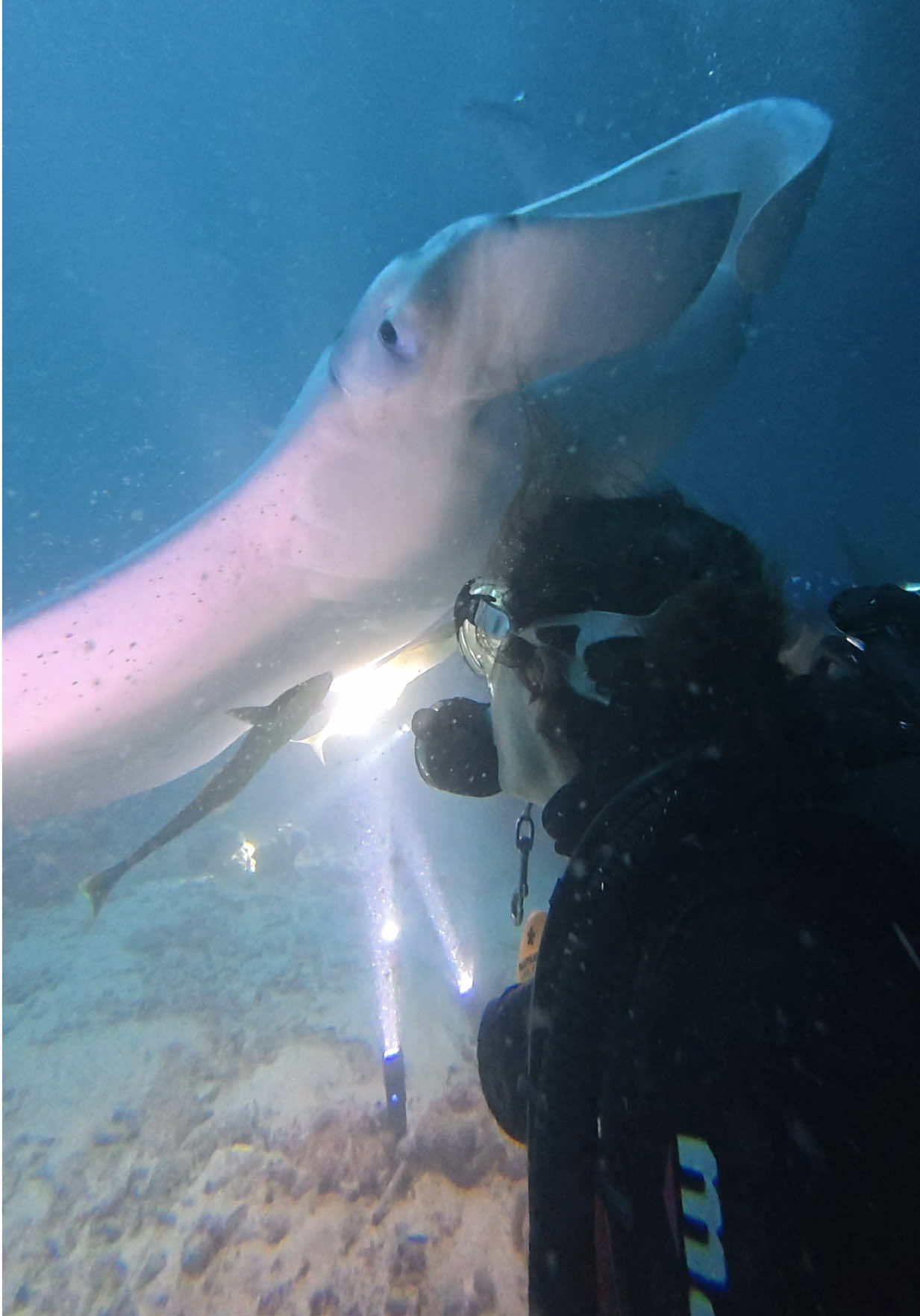
After a few minutes, however, many divers become comfortable with the environment.
The experience can feel surprisingly peaceful.
Without the visual distractions of a daytime reef, you concentrate on your breathing, your buddy, your guide and whatever appears inside the beam of your torch.
When several divers turn off or shield their lights for a carefully supervised moment, the surrounding darkness can make the vastness of the ocean especially noticeable.
Is Night Diving Suitable for Beginners?
Night diving generally requires greater situational awareness than an ordinary daytime dive.
Divers need to be comfortable with buoyancy control, underwater communication, buddy procedures and handling a dive light. Entry and exit procedures can also feel different after dark.
Requirements vary between dive operators and dive sites. Some centers may accept relatively new certified divers who demonstrate suitable skills, while others may recommend additional experience or night-diving training.
If you've never completed a night dive before, tell the dive center when booking. An experienced instructor or divemaster can explain the procedures and determine whether the planned site is appropriate for your experience level.
Essential Night Diving Equipment
In addition to normal scuba equipment, a night dive requires reliable underwater lighting.
Divers commonly carry a primary dive torch and a backup light. Your dive operator may provide lights or offer them for rental.
Before entering the water, check your torch, understand the dive plan and learn the light signals being used by your guide and buddy.
Never shine a powerful light directly into another diver's eyes, and avoid repeatedly illuminating marine animals at extremely close range.
Tips for a Safe and Enjoyable Night Dive
A little preparation can make your first Maldives night dive much more enjoyable.
Choose an established dive center, listen carefully to the briefing and stay close to your buddy and guide. Familiar dive sites can be particularly suitable because guides already understand the reef's underwater topography, currents and entry and exit points.
Good buoyancy control is especially important around coral. Avoid touching, standing on or grabbing the reef, even when trying to photograph an animal.
Move slowly and allow the wildlife to come into view naturally.
And don't forget to occasionally look away from the reef. The darkness surrounding you is part of the experience.
Best Time for Night Diving in the Maldives
Night diving can be offered throughout much of the year, although individual dives depend on weather, currents, visibility and local sea conditions.
Because night dives naturally take place after sunset, many dive centers schedule them in the early evening.
Conditions can vary significantly between atolls and individual dive sites. Rather than choosing a site based solely on something you've seen online, ask a local dive center which location currently offers the safest and most interesting nighttime conditions.
Local dive professionals usually know where nocturnal activity has recently been particularly good.
Underwater Photography During a Night Dive
Night diving offers excellent opportunities for macro and close-up underwater photography.
Because the surrounding environment is naturally dark, subjects can stand out dramatically when properly illuminated.
However, photographers should avoid chasing animals, touching coral or repeatedly disturbing resting creatures to get a photograph.
If you're new to underwater photography, consider enjoying your first night dive without a camera. Becoming comfortable with buoyancy, your torch and nighttime communication should come before trying to manage additional equipment.
Respect the Reef After Dark
Night diving provides access to marine animals during an important part of their daily cycle, making responsible behavior particularly important.
Sleeping fish should be allowed to rest. Animals shouldn't be touched, handled or forced out of hiding places. Divers should also avoid breaking or contacting coral while concentrating on something illuminated by their torch.
The goal is simple: observe the nighttime reef without changing its natural behavior.
Responsible diving helps protect the same ecosystem that makes Maldives scuba diving so extraordinary.
Night Diving vs. Day Diving in the Maldives
A daytime dive showcases the scale and color of a Maldivian reef. You can watch schools of tropical fish moving across coral formations and scan the blue water for larger marine animals.
A night dive is much more intimate.
Your world temporarily shrinks to whatever your torch illuminates.
A lobster appearing beneath a ledge, the patterned body of a moray eel sliding through the reef or a parrotfish sleeping between corals can become the highlight of the entire dive.
For this reason, experienced divers who have completed dozens of daytime dives can still find night diving completely fresh.
Add Night Diving to Your Maldives Adventure
There is something unforgettable about descending beneath the Indian Ocean after sunset and watching a familiar tropical reef transform.
Night diving in the Maldives isn't simply daytime scuba diving performed in darkness. It offers access to another rhythm of reef life—one dominated by nocturnal hunters, hidden crustaceans, sleeping fish and mysterious fluorescent colors.
One moment you might be watching a moray eel searching through the coral. Minutes later, your torch could reveal a lobster crossing the sand or a parrotfish resting quietly inside its nighttime shelter.
And if your dive center offers specialized fluorescence equipment, the reef can transform once again into an almost otherworldly display of glowing colors.
For certified divers searching for a different perspective on the Maldives' extraordinary underwater world, a night dive for nocturnal creatures deserves a place on the itinerary.
When daylight disappears beneath the horizon, the reef doesn't go to sleep.
It simply changes shifts.

 Dhivehi
 English
 Arabic
 French
 Spanish
 Portuguese
 Deutsch
 Turkish
 Dutch
Dutch
 Italiano
 Russian
 Romaian
 Greek
Greek