

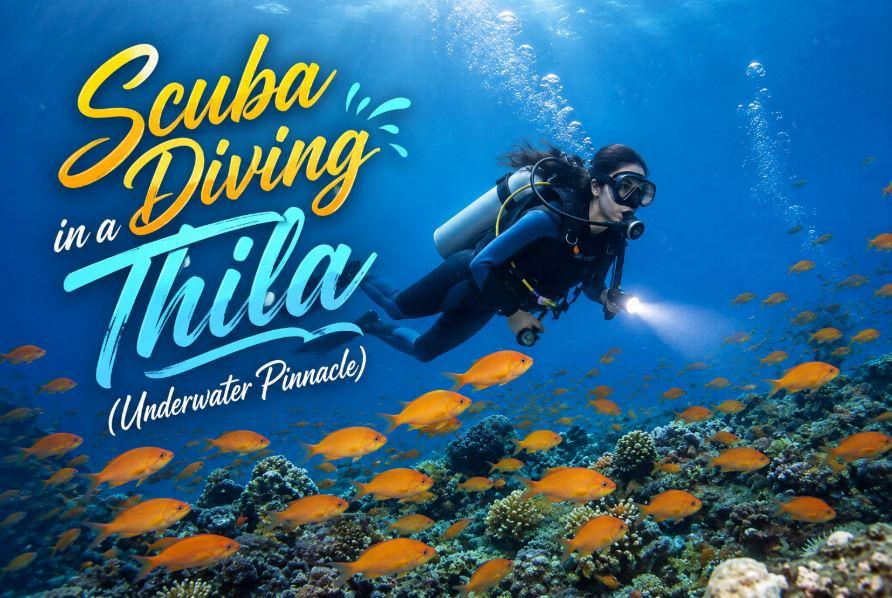
Few underwater experiences capture the wild beauty of the Maldives quite like scuba diving around a thila. Hidden beneath the surface of the Indian Ocean, these submerged pinnacles rise from the deeper ocean floor toward the sunlight, creating natural gathering places for an extraordinary variety of marine life.
Unlike a reef that reaches the surface, the top of a thila remains underwater. Divers descend into a completely submerged world where currents sweep nutrients around coral-covered walls, overhangs and rocky outcrops. The result is often an explosion of life: reef sharks cruising through the current, moray eels hiding inside crevices, barracuda circling above the reef and huge schools of tropical fish surrounding divers.
For anyone looking for some of the best scuba diving experiences in the Maldives, exploring a thila should be high on the list.
What Is a Thila?
In the Maldives, the word "thila" generally refers to a submerged reef or underwater pinnacle whose highest point remains below the surface.
Some thilas are relatively small and can be explored during a single dive, while others form larger underwater reef systems with steep walls, coral formations, caves and overhangs.
Because thilas are surrounded by deeper water, they can experience significant currents. These currents carry plankton and other nutrients past the reef, supporting an impressive ecosystem.
Soft corals, hard corals and sponges provide shelter for smaller reef creatures, while the abundance of fish attracts larger predators.
It creates a fascinating underwater food chain that divers can observe at remarkably close range.
Why Thila Diving in the Maldives Is So Special
The Maldives consists of coral atolls surrounded by channels, lagoons and deep ocean. This unusual geography creates ideal conditions for underwater pinnacles.
As ocean currents move through the atolls, thilas can become natural feeding stations.
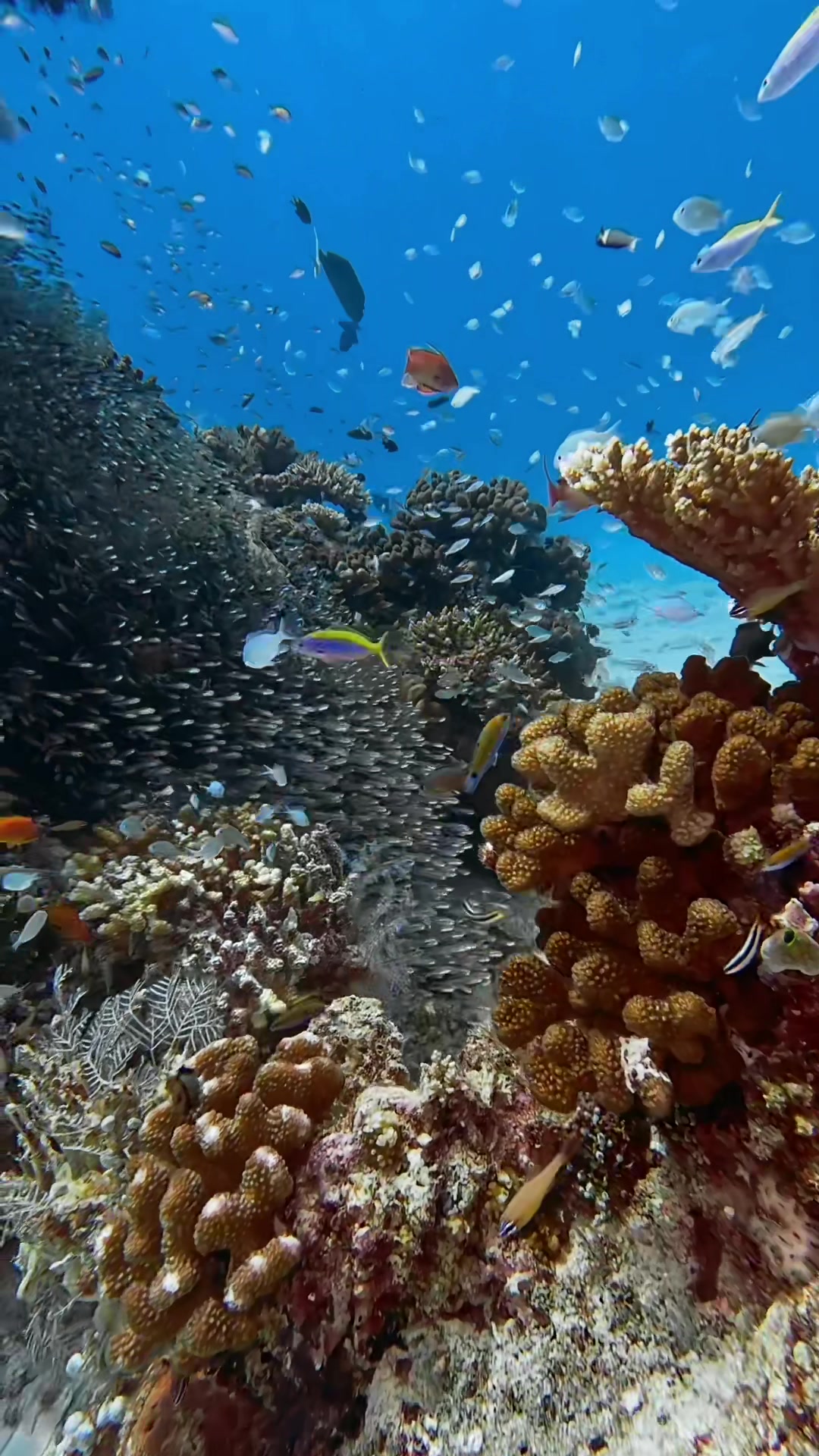
On a good dive, you might descend toward the pinnacle and immediately find yourself surrounded by clouds of fish.
Look toward the open water and you may see grey reef sharks or whitetip reef sharks patrolling beyond the reef.
Closer to the rocks, moray eels peer from their hiding places while groupers, snappers and colorful reef fish move among the corals.
Above the thila, schools of barracuda, fusiliers and trevally can form spectacular formations.
Every direction offers something different to watch.
Maaya Thila – One of the Maldives' Iconic Dive Sites
Located in North Ari Atoll, Maaya Thila has long been regarded as one of the Maldives' best-known dive sites.
The submerged pinnacle attracts an impressive concentration of marine life despite its relatively compact size.
Divers can explore around the reef while watching for whitetip reef sharks, grey reef sharks, giant trevally, moray eels and large schools of reef fish.
The reef itself is equally fascinating.
Crevices and overhangs provide hiding places for smaller creatures, making it worthwhile to occasionally stop looking into the blue and examine the reef closely.
Night Diving at Maaya Thila
Maaya Thila is particularly famous for night diving.
Once darkness falls, the character of the reef changes dramatically.
Predatory fish become more active, and divers may watch sharks and trevally hunting around the pinnacle. Under the beam of a dive light, the reef reveals nocturnal creatures that are easily overlooked during daylight hours.
For experienced divers comfortable underwater after dark, a Maaya Thila night dive can be one of the most memorable diving experiences in the Maldives.
Fish Head – A Legendary Ari Atoll Dive
Another famous thila is Fish Head, also known as Mushimasmingili Thila, in North Ari Atoll.
Fish Head has earned an international reputation for its rich marine ecosystem and frequent shark encounters.
The reef rises from deeper surrounding waters, creating an ideal location for divers to observe marine life concentrated around the pinnacle.
Grey reef sharks are among the major attractions, while schools of fusiliers, snappers and other fish can transform the water above the reef into a constantly moving wall of color.
Large trevally may patrol the area, while moray eels and smaller reef creatures occupy the rocky sections and coral formations.
Rather than swimming quickly around the entire site, divers can often enjoy the experience more by finding a suitable position and simply watching the underwater traffic pass.
Marine Life You May Encounter
No two thila dives are identical. Conditions, currents, season and even the time of day can influence what appears.
Depending on the dive site, possible encounters include:
-
Grey reef sharks and whitetip reef sharks
-
Barracuda
-
Giant trevally
-
Moray eels
-
Groupers
-
Snappers
-
Fusiliers
-
Eagle rays
-
Turtles
-
Napoleon wrasse
-
Stingrays
-
Schooling reef fish
-
Nudibranchs and other small reef creatures
One moment you might be photographing a tiny nudibranch on the reef; seconds later, your dive guide may point into the blue as several sharks cruise past.
That unpredictability is a major part of the appeal of thila diving in the Maldives.
Diving in Maldivian Currents
Currents are one of the reasons thilas support so much marine life, but they can also make these dives more challenging.
Conditions can range from almost completely calm to strong currents flowing across the pinnacle.
When the current is running, experienced divers may position themselves along the current-facing side of the thila, where fish and larger predators often congregate.
Strong-current dives require good buoyancy control, awareness and the ability to follow the dive guide's instructions.
Depending on the site and conditions, some operators may recommend or require equipment such as a surface marker buoy (SMB), and certain dives may be better suited to experienced or advanced-certified divers.
Never underestimate the current simply because the water looks calm from the boat.
Is Thila Diving Suitable for Beginners?
It depends on the individual thila and the conditions on the day.
Some underwater pinnacles can be explored in relatively gentle conditions and may be suitable for less-experienced certified divers under professional supervision.
Other sites involve stronger currents, deeper sections or more demanding profiles and are better suited to experienced divers.
A reputable Maldives dive center will normally assess factors such as your certification level, number of logged dives, recent diving experience and comfort in currents before selecting an appropriate site.
If you are new to diving, there are plenty of easier reefs where you can develop your skills before progressing to more challenging thila dives.
Best Time for Thila Diving in the Maldives
Scuba diving is possible throughout the year in the Maldives, although underwater conditions vary by season, location and prevailing currents.
The northeast monsoon period generally brings excellent visibility to many areas, while the southwest monsoon can produce different current and plankton conditions.
However, there is no single perfect month for every thila.
Local weather, tides and currents can matter more than the calendar on an individual diving day. Dive centers usually schedule sites according to the conditions and experience level of their guests.
Tips for a Better Thila Dive
Before entering the water, listen carefully to the dive briefing. Your guide will usually explain the expected current direction, maximum depth, route, entry procedure and where the group is likely to encounter larger marine life.
Maintain good buoyancy and avoid touching or standing on coral. Stay reasonably close to the reef when appropriate, but never chase sharks, turtles, rays or other wildlife for photographs.
If sharks approach naturally, remaining calm often provides a much better encounter than swimming after them.
Underwater photographers should also remember to look away from the camera occasionally. A thila is a three-dimensional environment, and some of the most exciting encounters can happen behind or above you.
Protecting the Maldives' Underwater World
The spectacular biodiversity surrounding Maldivian thilas depends on healthy reefs and responsible diving.
Divers can help protect these ecosystems by maintaining neutral buoyancy, securing dangling equipment, never touching coral and keeping a respectful distance from marine animals.
Do not feed wildlife or remove shells, coral or other objects from the reef.
The goal should be simple:
Leave the thila exactly as you found it and take home only memories, photographs and videos.
Experience the Wild Side of Maldives Scuba Diving
A beautiful lagoon may define the Maldives above water, but thilas reveal an entirely different personality beneath the surface.
These hidden underwater pinnacles are busy, unpredictable ecosystems where currents, coral reefs, schooling fish and predators come together.
Descending onto Maaya Thila, exploring the legendary Fish Head, or discovering a lesser-known pinnacle elsewhere in the archipelago gives divers a front-row seat to one of nature's most impressive underwater spectacles.
You may find sharks cruising beyond the reef, moray eels watching from their caves and hundreds of fish moving together above your head.
For certified divers searching for adventure, biodiversity and unforgettable marine encounters, scuba diving in a thila is one of the essential experiences to try in the Maldives.

 Dhivehi
 English
 French
 Spanish
 Portuguese
 Deutsch
 Turkish
 Dutch
Dutch
 Italiano
 Russian
 Romaian
 Portuguese (Brazil)
 Greek
Greek