

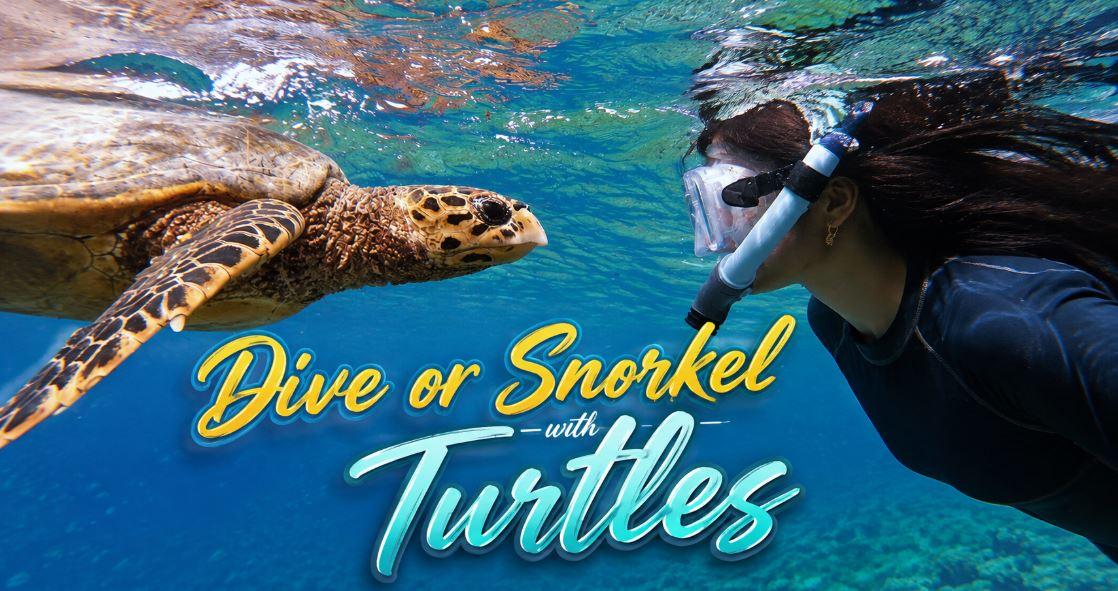
Swimming alongside a sea turtle in crystal-clear tropical water is one of the most memorable experiences you can have in the Maldives. Beneath the turquoise lagoons, coral reefs provide habitat and feeding grounds for marine life, including green sea turtles and hawksbill turtles.
Whether you are an experienced scuba diver or someone putting on a snorkel mask for the first time, there are opportunities across the Maldives to encounter turtles in their natural environment.
From shallow house reefs accessible directly from the beach to deeper dive sites, snorkeling and diving with turtles in the Maldives deserves a place on any ocean lover's itinerary.
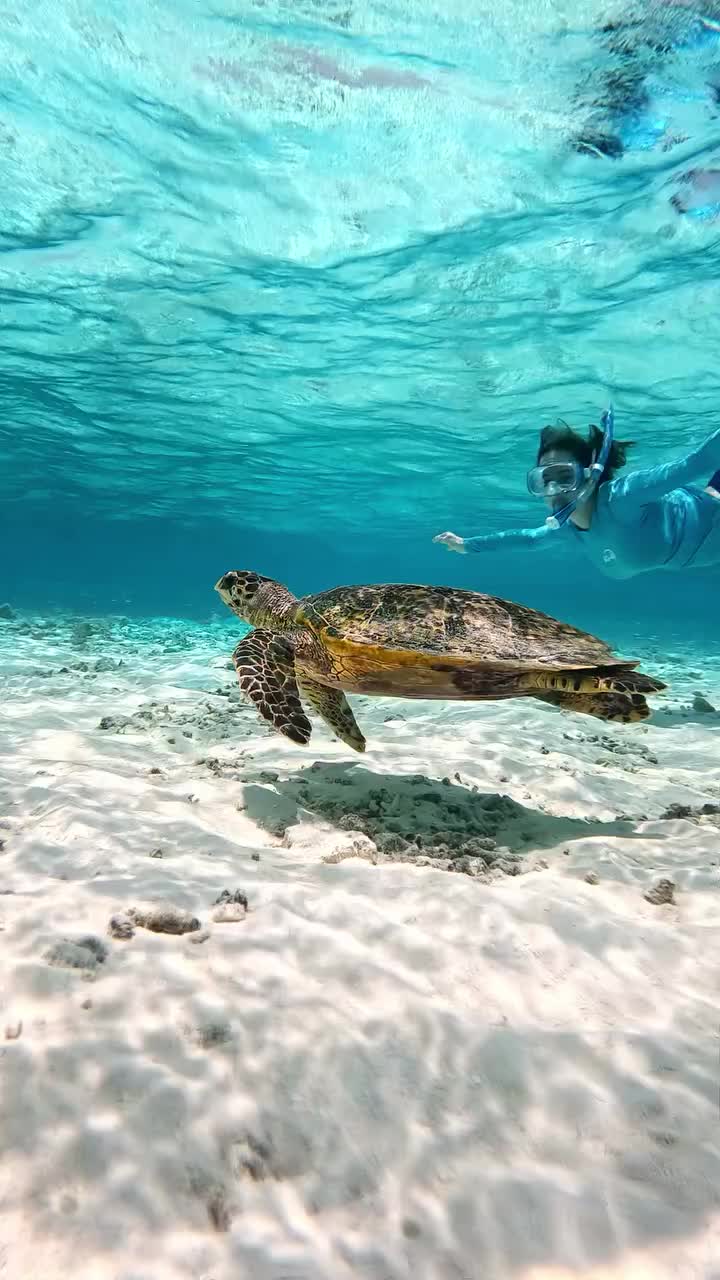
Sea Turtles in the Maldives
The two species visitors are most likely to encounter are the green sea turtle and hawksbill sea turtle.
Green Sea Turtles
Green turtles are large, graceful swimmers that can sometimes be seen cruising over reefs and feeding around areas rich in seagrass and algae.
Watching one slowly move through the water is a surprisingly peaceful experience. They may appear unhurried, but turtles can move remarkably quickly when they choose to.
Hawksbill Turtles
Hawksbill turtles are another familiar sight around Maldivian coral reefs. They can be identified by their distinctive pointed, beak-like mouths.
They spend considerable time around reefs searching for food, which can give patient snorkelers and divers wonderful opportunities to observe their natural behavior.
Snorkeling with Turtles in the Maldives
You don't necessarily need scuba equipment to see turtles.
One of the great advantages of visiting the Maldives is the abundance of house reefs surrounding resort and local islands. On islands with accessible reefs, you may only need a mask, snorkel and fins to begin exploring.
Swim toward the reef edge and keep an eye on the coral below. A turtle may suddenly appear, quietly gliding through the blue water.
Some turtles can also be encountered relatively close to shore, particularly around healthy reef and feeding areas.
Guided snorkeling excursions are another option. Local guides know the reefs well and can take visitors to areas where turtles are regularly observed.
Scuba Diving with Turtles
For certified divers, scuba diving opens up even more opportunities to encounter Maldivian marine life.
Turtles may be seen resting near reef structures, swimming along drop-offs or feeding around coral formations. Depending on the dive site, you could also encounter reef sharks, rays, moray eels, schools of tropical fish and other marine species during the same dive.
The Maldives has dive sites suitable for different experience levels, although currents and conditions vary considerably between locations.
Sites around North Malé Atoll, South Malé Atoll, Ari Atoll, Baa Atoll and other regions provide opportunities for memorable reef diving.
Best Places to See Turtles in the Maldives
There is no single turtle destination in the Maldives. Green and hawksbill turtles occur across many of the country's reefs, and sightings depend on the location, season, sea conditions and a little luck.
Some excellent options include:
-
House reefs: Choose a resort or guesthouse island known for a healthy and easily accessible house reef.
-
Ari Atoll: Its extensive reef system makes it a popular region for snorkeling and diving excursions.
-
Baa Atoll: The UNESCO Biosphere Reserve is renowned for its rich marine biodiversity.
-
North and South Malé Atolls: Convenient for travelers staying near the capital and home to numerous snorkeling and diving sites.
-
Lhaviyani Atoll: Another popular diving region where turtles and diverse reef life can be encountered.
Before booking, ask your resort, guesthouse or dive center about recent turtle sightings rather than choosing a location solely because turtles have historically been seen there.
What Is It Like to Swim with a Sea Turtle?
Imagine floating above a coral reef in warm, transparent water.
Schools of colorful fish move between the corals below you. Then a dark shape slowly emerges from the blue.
A turtle.
It effortlessly moves its flippers, gliding through the water while seemingly paying little attention to the excited snorkelers watching nearby.
Sometimes it will descend toward the reef to feed. At other times, it may slowly rise toward the surface for air before disappearing back into the ocean.
There is no need to chase it. Remaining calm and observing from a respectful distance often creates a far more enjoyable encounter.
Best Time for Turtle Snorkeling in the Maldives
Sea turtles live in Maldivian waters throughout the year, so turtle snorkeling and diving are possible year-round.
However, underwater conditions vary according to the monsoon, location and daily weather.
Generally, calmer seas and good visibility make snorkeling easier, while experienced dive operators select sites according to currents, visibility and prevailing conditions.
Rather than focusing exclusively on a particular month, travelers who specifically want to see turtles should choose accommodation close to a good reef and ask local dive or watersports operators about current conditions.
Can Beginners Snorkel with Turtles?
Yes.
You don't need to be a scuba diver to enjoy a turtle encounter. Snorkeling is often the easiest way for beginners to explore the Maldives' underwater environment.
If you are not a confident swimmer, join a guided excursion and use an appropriate flotation device. A guide can explain currents, entry and exit points, reef boundaries and safe snorkeling practices before entering the water.
Never venture into unfamiliar channels or strong currents without local guidance.
Responsible Turtle Encounters
Sea turtles are wild animals and should always be given space.
Seeing one nearby can be exciting, but resist the temptation to swim directly toward it, touch its shell or block its path to the surface.
When snorkeling or diving with turtles:
-
Keep a respectful distance.
-
Never touch, grab, ride or feed a turtle.
-
Don't surround or chase it.
-
Avoid blocking its route to the surface.
-
Keep fins away from coral.
-
Follow instructions from your dive or snorkeling guide.
-
Observe natural behavior without interfering.
Underwater photography is wonderful, but getting the perfect photo should never come at the expense of the animal.
Turtle Snorkeling vs. Turtle Diving
For many travelers, snorkeling is enough.
It requires minimal equipment and can provide excellent encounters on shallow reefs. It's particularly convenient when staying on an island with a good house reef because you may be able to snorkel several times during your holiday.
Scuba diving offers a different perspective. Divers can explore deeper reef structures and spend more time underwater, potentially encountering turtles alongside a wider variety of marine life.
If you aren't certified but want to experience scuba diving, many Maldives dive centers offer introductory programs under professional supervision, subject to applicable safety requirements.
What to Bring
You won't need much equipment for a guided turtle snorkeling trip. Resorts and excursion operators commonly provide or rent snorkeling equipment.
Useful items include a comfortable mask, snorkel, fins, rash guard or UV-protective swimwear, waterproof action camera and drinking water.
If you bring your own camera, consider using a wrist strap or secure mount so you can concentrate on swimming safely rather than worrying about losing it.
Photographing Turtles Underwater
Turtles are fantastic underwater photography subjects because their slow, graceful movements can provide opportunities for beautiful photographs.
Instead of chasing a turtle, anticipate where it is moving and remain at an appropriate distance.
For a more natural image, try photographing the turtle against the open blue water or coral reef while leaving enough space in the frame to show the surrounding environment.
Natural behavior usually produces much better photographs than forcing a close encounter.
Combine Turtle Snorkeling with Other Maldives Adventures
A turtle excursion can easily be combined with other ocean experiences during a Maldives holiday.
Depending on your destination, you could spend your trip exploring coral reefs, snorkeling with tropical fish, joining dolphin-watching excursions, diving with reef sharks and rays, visiting sandbanks or enjoying kayaking and other watersports.
In certain regions and seasons, travelers may also have opportunities for encounters with manta rays or whale sharks.
Is Swimming with Turtles in the Maldives Worth It?
Absolutely.
The Maldives is famous for luxury resorts and postcard-perfect beaches, but some of its greatest treasures are found beneath the surface.
Seeing a wild sea turtle glide across a coral reef turns an ordinary snorkeling session into something unforgettable.
You don't necessarily need advanced diving skills, expensive equipment or a complicated expedition. On the right island, an incredible encounter could be waiting just beyond the beach.
Put on your mask, slip beneath the turquoise water and keep your eyes on the reef—you never know when a Maldivian sea turtle might appear.

 Dhivehi
 English
 Arabic
 French
 Spanish
 Portuguese
 Turkish
 Dutch
Dutch
 Italiano
 Russian
 Romaian
 Portuguese (Brazil)
 Greek
Greek