

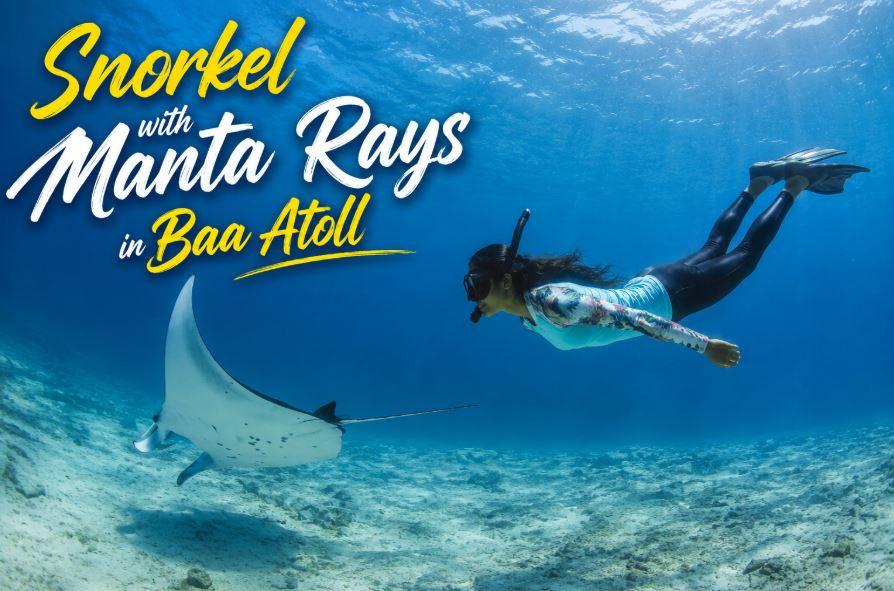
Imagine floating in the warm, crystal-clear waters of the Maldives as enormous manta rays glide effortlessly beneath you. With wingspans stretching several meters, these gentle ocean giants swoop, turn, and perform graceful somersaults while feeding on clouds of plankton.
Snorkeling with manta rays in Baa Atoll is one of the most extraordinary wildlife experiences the Maldives has to offer. At the heart of the action is Hanifaru Bay, a world-famous marine area within the Baa Atoll UNESCO Biosphere Reserve.
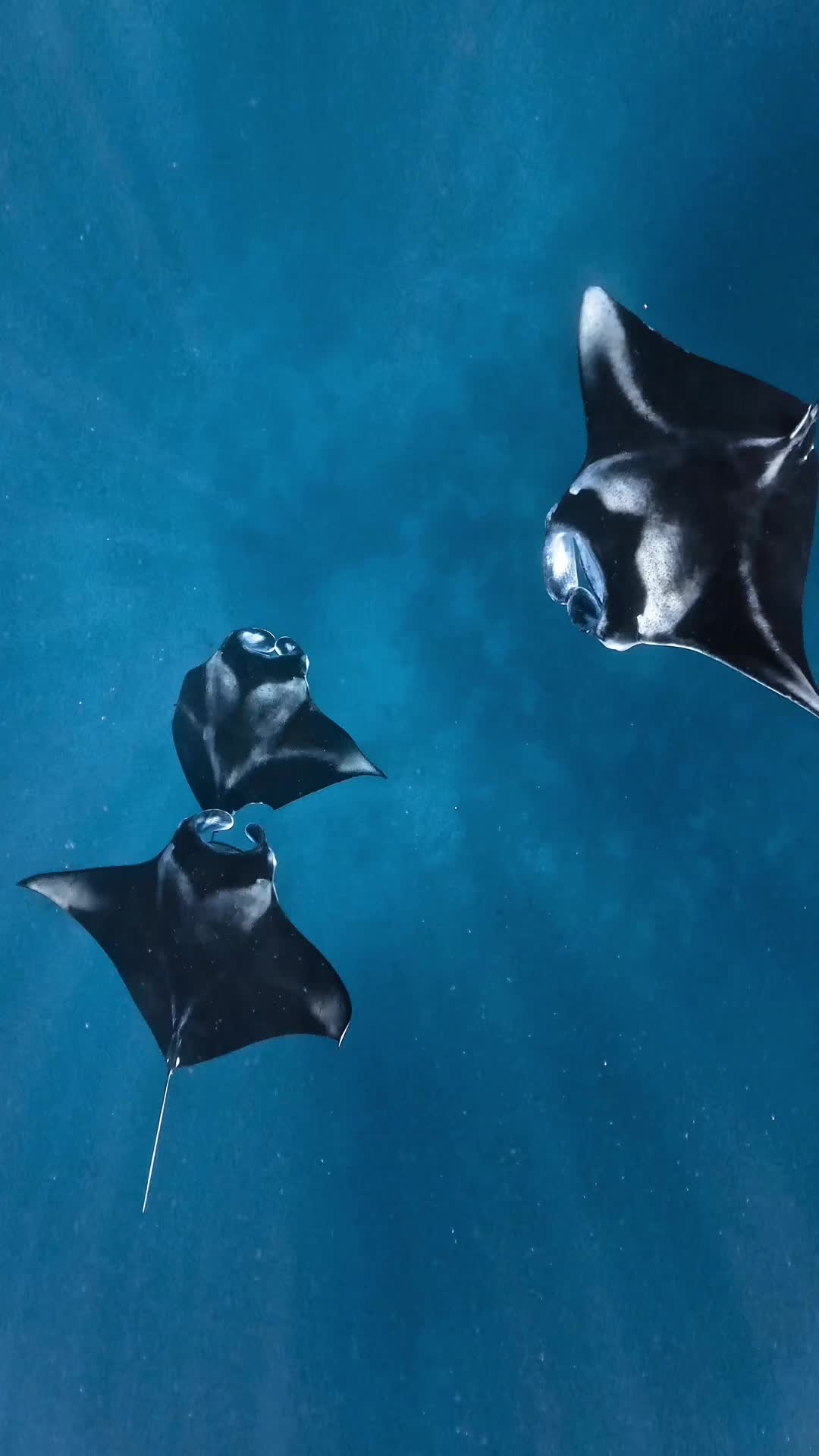
During the southwest monsoon season, typically between May and November, ocean conditions can concentrate huge quantities of plankton inside the bay. When conditions are right, manta rays gather to feed, sometimes creating spectacular formations that have made Hanifaru Bay famous among marine enthusiasts around the world.
Why Baa Atoll Is Famous for Manta Rays
Located in the central-western Maldives, Baa Atoll is internationally recognized for its exceptional marine biodiversity. In 2011, UNESCO designated Baa Atoll as a Biosphere Reserve, highlighting the importance of its coral reefs, islands, mangroves and surrounding marine ecosystems.
One of its greatest natural treasures is Hanifaru Bay, a small bay that acts as a seasonal feeding area for reef manta rays.
The magic happens when tides, currents and monsoon conditions push plankton into the bay. Manta rays follow their food, sometimes arriving in impressive numbers.
Unlike predatory rays, manta rays do not have a dangerous stinger. They are filter feeders, consuming tiny plankton as they swim through the water with their mouths open.
Watching these enormous yet peaceful animals feed just meters away is an experience difficult to compare with anything else in the Maldives.
Best Time to See Manta Rays in Baa Atoll
The main Baa Atoll manta ray season generally falls between May and November, coinciding with the southwest monsoon.
However, seeing manta rays is never guaranteed.
Their appearance depends on natural factors including tides, currents, moon phases, weather and plankton concentrations. Some days may produce only a handful of mantas, while exceptional conditions can result in much larger feeding aggregations.
For travelers specifically visiting the Maldives to see manta rays, staying several days in Baa Atoll can provide more opportunities than relying on a single excursion.
Local guides and marine centers usually monitor conditions and can advise visitors when activity around Hanifaru Bay looks promising.
The Spectacle of Manta Ray Feeding
Seeing one manta ray underwater is impressive. Seeing many feeding together can be breathtaking.
When plankton becomes concentrated, manta rays use several feeding techniques to maximize the amount of food they consume.
You may witness mantas swimming in long lines, a behavior commonly called chain feeding. At other times, individual mantas repeatedly perform barrel rolls or somersault-like movements through dense patches of plankton.
From the surface, snorkelers can watch their huge wings moving gracefully through the water.
Despite their size, manta rays can appear almost weightless.
One moment a manta may be approaching directly toward you, and seconds later it can sweep underneath you and disappear into the blue before circling back toward another patch of plankton.
What Is Snorkeling at Hanifaru Bay Like?
A typical Hanifaru Bay snorkeling excursion begins with a boat journey to the protected area.
Before entering the water, visitors are normally briefed about responsible behavior around manta rays and the regulations designed to protect the animals.
Once manta rays are located and entry is permitted, you'll enter the water wearing snorkeling equipment and observe the activity from the surface.
You don't need to dive deep.
In fact, much of the excitement happens close enough to the surface that a mask and snorkel can provide an incredible view.
The water may not always have the postcard-perfect visibility associated with Maldivian lagoons. That's actually part of what attracts the mantas: plankton-rich water means food.
When conditions come together, you could find yourself surrounded by mantas feeding only a short distance away.
Can You Scuba Dive with Manta Rays at Hanifaru Bay?
Hanifaru Bay is a highly protected marine environment, and activities are carefully managed to minimize disturbance to feeding manta rays.
Visitors should not assume that normal recreational scuba-diving rules apply inside the protected bay. Snorkeling is the primary way visitors experience manta aggregations at Hanifaru Bay, subject to current local regulations and access conditions.
Fortunately, scuba equipment isn't necessary to appreciate the spectacle.
Manta rays frequently feed near the surface, making snorkeling one of the best ways to watch their natural behavior.
Divers can also find manta encounters at other dive sites around Baa Atoll, depending on the season and conditions.
How to Reach Hanifaru Bay
Travelers usually visit Hanifaru Bay while staying at a Baa Atoll resort, guesthouse or local island.
Baa Atoll can be reached from the Malé area using domestic flights, seaplanes or speedboat transfers, depending on your accommodation and location.
Many resorts and guesthouses within Baa Atoll organize dedicated manta-ray excursions during the season.
Choosing accommodation relatively close to Hanifaru Bay can be particularly useful for travelers whose main objective is seeing mantas. Since sightings depend on changing natural conditions, nearby operators may be able to respond quickly when manta activity increases.
Responsible Manta Ray Snorkeling
Manta rays are wild animals, and responsible tourism is essential to keeping encounters safe and sustainable.
When snorkeling with manta rays:
-
Follow your guide's instructions at all times.
-
Keep a respectful distance from the animals.
-
Never chase, touch or attempt to ride a manta ray.
-
Avoid blocking a manta's swimming or feeding path.
-
Swim calmly and minimize unnecessary splashing.
-
Never feed marine wildlife.
-
Follow all current Hanifaru Bay protected-area regulations.
-
Avoid touching or standing on coral reefs.
A manta may occasionally swim extremely close to you on its own. If this happens, remain calm and allow the animal to determine the encounter.
The goal should be to observe natural manta behavior rather than interact with or influence it.
What to Bring
For a manta snorkeling trip, bring comfortable swimwear, a mask and snorkel if you prefer using your own equipment, reef-conscious sun protection, a towel and drinking water.
Many excursion operators provide masks, snorkels and fins.
An underwater camera can also capture remarkable memories, but don't spend the entire encounter looking through a screen. Watching a giant manta ray glide underneath you with your own eyes is often far more memorable than any photograph.
Are Manta Rays Dangerous?
Manta rays are generally considered gentle animals and do not hunt humans.
Unlike stingrays, manta rays do not possess a venomous tail stinger. They feed primarily on plankton and other tiny organisms filtered from seawater.
Their enormous size can initially seem intimidating, especially when one approaches head-on with its mouth open while feeding.
But that open mouth isn't interested in you—it is filtering plankton from the surrounding water.
As with all wildlife encounters, visitors should respect the animal's space and follow instructions from qualified local guides.
Manta Rays and Whale Sharks
Baa Atoll is famous primarily for its seasonal manta aggregations, but whale sharks can occasionally appear in areas where plankton concentrations are high.
However, travelers should never book a Hanifaru Bay trip expecting both species.
Wildlife sightings are unpredictable, and the possibility of encountering a whale shark should be considered an extraordinary bonus rather than a guarantee.
For travelers particularly interested in swimming with whale sharks in the Maldives, South Ari Atoll is another important destination to consider.
Is Snorkeling with Manta Rays Worth It?
Absolutely.
The Maldives offers countless spectacular experiences—overwater villas, white-sand beaches, coral reefs and turquoise lagoons—but encountering manta rays in their natural environment can become one of the defining memories of a trip.
There is something remarkable about watching an animal several meters across move through the ocean with almost effortless grace.
Then another manta appears.
And another.
Suddenly, you're watching them circle, roll and follow one another through plankton-filled water while you float quietly above.
It is not an aquarium performance or staged wildlife attraction. It is a completely natural event dictated by tides, currents, plankton and the movements of wild manta rays.
Plan Your Baa Atoll Manta Ray Adventure
If snorkeling with manta rays in the Maldives is high on your bucket list, Baa Atoll deserves a place near the top of your itinerary.
Plan your trip during the main May to November manta season, allow several days if possible, and choose a reputable local operator experienced with responsible manta encounters.
Most importantly, remember that Hanifaru Bay is a protected natural environment rather than a guaranteed wildlife attraction. Conditions change from day to day, and every encounter is different.
When everything aligns, however, the reward can be spectacular: giant manta rays sweeping beneath the surface, performing graceful barrel rolls and forming feeding chains in the plankton-rich waters of one of the Maldives' most remarkable marine environments.

 Dhivehi
 English
 Arabic
 French
 Spanish
 Portuguese
 Deutsch
 Turkish
 Italiano
 Russian
 Romaian
 Portuguese (Brazil)
 Greek
Greek