

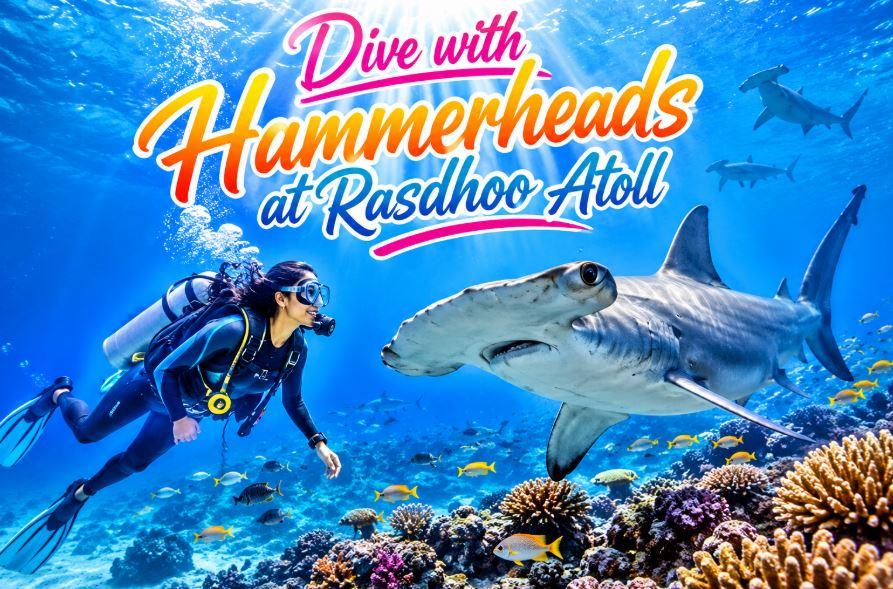
Few underwater encounters generate as much excitement as seeing the unmistakable silhouette of a hammerhead shark emerging from the deep blue. For experienced scuba divers visiting the Maldives, diving with hammerheads at Rasdhoo Atoll has long been considered one of the country's most adventurous diving experiences.
Rasdhoo Atoll is known for deep channels, dramatic reef formations and encounters with pelagic marine life. Divers exploring its deeper waters may have the opportunity to encounter scalloped hammerhead sharks, particularly during early-morning dives into the blue.
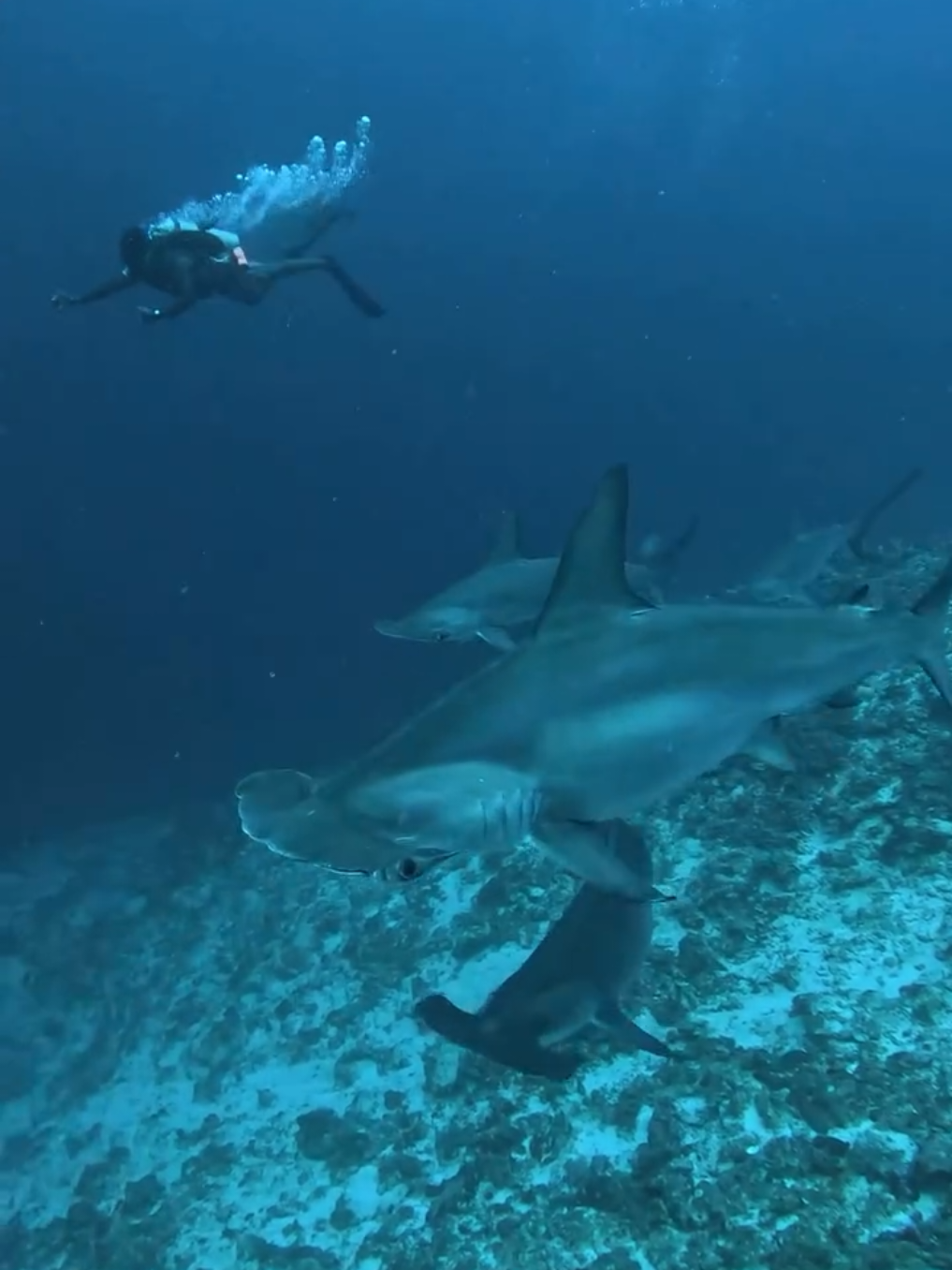
Hammerhead sightings are never guaranteed, and conditions can be challenging. But that uncertainty is part of what makes a Rasdhoo hammerhead dive so exciting.
Where Is Rasdhoo Atoll?
Rasdhoo Atoll is a small natural atoll located west of North Ari Atoll in the central Maldives.
The inhabited island of Rasdhoo is a popular destination for scuba divers because it provides relatively easy access to several impressive dive sites. The surrounding waters feature channels, reef walls, pinnacles and steep drop-offs where ocean currents bring nutrients and attract a wide variety of marine life.
Rasdhoo is also conveniently accessible from the Malé area by speedboat, making it possible to combine local-island accommodation with world-class Maldives diving.
Hammerhead Shark Diving at Rasdhoo
The waters outside Rasdhoo Atoll drop rapidly into the deep Indian Ocean. This deep-water environment has historically been associated with encounters with scalloped hammerhead sharks.
Unlike a typical coral reef dive, a hammerhead dive may take divers away from the reef and into open blue water.
You descend into an enormous blue environment with few visual references. Far below may be hundreds or even thousands of meters of ocean.
Then you wait.
If conditions and luck are on your side, the distinctive outline of a hammerhead may emerge from the blue.
Sometimes a single shark appears. On exceptional dives, multiple hammerheads may be encountered.
However, divers should arrive with realistic expectations. Hammerhead sightings at Rasdhoo are unpredictable, and historical reports of large schools do not mean that every dive—or even every diving trip—will produce an encounter.
Why Do Divers Enter the Water Early?
Hammerhead dives around Rasdhoo have traditionally been conducted very early in the morning, sometimes around sunrise.
Divers may leave the island while the sky is still dark and reach the dive site as the first light appears over the Indian Ocean.
The dive boat positions the group near the outer edge of the atoll before divers descend into deeper water.
There is something particularly memorable about beginning a dive while most of the island is still asleep and descending into the deep blue in search of one of the ocean's most recognizable predators.
What Does a Rasdhoo Hammerhead Dive Feel Like?
This is very different from leisurely snorkeling in a shallow Maldivian lagoon.
Visibility can be excellent, but because divers may be suspended in blue water, there may be few nearby objects to provide a sense of depth.
You could look downward and see nothing except increasingly dark shades of blue.
Currents may also move through the area, making good buoyancy control and situational awareness essential.
Your dive guide will normally determine the entry point based on current, weather and ocean conditions.
Once underwater, the group may descend to the planned depth and watch the surrounding blue for passing sharks and other pelagic species.
And then, sometimes, a shadow appears.
The wide, flattened head and tall dorsal fin make the hammerhead shark instantly recognizable.
It can be an extraordinary sight.
Scalloped Hammerhead Sharks
The species most commonly associated with these encounters is the scalloped hammerhead (Sphyrna lewini).
Its unusual hammer-shaped head is known as a cephalofoil. The shark's widely spaced eyes provide a broad field of vision, while specialized sensory organs help it detect electrical signals produced by potential prey.
Scalloped hammerheads can sometimes form large aggregations, making them particularly fascinating to divers.
Despite their dramatic appearance, hammerheads generally show little interest in scuba divers. Divers should nevertheless treat them as wild animals and maintain a respectful distance.
Is Hammerhead Diving at Rasdhoo for Beginners?
Generally, this is not an ideal dive for inexperienced divers.
The combination of depth, currents, blue-water conditions and the possibility of limited visual references can make the dive demanding.
Depending on the dive operator, site and conditions, divers may be expected to have an advanced certification or demonstrate sufficient experience with deeper and current-affected dives.
Important skills include:
-
Strong buoyancy control
-
Comfortable deep-water diving
-
Experience with currents
-
Controlled descents and ascents
-
Good air consumption
-
Ability to remain close to the dive group
-
Familiarity with safety procedures and dive computers
Requirements vary between dive centers, so always discuss your certification level and diving experience with the operator before booking.
Other Marine Life Around Rasdhoo Atoll
Hammerheads may receive most of the attention, but they are only one reason Rasdhoo has developed such a strong reputation among divers.
Depending on the site and season, the surrounding reefs and channels can offer encounters with grey reef sharks, whitetip reef sharks, eagle rays, stingrays, turtles, moray eels, barracuda, trevallies and large schools of tropical fish.
Rasdhoo's reef systems also provide beautiful coral scenery for divers who prefer shallower dives.
This means that even if hammerheads do not appear, a diving holiday in Rasdhoo can still deliver memorable underwater experiences.
When Is the Best Time to Dive in Rasdhoo?
The Maldives can be dived throughout the year, although underwater conditions change with the monsoons.
The northeast monsoon period, roughly December through April, often brings relatively dry weather and favorable visibility to many areas of the central Maldives.
The southwest monsoon brings different currents and plankton conditions, which can influence visibility and marine-life activity.
Hammerheads are wild animals, however, and there is no season or month that can guarantee a sighting.
For the latest information, speak with experienced Rasdhoo dive centers when you arrive. Local instructors and divemasters dive these waters regularly and usually have the best understanding of recent sightings and conditions.
How to Dive Responsibly with Hammerhead Sharks
Seeing a hammerhead in its natural environment is a privilege.
Never chase, touch, feed or attempt to surround a shark for a photograph. Allow the animal to determine the distance of the encounter.
If a hammerhead approaches, remain calm and enjoy the moment without making sudden movements.
Photographers should also avoid sacrificing buoyancy control or separating from the group while trying to capture the perfect image.
The best shark encounter is one where the shark can continue behaving naturally.
Underwater Photography Tips
Photographing a hammerhead in open water can be challenging because the shark may remain some distance from divers.
A wide-angle lens is generally the most useful choice.
Avoid chasing a shark simply to get closer. Instead, remain calm and let the animal decide whether to approach.
Because blue-water dives can produce strong blue tones, photographers may also need to adjust white balance, exposure and post-processing depending on depth and available sunlight.
Sometimes the most dramatic photograph isn't a close-up. A hammerhead silhouette surrounded by endless blue water can capture the scale and atmosphere of the encounter beautifully.
Rasdhoo Beyond Hammerhead Diving
Rasdhoo isn't exclusively a destination for advanced divers.
The island and surrounding atoll offer opportunities for snorkeling, sandbank trips, reef diving, fishing excursions and other ocean activities.
That makes Rasdhoo particularly attractive for groups where some travelers are experienced scuba divers while others prefer snorkeling or relaxing on the beach.
Visitors staying on the local island can also experience a different side of the Maldives from the private-resort environment.
Safety Comes Before the Sharks
The excitement of potentially seeing hammerheads should never override safe diving practices.
Conditions in Maldivian channels can change quickly, and currents can sometimes become powerful.
Always follow your divemaster's instructions, remain within your certification and experience limits, monitor your depth and remaining gas, and never descend deeper simply because you see a shark below you.
A hammerhead disappearing into the depths can be tempting to follow.
Don't.
There will always be another dive.
Why Rasdhoo Belongs on a Diver's Maldives Bucket List
The Maldives offers countless spectacular underwater experiences, but searching for hammerheads in the deep waters around Rasdhoo has a special atmosphere.
You're not swimming through a shallow aquarium-like reef waiting for colorful fish to pass.
You're floating above the depths of the Indian Ocean, staring into seemingly endless blue water and waiting for one of the ocean's most distinctive predators to appear.
There may be minutes when nothing happens.
Then a silhouette materializes in the distance.
The broad head becomes visible.
A hammerhead cruises effortlessly through the blue before slowly disappearing again.
It's unpredictable, challenging and impossible to manufacture—which is exactly what makes the experience so memorable.
For experienced divers searching for something beyond the Maldives' beautiful coral reefs, diving with hammerheads at Rasdhoo Atoll remains one of the country's most intriguing underwater adventures.
Frequently Asked Questions
Can you see hammerhead sharks at Rasdhoo Atoll?
Yes. Scalloped hammerhead sharks have historically been encountered in the deeper waters around Rasdhoo Atoll. However, sightings are unpredictable and should never be considered guaranteed.
Where is the famous hammerhead dive in Rasdhoo?
Hammerhead dives are generally conducted in deep water around the outer sections and channels of Rasdhoo Atoll. Exact entry points depend on currents and conditions and should be selected by experienced local dive guides.
Do I need to be an advanced diver?
Advanced certification and suitable diving experience may be required or strongly recommended because these dives can involve depth, currents and open blue-water conditions. Requirements depend on the dive center and conditions.
Are hammerhead sharks dangerous to divers?
Hammerheads are powerful wild predators and should always be treated respectfully, but they generally avoid divers. Responsible divers should never chase, touch or feed them.
Are hammerhead sightings guaranteed in Rasdhoo?
No. Hammerheads are wild, highly mobile animals. Even at locations known for previous encounters, sightings can vary considerably.
What else can I see while diving at Rasdhoo?
Rasdhoo Atoll can offer encounters with reef sharks, rays, turtles, barracuda, trevallies, moray eels and large schools of tropical reef fish, depending on the dive site and conditions.
Is Rasdhoo worth visiting if I don't see hammerheads?
Absolutely. Rasdhoo offers a diverse range of reef, channel and pinnacle diving, making it a rewarding Maldives diving destination even without a hammerhead encounter.

 Dhivehi
 English
 Arabic
 French
 Portuguese
 Deutsch
 Turkish
 Dutch
Dutch
 Italiano
 Russian
 Romaian
 Portuguese (Brazil)
 Greek
Greek